English
 For Schools
 For Homeschool

A Matriarch's Memory: An African Elephant's Story
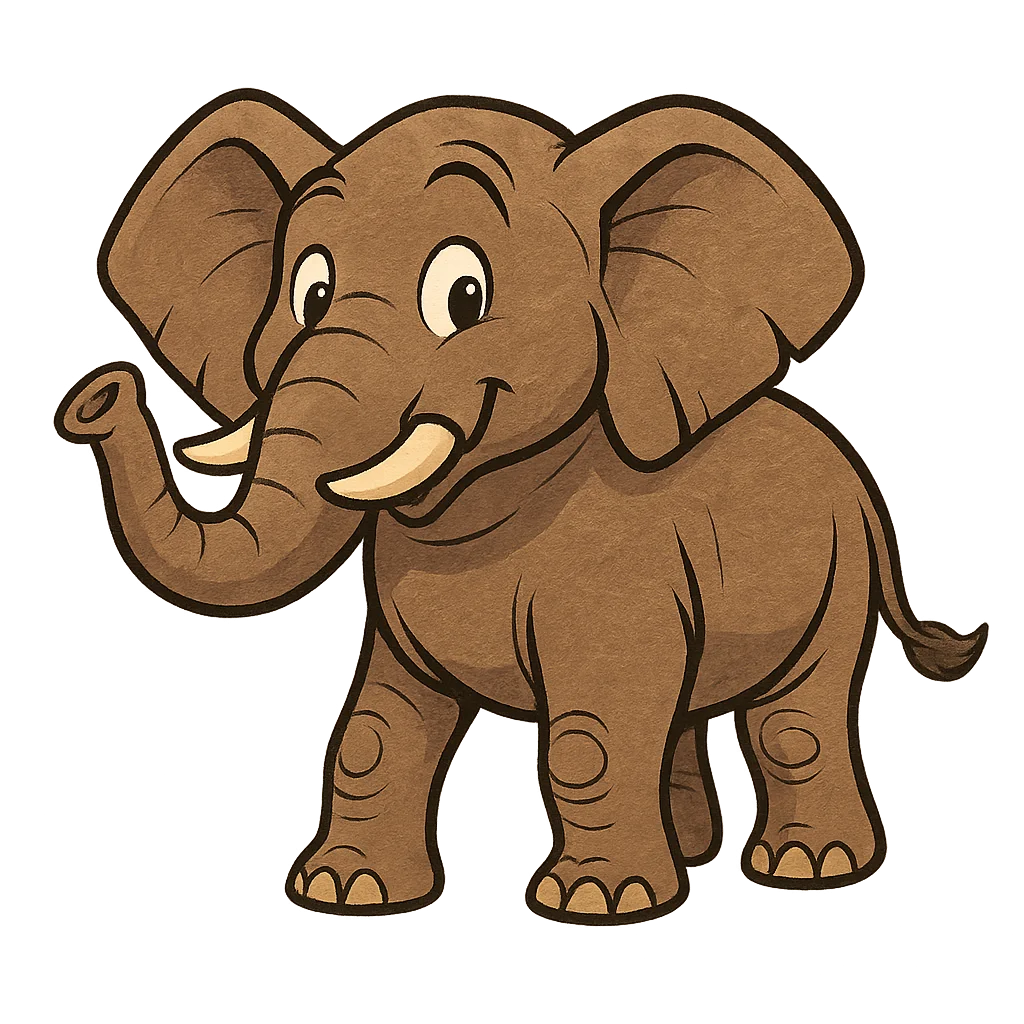
Hello. I am the matriarch of my herd, and my home is the wide, beautiful African savanna. Can you smell the sweet grass after a rain or hear the wind whispering through the acacia trees? I can. I am an African elephant, the largest animal walking on this Earth. My family is everything to me. It is made of my sisters, my daughters, and their children, and they all look to me for guidance. As the oldest and most experienced female, it is my job to lead them to food, water, and safety. I remember when I was just a small calf, always staying close to my mother’s side. The world seemed so big. I spent my days learning how to control my wobbly trunk, trying to pick up twigs and spray dust on my back just like she did.
My body is full of amazing tools that help me thrive. My trunk is the best multi-tool you could ever imagine. It has over 40,000 muscles, which allows me to do so many things. I use it to breathe in the scents of the savanna, to drink gallons of water in a single go, and to trumpet loud calls to my family. It is also gentle enough to pick a single, juicy berry from a bush without crushing it. My giant, floppy ears are not just for show, either. They help me hear the low rumbles of my family from miles away, letting us stay in touch even when we are far apart. But they also act as giant fans. When the sun is hot, I flap them back and forth to cool the blood flowing through them, which helps cool my whole body down. And then there are my tusks. They look impressive, but they are actually very long teeth that grow my whole life. I use them to dig for water under dry riverbeds, to pull tasty roots out of the ground, and to protect my family if danger comes near.
My herd and I have a very important job. You could call us the 'gardeners of the savanna.' As we travel, we eat many different kinds of fruits. Later, when we leave our dung behind, the seeds from those fruits are planted in a new place, helping to grow new trees and bushes across the land. We spread these seeds far and wide on our long journeys. We also create pathways through the thick brush by pushing aside plants, which makes it easier for smaller animals to travel. During the dry season, we use our tusks and feet to dig for underground water, creating waterholes that provide a drink for everyone, from the smallest mongoose to the tallest giraffe. My long memory, a skill passed down through generations since my ancestors were first described by scientists in 1797, helps me remember where to find these life-saving resources, year after year.
Our journey has not always been peaceful. For many years, our families lived in fear. Humans hunted us for our ivory tusks, and it was a very difficult and scary time. Our herds became smaller, and the sounds of our families grew quieter across the savanna. It felt like our future was uncertain. But then, a moment of hope arrived. In 1989, CITES banned the international commercial trade in African elephant ivory, with the ban coming into effect in 1990. CITES is a global agreement that banned international commercial trade in African elephant ivory in 1989, effective in 1990. This important decision was a turning point. It gave us a fighting chance to recover and showed us that many humans wanted to help us survive.
Today, my life continues on the savanna, and while there are still challenges, things are much brighter. We sometimes struggle to find enough space to roam as human settlements grow. However, many wonderful people are now our allies. They work hard to protect our habitats, create safe corridors for us to travel, and watch over our families to keep us safe from harm. I am a living piece of Africa’s history, a keeper of ancient memories, and a shaper of the land itself. My footsteps, and the footsteps of my herd, pave the way for the future of this ecosystem. By helping us thrive, humans help keep the entire savanna healthy and whole for all the generations to come.
Activities
Take a Quiz
Test what you learned with a fun quiz!
Get creative with colors!
Print a coloring book page of this topic.