English


Habitat
A habitat is the natural home or environment of an animal, plant, or other organism, providing the food…
Reads at Grades 3–5 Listens at Grades 1–5
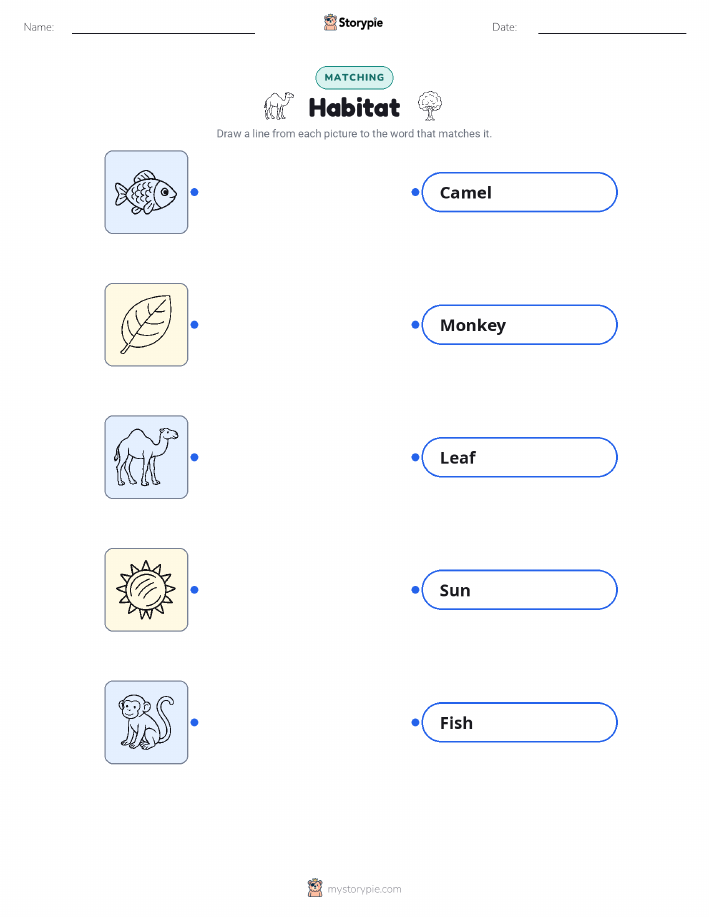
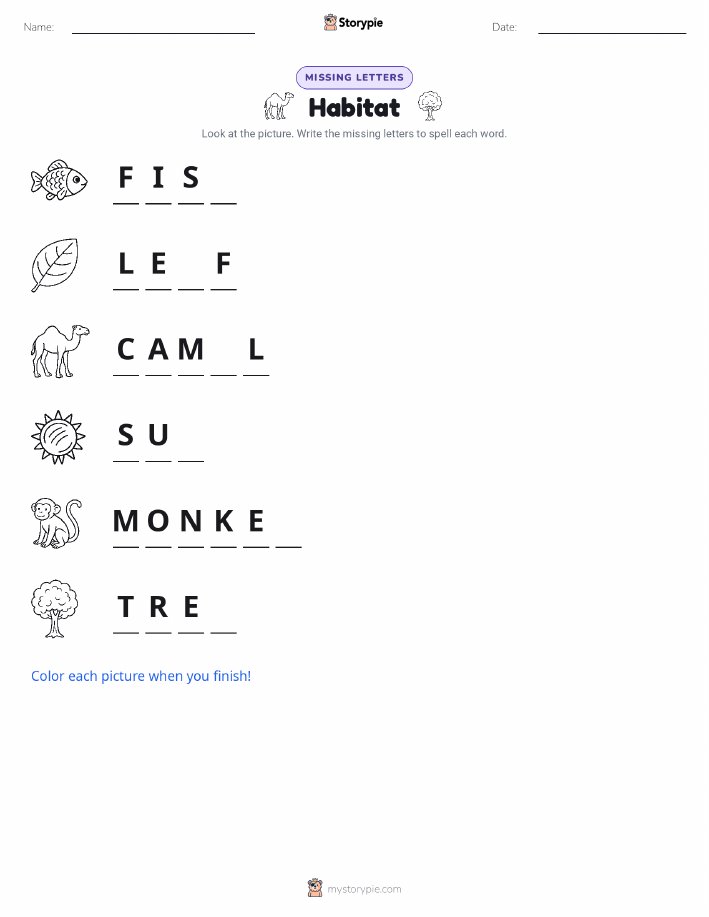
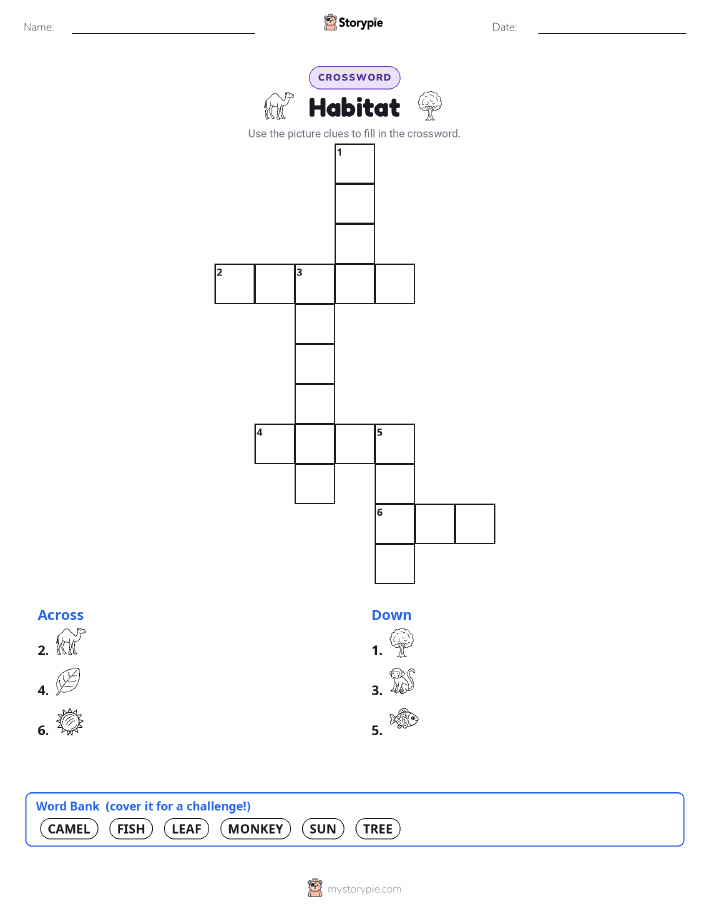
Print & create
Answer keys·No prep·Free with an account
28 worksheets · answer keys · full story · quiz · Ages 8-10 · CEFR B1
Plus adds 244,000+ more stories in 27 languages, audio for every one, and printables for all of them.
Just want Habitat?
I am the cool, dark water that swirls around a giant blue whale, holding it gently as it sings its deep, humming song. I am the rustling green leaves of a treetop, a bouncy castle for a spider monkey as it swings from branch to branch, chattering to its friends. Have you ever felt the sun bake the sand until it’s almost too hot to touch? I am that scorching desert, a cozy, warm blanket for a camel with long eyelashes that protect it from my sandy breezes. I can even be a noisy, bustling city, full of towering buildings and rumbling buses, where a clever pigeon finds the perfect ledge to build its nest. I am all of these places and more. I am the special, invisible home where every living creature belongs, from the tiniest ant to the tallest giraffe. I am a Habitat.
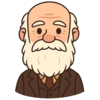
For a long, long time, people lived inside of me without really knowing my name or understanding how I worked. They saw the world around them, but they didn't always see the delicate connections that held everything together. Thousands of years ago, a wise man in ancient Greece named Aristotle sat by the sea, watching the world with curious eyes. He noticed that crabs scuttled along the rocky shore and fish darted through the salty waves. He realized that animals didn't just live anywhere they pleased. No, they had specific places where they found their food and shelter. He was one of the very first people to see my different rooms and begin to understand my secrets. Many, many centuries passed. Then, a brave and adventurous explorer named Alexander von Humboldt journeyed all across the world. He climbed towering, snow-capped mountains and paddled down twisting, jungle rivers. He saw that a fuzzy plant growing high on a cold peak looked very different from a giant-leafed plant in a steamy rainforest. He understood that I provide each living thing with the perfect conditions to thrive, almost like a custom-made suit of clothes. He called this beautiful connection “the web of life,” and he helped people see that every creature and plant was an important thread in a giant, wonderful pattern. Not long after, another brilliant scientist named Charles Darwin set sail on a grand adventure to faraway islands called the Galápagos. There, he met little birds called finches. He noticed something truly astonishing. On one island, where the only food was hard nuts, the finches had strong, thick beaks perfect for cracking them open. But on another island, where tiny insects hid in the bark of trees, the finches had thin, pointy beaks that worked like tweezers. Can you imagine having a special tool that was perfect for eating your favorite snack? Darwin realized that over a very, very long time, creatures change, or adapt, to become perfectly designed for their special part of me. This amazing process is called adaptation, and it’s how I help everyone survive.
I Am a Habitat
I am the cool, dark water that swirls around a giant blue whale, holding it gently as it sings its deep, humming song. I am the rustling green leaves of a treetop, a bouncy castle for a spider monkey as it swings from branch to branch, chattering to its friends. Have you ever felt the sun bake the sand until it’s almost too hot to touch? I am that scorching desert, a cozy, warm blanket for a camel with long eyelashes that protect it from my sandy breezes. I can even be a noisy, bustling city, full of towering buildings and rumbling buses, where a clever pigeon finds the perfect ledge to build its nest. I am all of these places and more. I am the special, invisible home where every living creature belongs, from the tiniest ant to the tallest giraffe. I am a Habitat.
For a long, long time, people lived inside of me without really knowing my name or understanding how I worked. They saw the world around them, but they didn't always see the delicate connections that held everything together. Thousands of years ago, a wise man in ancient Greece named Aristotle sat by the sea, watching the world with curious eyes. He noticed that crabs scuttled along the rocky shore and fish darted through the salty waves. He realized that animals didn't just live anywhere they pleased. No, they had specific places where they found their food and shelter. He was one of the very first people to see my different rooms and begin to understand my secrets. Many, many centuries passed. Then, a brave and adventurous explorer named Alexander von Humboldt journeyed all across the world. He climbed towering, snow-capped mountains and paddled down twisting, jungle rivers. He saw that a fuzzy plant growing high on a cold peak looked very different from a giant-leafed plant in a steamy rainforest. He understood that I provide each living thing with the perfect conditions to thrive, almost like a custom-made suit of clothes. He called this beautiful connection “the web of life,” and he helped people see that every creature and plant was an important thread in a giant, wonderful pattern. Not long after, another brilliant scientist named Charles Darwin set sail on a grand adventure to faraway islands called the Galápagos. There, he met little birds called finches. He noticed something truly astonishing. On one island, where the only food was hard nuts, the finches had strong, thick beaks perfect for cracking them open. But on another island, where tiny insects hid in the bark of trees, the finches had thin, pointy beaks that worked like tweezers. Can you imagine having a special tool that was perfect for eating your favorite snack? Darwin realized that over a very, very long time, creatures change, or adapt, to become perfectly designed for their special part of me. This amazing process is called adaptation, and it’s how I help everyone survive.
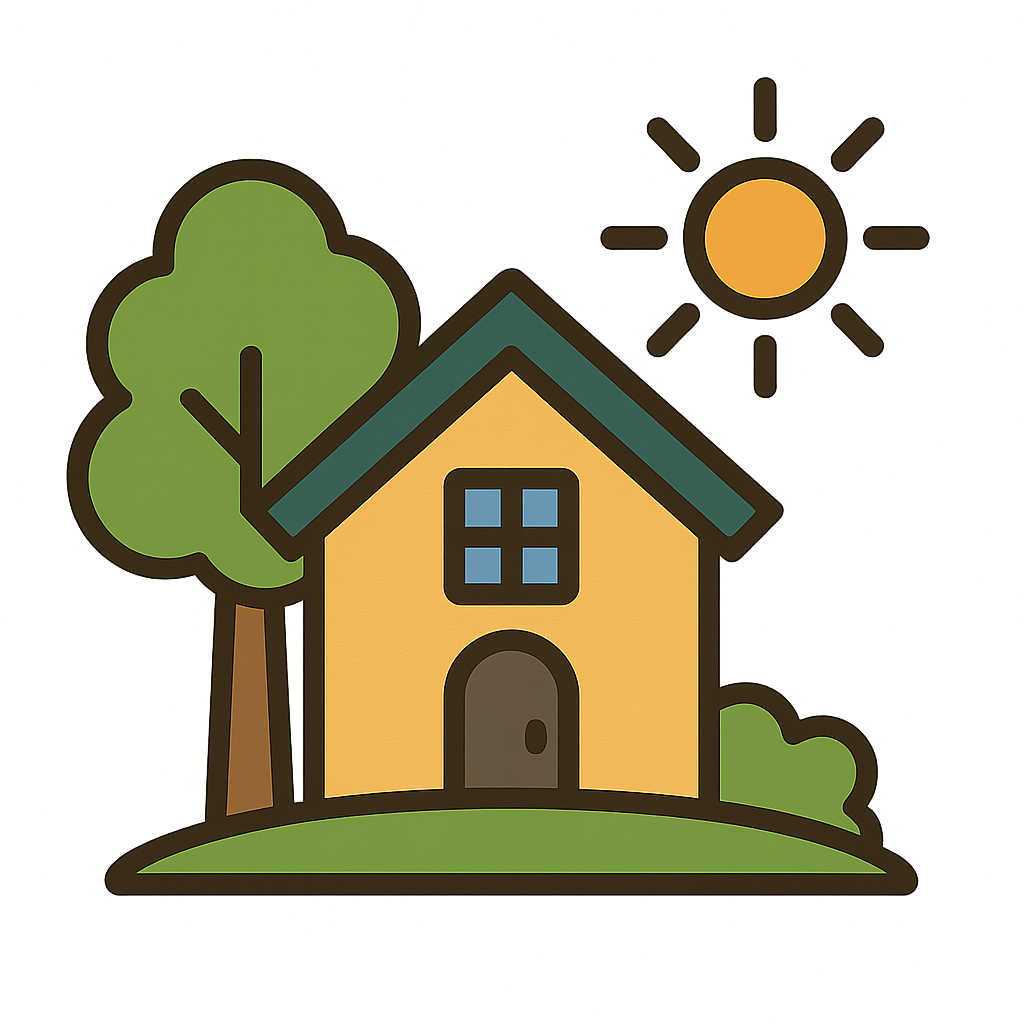
You have a home inside me, too. It might be a cozy house in a quiet town, a tall apartment building in a busy city, or a farmhouse surrounded by open fields. All of these are human habitats, and they are just as important as the ocean or the forest. Because I am one big, shared home for everyone—the fish, the monkeys, the camels, and you—we all have to be good neighbors. When we keep the oceans clean from trash, we are taking care of the whale’s living room and the fish’s kitchen. When we plant new trees, we are building new bedrooms for the birds and squirrels. Protecting me isn’t a job for just one person; it’s a team effort for all of us. Every time you recycle a plastic bottle, turn off a light when you leave a room, or help clean up a local park, you are helping to keep all of my rooms safe and healthy for every living thing. We all share this one amazing world, and together, we can make sure every habitat is a wonderful, beautiful home for generations to come.
Wow facts
About
A habitat is the natural home or environment of an animal, plant, or other organism, providing the food, water, shelter, and space it needs to survive.
Take a Quiz
Question 1 of 5
The story says Alexander von Humboldt saw how plants were 'perfectly suited for their environments.' What does the word 'suited' mean here?
Explore next

Want to do even more?
Go beyond exploring. Unlock tools that turn every story into real learning.

Storypie Plus for families
Full stories, quizzes, and printables. Nights and car rides, sorted.
- Unlimited audio stories
- Create Mode: your child stars in the story
- Offline downloads
- Printable worksheets & coloring pages

Why Storypie for Schools
Students engaged. Prep in seconds. Evenings back to you.
- Worksheets & Quizzes
- Classroom Management
- Formative Assessment
- Custom Curriculum & Lesson Plans
- 27 Languages

Why Storypie for Homeschool
Curriculum done. They'll ask for more. Hours back in your day.
- Worksheet Generator
- First-Person Audio Stories
- Built-in Comprehension Quizzes
- Custom Curriculum & Lesson Plans
- Print & Go Activities