English

Ecology
Ecology is the scientific study of the relationships between living organisms, including humans…
Reads at Grades K-2 Listens at K–3
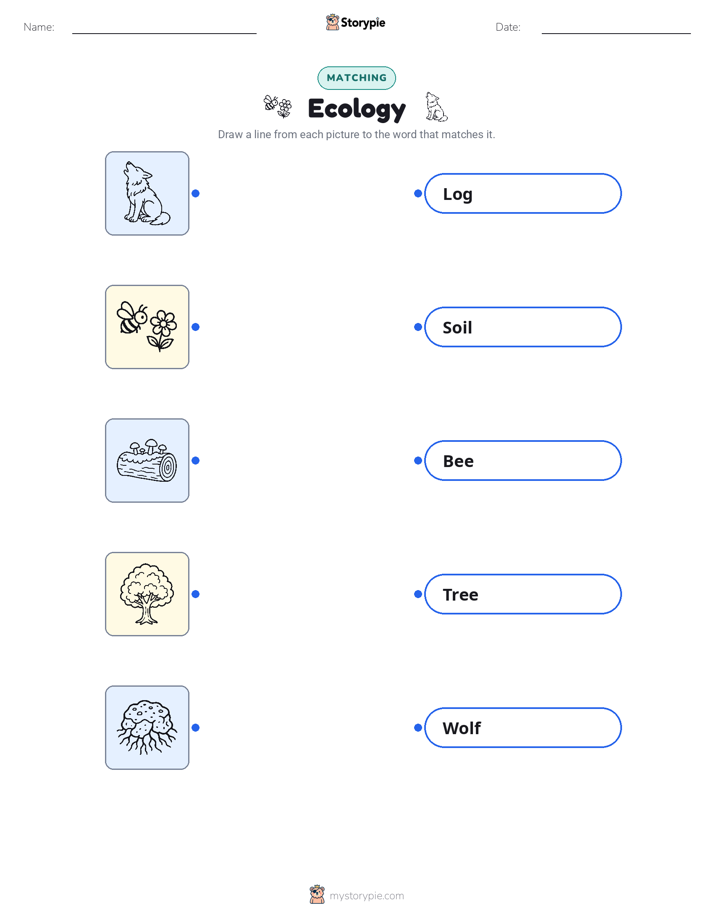
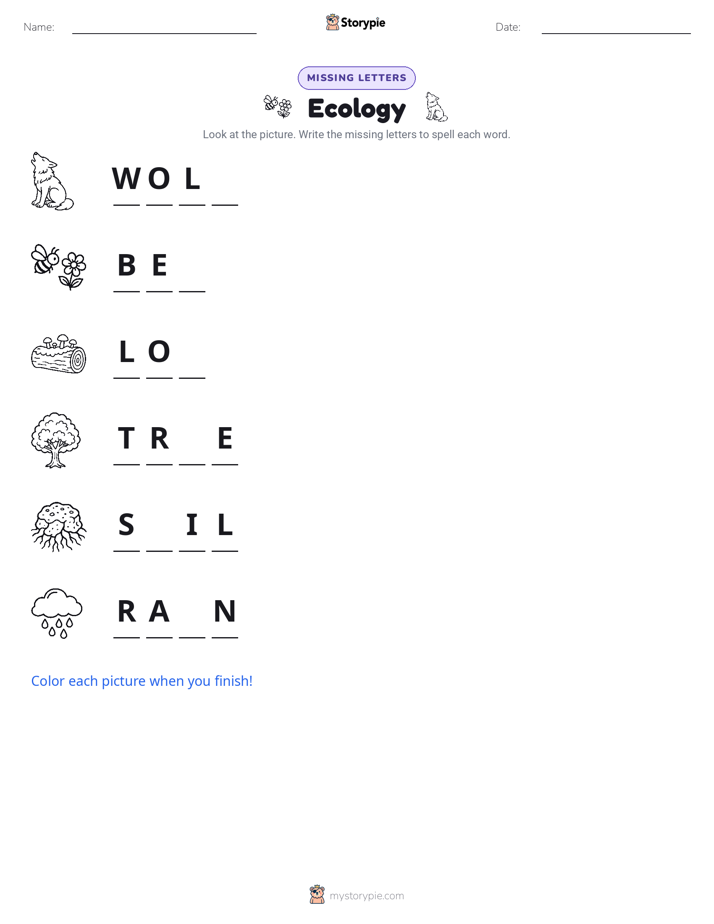
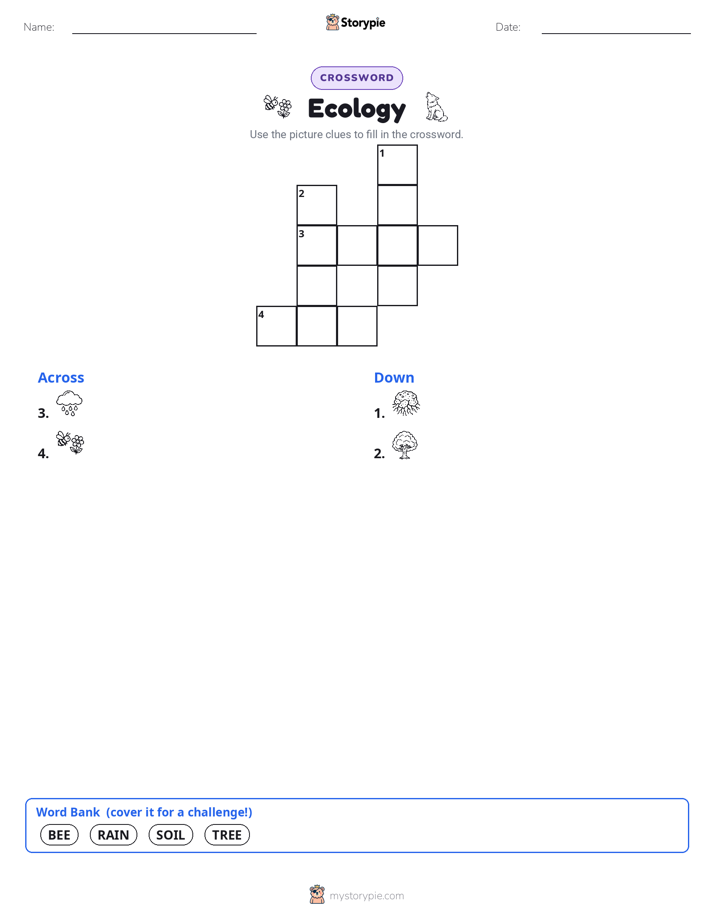
Print & create
Answer keys·No prep·Free with an account
28 worksheets · answer keys · full story · quiz · Ages 6-8 · CEFR A2
Plus adds 164,000+ more stories in 27 languages, audio for every one, and printables for all of them.
Just want Ecology?
Have you ever watched a fuzzy bee buzz from one bright flower to another. The bee is sipping sweet nectar for its lunch, and at the same time, it carries dusty pollen that helps the flower make new seeds. Have you ever seen a busy squirrel bury an acorn in the ground. It might forget where it left its snack, but a mighty oak tree can grow from that very spot. That tree then becomes a home for chirping birds and a shady place for you to play. It’s like a secret puzzle where every piece fits together perfectly. All around you, there is an invisible web connecting every living thing, from the tiniest ant crawling on the sidewalk to the giant blue whale swimming in the ocean. This web is a beautiful secret, a special connection that makes our world work. I am the secret that connects everything. I am Ecology.
People have noticed my invisible web for a very, very long time. Thousands of years ago, even back in ancient Greece around the 4th century BCE, smart thinkers like a man named Theophrastus watched plants and animals and wrote down how they all seemed to help each other live. But for a long time, I didn't have a proper name. People just knew that everything in nature was connected. Then, one day, a scientist from Germany named Ernst Haeckel decided I needed a special name to help everyone understand me. On October 10th, 1866, he gave me my official name, Ecology. He made it from two old Greek words that mean 'the study of our home'. Because that's what I am, the story of how everything lives together in our shared home, the Earth. Later, my story became even more important. A brave scientist named Rachel Carson saw that my web was in trouble. In 1962, she wrote a famous book called 'Silent Spring'. Her book showed everyone that harmful chemicals being sprayed on farms were hurting birds and other animals, making the springtime quiet. It was a wake-up call that reminded people to protect our home.
The Invisible Web of Ecology
Have you ever watched a fuzzy bee buzz from one bright flower to another. The bee is sipping sweet nectar for its lunch, and at the same time, it carries dusty pollen that helps the flower make new seeds. Have you ever seen a busy squirrel bury an acorn in the ground. It might forget where it left its snack, but a mighty oak tree can grow from that very spot. That tree then becomes a home for chirping birds and a shady place for you to play. It’s like a secret puzzle where every piece fits together perfectly. All around you, there is an invisible web connecting every living thing, from the tiniest ant crawling on the sidewalk to the giant blue whale swimming in the ocean. This web is a beautiful secret, a special connection that makes our world work. I am the secret that connects everything. I am Ecology.
People have noticed my invisible web for a very, very long time. Thousands of years ago, even back in ancient Greece around the 4th century BCE, smart thinkers like a man named Theophrastus watched plants and animals and wrote down how they all seemed to help each other live. But for a long time, I didn't have a proper name. People just knew that everything in nature was connected. Then, one day, a scientist from Germany named Ernst Haeckel decided I needed a special name to help everyone understand me. On October 10th, 1866, he gave me my official name, Ecology. He made it from two old Greek words that mean 'the study of our home'. Because that's what I am, the story of how everything lives together in our shared home, the Earth. Later, my story became even more important. A brave scientist named Rachel Carson saw that my web was in trouble. In 1962, she wrote a famous book called 'Silent Spring'. Her book showed everyone that harmful chemicals being sprayed on farms were hurting birds and other animals, making the springtime quiet. It was a wake-up call that reminded people to protect our home.
Today, you can find me working everywhere. I am in your backyard, where worms wiggle through the soil to help your plants grow strong. I am in the city park, where squirrels and birds find food and shelter in the trees. I am in the deepest oceans and the tallest mountains. Scientists who study me are called ecologists, and they work hard to understand my connections. They learn how to protect animals that are in danger, like tigers and sea turtles. They figure out the best ways to keep forests healthy so they can clean our air, and they help make sure our rivers and lakes have clean water for everyone to drink. And guess what. You are an important part of my web, too. Every time you help plant a garden, watch the birds from your window, or put a plastic bottle in the recycling bin, you are helping to keep me strong and healthy. Together, we can all be ecologists who take care of our wonderful home, the Earth.
Wow facts
About
Ecology is the scientific study of the relationships between living organisms, including humans, and their physical environment, focusing on the connections within ecosystems.
Take a Quiz
Question 1 of 4
Who gave the name 'Ecology' to the study of nature's connections in 1866?
Explore next


Want to do even more?
Go beyond exploring. Unlock tools that turn every story into real learning.

Storypie Plus for families
Full stories, quizzes, and printables. Nights and car rides, sorted.
- Unlimited audio stories
- Create Mode: your child stars in the story
- Offline downloads
- Printable worksheets & coloring pages

Why Storypie for Schools
Students engaged. Prep in seconds. Evenings back to you.
- Worksheets & Quizzes
- Classroom Management
- Formative Assessment
- Custom Curriculum & Lesson Plans
- 27 Languages

Why Storypie for Homeschool
Curriculum done. They'll ask for more. Hours back in your day.
- Worksheet Generator
- First-Person Audio Stories
- Built-in Comprehension Quizzes
- Custom Curriculum & Lesson Plans
- Print & Go Activities