English

Ecology
Ecology is the scientific study of the relationships between living organisms, including humans…
Reads at Grades 3–5 Listens at Grades 1–5
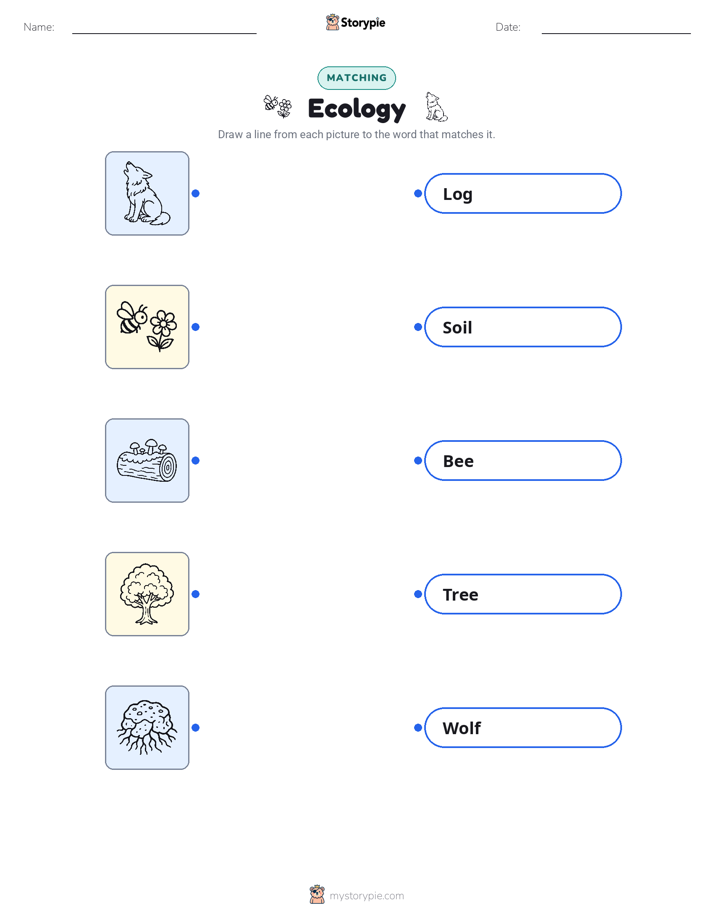
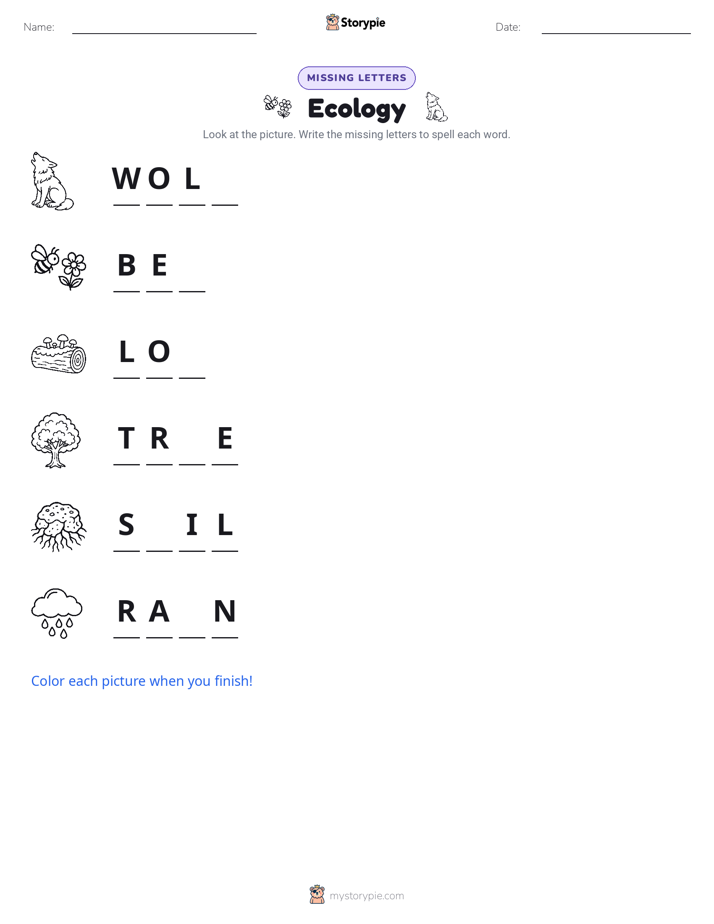
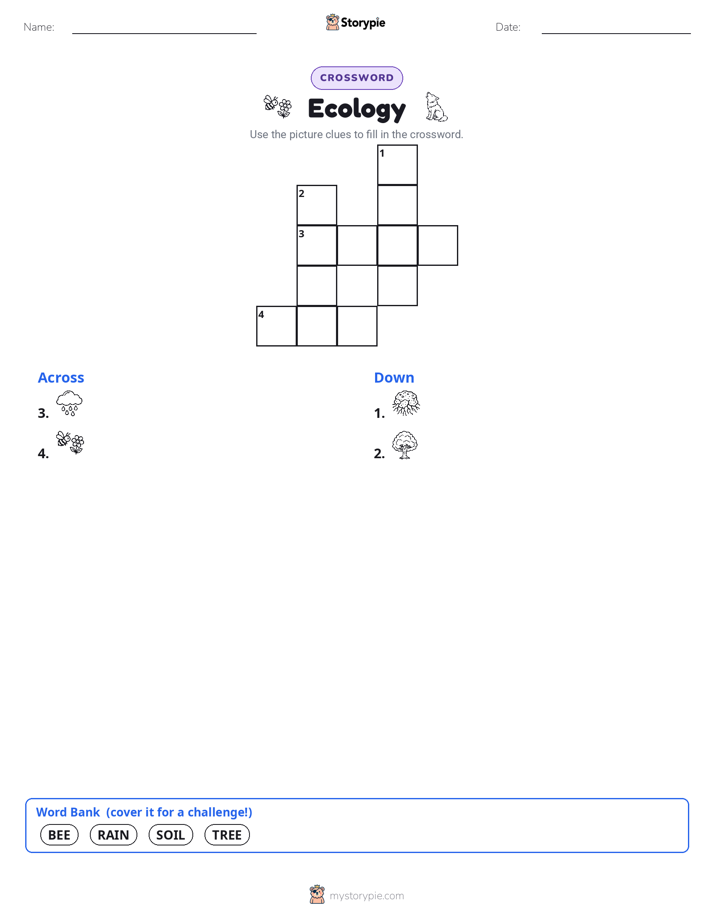
Print & create
Answer keys·No prep·Free with an account
28 worksheets · answer keys · full story · quiz · Ages 8-10 · CEFR B1
Plus adds 164,000+ more stories in 27 languages, audio for every one, and printables for all of them.
Just want Ecology?
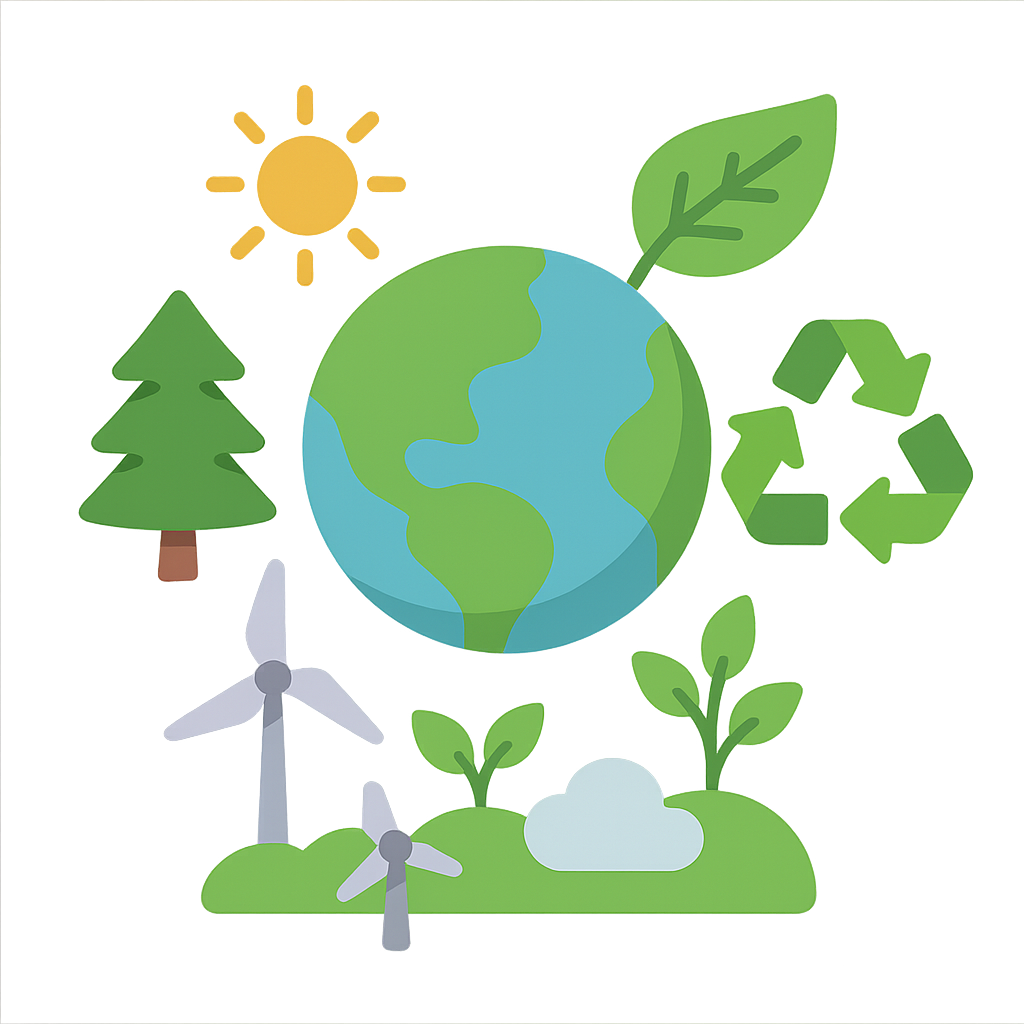
Have you ever watched a fuzzy bee dance from one bright flower to the next. It sips sweet nectar, but it also carries a sprinkle of yellow dust, called pollen, helping the flowers make seeds. Or have you seen a squirrel bury an acorn and then forget where it is. That forgotten snack might one day grow into a giant oak tree, giving shade and homes to countless other creatures. Can you feel the invisible threads that tie them all together. From the sunlight that feeds the tiniest blade of grass, to the rabbit that nibbles on it, to the fox that hunts the rabbit, there is a secret pattern. It’s a giant, hidden web that connects every living thing to the soil, the water, and the air. I am that web. I am the story of how everything fits together. My name is Ecology.
For thousands of years, people have noticed my secret connections, even if they didn't know my name. In ancient Greece, more than two thousand years ago, a man named Theophrastus, who lived around 300 BCE, was one of the first to write me down. He was a great observer who filled scrolls with notes about how different plants needed just the right amount of sun or a specific kind of soil to grow strong. He saw that a plant wasn't just a plant; it was part of a neighborhood. Much later, in the early 1800s, a brave explorer from Germany named Alexander von Humboldt traveled the world. He climbed tall mountains and paddled through steamy jungles, and everywhere he went, he saw me. He didn’t just see separate animals and plants; he saw one great web of life, a living tapestry where everything depended on everything else. He was one of the first to see the big picture. Then came the day I finally got my name. In 1866, another German scientist, Ernst Haeckel, thought it was time to give the study of nature’s family a formal title. He took two words from Greek, 'oikos,' which means 'home,' and 'logos,' which means 'study.' He put them together to create 'oekologie,' the study of our home. Suddenly, I wasn't just a secret feeling or a curious observation anymore. I was a science. Having a name meant people could study my rules and understand our planet in a whole new way.
The Secret Story of Our Shared Home
Have you ever watched a fuzzy bee dance from one bright flower to the next. It sips sweet nectar, but it also carries a sprinkle of yellow dust, called pollen, helping the flowers make seeds. Or have you seen a squirrel bury an acorn and then forget where it is. That forgotten snack might one day grow into a giant oak tree, giving shade and homes to countless other creatures. Can you feel the invisible threads that tie them all together. From the sunlight that feeds the tiniest blade of grass, to the rabbit that nibbles on it, to the fox that hunts the rabbit, there is a secret pattern. It’s a giant, hidden web that connects every living thing to the soil, the water, and the air. I am that web. I am the story of how everything fits together. My name is Ecology.
For thousands of years, people have noticed my secret connections, even if they didn't know my name. In ancient Greece, more than two thousand years ago, a man named Theophrastus, who lived around 300 BCE, was one of the first to write me down. He was a great observer who filled scrolls with notes about how different plants needed just the right amount of sun or a specific kind of soil to grow strong. He saw that a plant wasn't just a plant; it was part of a neighborhood. Much later, in the early 1800s, a brave explorer from Germany named Alexander von Humboldt traveled the world. He climbed tall mountains and paddled through steamy jungles, and everywhere he went, he saw me. He didn’t just see separate animals and plants; he saw one great web of life, a living tapestry where everything depended on everything else. He was one of the first to see the big picture. Then came the day I finally got my name. In 1866, another German scientist, Ernst Haeckel, thought it was time to give the study of nature’s family a formal title. He took two words from Greek, 'oikos,' which means 'home,' and 'logos,' which means 'study.' He put them together to create 'oekologie,' the study of our home. Suddenly, I wasn't just a secret feeling or a curious observation anymore. I was a science. Having a name meant people could study my rules and understand our planet in a whole new way.
As time marched on into the 20th century, people built bigger cities and amazing machines. But sometimes, in their hurry to build and invent, they forgot about my delicate connections. Their actions began to pull and tear at my web. Then, a brave scientist named Rachel Carson spoke up. She used her words to sound a very important alarm. On September 27th, 1962, her book 'Silent Spring' was published. In its pages, she told a powerful and scary story. She explained how chemicals that farmers were spraying on their fields to protect crops were poisoning insects. But it didn't stop there. The birds that ate those insects were getting sick and disappearing. She warned that if things didn't change, we might one day wake up to a spring that was strangely quiet, with no birdsongs to fill the air. Her book was a huge wake-up call for the whole world. It made people realize that their actions, even small ones, could have huge effects on all of nature. It helped start the modern environmental movement, inspiring people to protect the air, water, and animals that make up our home.
Today, the people who study my story are called ecologists. They are like nature’s detectives, working to solve big puzzles like climate change and how to protect animals that are in danger of disappearing forever. They help us understand how to live in a way that keeps my web strong and healthy. And guess what. You are an ecologist, too. You don't need a lab coat or a fancy notebook. Every time you decide to recycle a bottle, help plant flowers in a garden for the bees, or just sit quietly and watch how a spider builds its web, you are practicing ecology. You are paying attention to the connections that hold our world together. I am the story of our wonderful, shared home, and by understanding me, we can all become better caretakers for our amazing planet.
Wow facts
About
Ecology is the scientific study of the relationships between living organisms, including humans, and their physical environment, focusing on the connections within ecosystems.
Take a Quiz
Question 1 of 5
In the story, what does the phrase 'a huge wake-up call' mean when talking about Rachel Carson's book?
Explore next


Want to do even more?
Go beyond exploring. Unlock tools that turn every story into real learning.

Storypie Plus for families
Full stories, quizzes, and printables. Nights and car rides, sorted.
- Unlimited audio stories
- Create Mode: your child stars in the story
- Offline downloads
- Printable worksheets & coloring pages

Why Storypie for Schools
Students engaged. Prep in seconds. Evenings back to you.
- Worksheets & Quizzes
- Classroom Management
- Formative Assessment
- Custom Curriculum & Lesson Plans
- 27 Languages

Why Storypie for Homeschool
Curriculum done. They'll ask for more. Hours back in your day.
- Worksheet Generator
- First-Person Audio Stories
- Built-in Comprehension Quizzes
- Custom Curriculum & Lesson Plans
- Print & Go Activities