English

Ecology
Ecology is the scientific study of the relationships between living organisms, including humans…
Reads at Grades 6–8 Listens at Grades 4–8
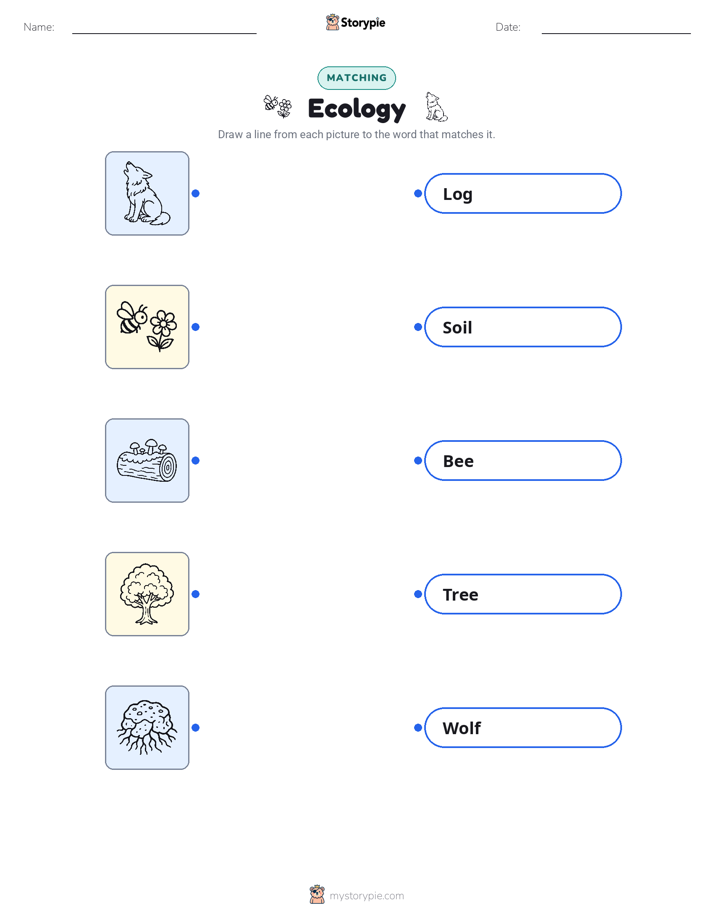
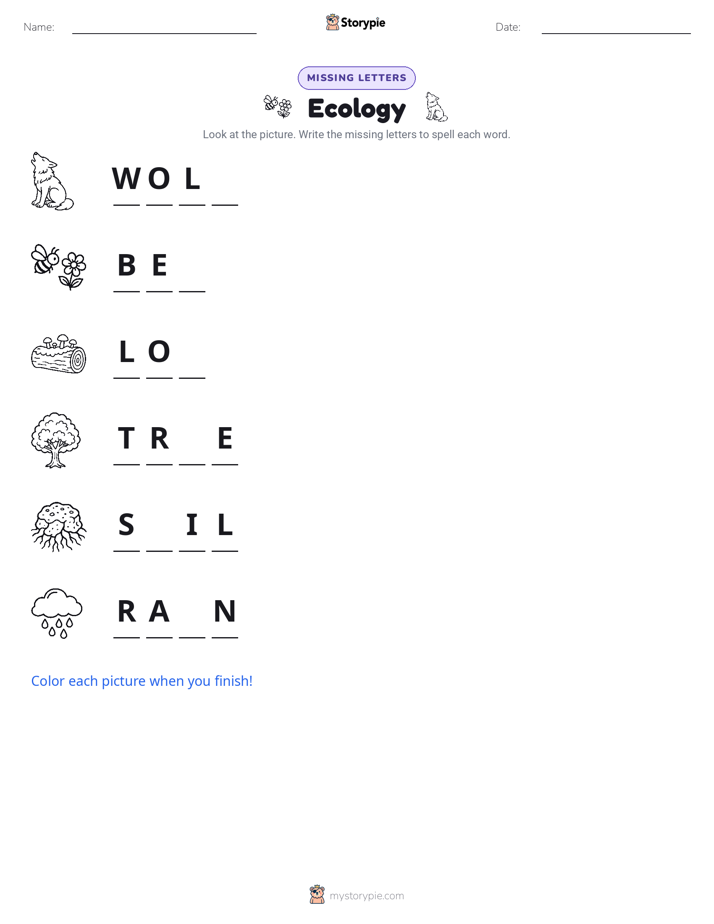
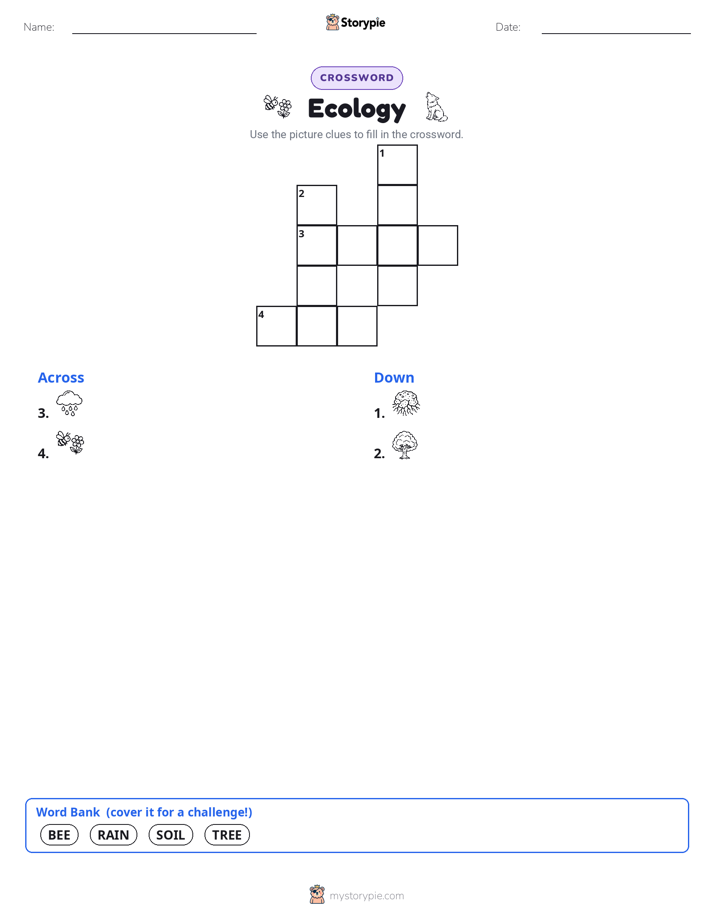
Print & create
Answer keys·No prep·Free with an account
28 worksheets · answer keys · full story · quiz · Ages 10-12 · CEFR B2
Plus adds 164,000+ more stories in 27 languages, audio for every one, and printables for all of them.
Just want Ecology?
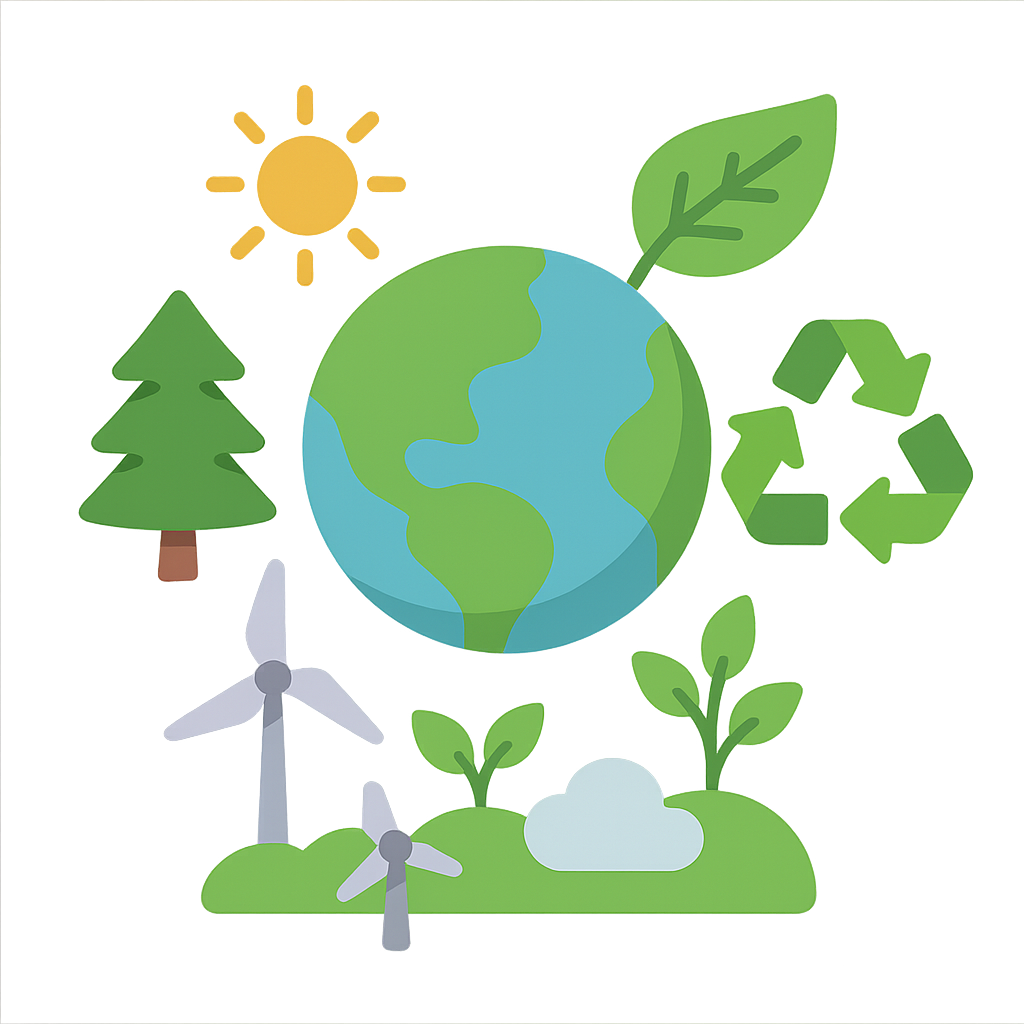
Have you ever wondered how a wolf’s howl can change the path of a river? Or why a tiny bee, buzzing from flower to flower, is responsible for the crisp apple you eat for a snack? Have you seen a fallen log in the forest and noticed how it becomes a bustling city for bright green moss, strange-looking mushrooms, and countless tiny insects? I am the reason for all of it. I am the secret conversation happening between the tallest trees, the dark soil beneath your feet, and the gentle rain that falls from the sky. Think of me as a giant, invisible web. This web connects every single living thing, from the smallest bacteria you can’t even see to the biggest blue whale swimming in the ocean’s depths. Every thread is a relationship, a dependence, a partnership. When one thread is plucked, the whole web shivers. I am the grand story of our planet’s family, the blueprint for how life works together in a delicate, beautiful dance. I am Ecology.
For thousands of years, people felt my presence even if they didn’t have a name for me. Farmers knew to rotate their crops because they understood the soil needed to rest. Hunters knew the migration patterns of animals, understanding their connection to the seasons. This knowledge was woven into stories and traditions. The first person to try and write it all down systematically was a man in ancient Greece named Theophrastus, who lived in the 4th century BCE. He carefully documented how different plants were affected by their surroundings, from the soil to the climate. He was one of the first to look at a plant not just as a thing, but as part of a neighborhood. Centuries flew by, and in the early 1800s, a daring German explorer named Alexander von Humboldt traveled the world. As he climbed mountains and navigated rivers in South America, he saw that nature wasn’t just a collection of separate parts. He described it as a “living whole,” an interconnected force where a plant on a high mountain was related to the climate of the entire continent. But the biggest piece of the puzzle arrived on November 24th, 1859, when Charles Darwin published his book, 'On the Origin of Species.' He gave everyone the 'why'—explaining that these relationships, this constant struggle and cooperation, were the very engine of evolution, shaping all life over millions of years. Finally, in 1866, another German scientist named Ernst Haeckel gave me the name I have today. He combined two Greek words: 'oikos,' meaning 'house,' and 'logos,' meaning 'study.' I became 'oekologie'—the study of nature’s house. And much later, in 1935, a botanist named Arthur Tansley gave a name to the individual rooms in my house, calling them 'ecosystems.'
The Story of Ecology
Have you ever wondered how a wolf’s howl can change the path of a river? Or why a tiny bee, buzzing from flower to flower, is responsible for the crisp apple you eat for a snack? Have you seen a fallen log in the forest and noticed how it becomes a bustling city for bright green moss, strange-looking mushrooms, and countless tiny insects? I am the reason for all of it. I am the secret conversation happening between the tallest trees, the dark soil beneath your feet, and the gentle rain that falls from the sky. Think of me as a giant, invisible web. This web connects every single living thing, from the smallest bacteria you can’t even see to the biggest blue whale swimming in the ocean’s depths. Every thread is a relationship, a dependence, a partnership. When one thread is plucked, the whole web shivers. I am the grand story of our planet’s family, the blueprint for how life works together in a delicate, beautiful dance. I am Ecology.
For thousands of years, people felt my presence even if they didn’t have a name for me. Farmers knew to rotate their crops because they understood the soil needed to rest. Hunters knew the migration patterns of animals, understanding their connection to the seasons. This knowledge was woven into stories and traditions. The first person to try and write it all down systematically was a man in ancient Greece named Theophrastus, who lived in the 4th century BCE. He carefully documented how different plants were affected by their surroundings, from the soil to the climate. He was one of the first to look at a plant not just as a thing, but as part of a neighborhood. Centuries flew by, and in the early 1800s, a daring German explorer named Alexander von Humboldt traveled the world. As he climbed mountains and navigated rivers in South America, he saw that nature wasn’t just a collection of separate parts. He described it as a “living whole,” an interconnected force where a plant on a high mountain was related to the climate of the entire continent. But the biggest piece of the puzzle arrived on November 24th, 1859, when Charles Darwin published his book, 'On the Origin of Species.' He gave everyone the 'why'—explaining that these relationships, this constant struggle and cooperation, were the very engine of evolution, shaping all life over millions of years. Finally, in 1866, another German scientist named Ernst Haeckel gave me the name I have today. He combined two Greek words: 'oikos,' meaning 'house,' and 'logos,' meaning 'study.' I became 'oekologie'—the study of nature’s house. And much later, in 1935, a botanist named Arthur Tansley gave a name to the individual rooms in my house, calling them 'ecosystems.'
For a long time, as humans built incredible cities and invented amazing machines, they sometimes forgot about my delicate web. They saw nature as something to be used, not something they were a part of. The consequences of this forgetting grew quietly, until a brave biologist gave me a powerful voice. Her name was Rachel Carson. On September 27th, 1962, she published a book called 'Silent Spring.' In its pages, she used my principles to tell a frightening story. A powerful chemical, designed to kill insects on farms, was not staying put. It was being washed by rain into rivers, where fish absorbed it. Birds then ate the fish, and the poison became more and more concentrated as it moved up the food chain. The birds began to disappear. The spring, once filled with birdsong, was growing quiet. Rachel Carson’s book was a stunning wake-up call. It showed the world, in clear and undeniable terms, that you cannot simply do one thing in nature. Every action ripples across the entire web. People were shocked, but they were also inspired. Her work helped launch the modern environmental movement. On April 22nd, 1970, millions of people across the United States participated in the very first Earth Day, marching and demanding better protection for our shared home. I was no longer just a subject for scientists; I was a cause for everyone.
Today, you and I are part of the same story, and it’s more important than ever. I am the tool scientists use to understand some of our planet's biggest challenges, like climate change. I help them figure out how melting ice in the Arctic affects weather thousands of miles away, or how to design a wildlife corridor so endangered tigers can roam safely. But I am not just for scientists in labs or explorers in faraway jungles. I am right there in the park where you play, a complex ecosystem of squirrels, oak trees, grass, and worms. I am in the small garden where tomatoes grow, relying on bees for pollination and good soil for nutrients. You interact with me every time you choose to recycle a plastic bottle, turn off a light to save energy, or decide not to waste food. Each of these small actions sends a positive ripple through my web. Understanding me is like being given a map to a healthier, more hopeful future for our world. By seeing the invisible connections that link you to the air you breathe, the water you drink, and the life all around you, you become a guardian of our planet’s beautiful, complicated, and wonderful home. You are a vital thread in my web, and together, we can make sure our story is a long and happy one.
Wow facts
About
Ecology is the scientific study of the relationships between living organisms, including humans, and their physical environment, focusing on the connections within ecosystems.
Take a Quiz
Question 1 of 5
What is the main idea of this story?
Explore next


Want to do even more?
Go beyond exploring. Unlock tools that turn every story into real learning.

Storypie Plus for families
Full stories, quizzes, and printables. Nights and car rides, sorted.
- Unlimited audio stories
- Create Mode: your child stars in the story
- Offline downloads
- Printable worksheets & coloring pages

Why Storypie for Schools
Students engaged. Prep in seconds. Evenings back to you.
- Worksheets & Quizzes
- Classroom Management
- Formative Assessment
- Custom Curriculum & Lesson Plans
- 27 Languages

Why Storypie for Homeschool
Curriculum done. They'll ask for more. Hours back in your day.
- Worksheet Generator
- First-Person Audio Stories
- Built-in Comprehension Quizzes
- Custom Curriculum & Lesson Plans
- Print & Go Activities