English
 For Schools
 For Homeschool

A Song of the Deep: My Life as a Blue Whale
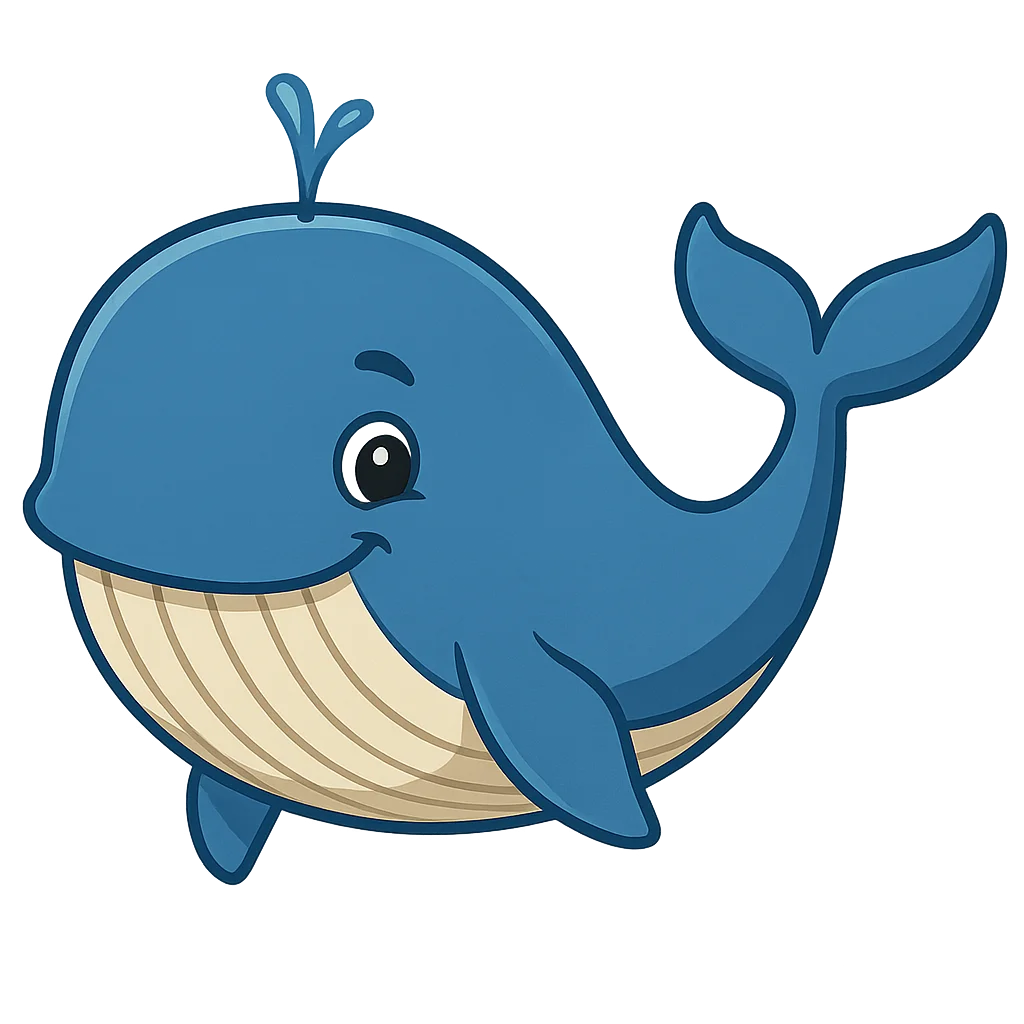
Hello. I am a blue whale, and my story is as vast as the ocean I call home. I belong to a species that is the largest ever to have lived on Earth, even bigger than the mightiest dinosaurs. My life began not in the frigid depths, but in the gentle, warm tropical waters of the planet. From my very first breath, I was immense. Imagine a school bus gliding through the water—that was my length the day I was born. I weighed approximately the same as a full-grown female Asian elephant at birth, a truly giant baby. For the first year of my life, I never strayed far from my mother's side. She was my entire world, my protector and my source of life. I drank her milk, which was so rich and fatty that it helped me grow at an unbelievable rate. Each day, I gained about 200 pounds, a pace of growth that is difficult for humans to comprehend. This rapid development was essential, preparing me for the long journeys and the cold waters that would define the rest of my life.
My existence is one of constant movement, a life of song and travel across the globe's oceans. Every year, I undertake a tremendous migration, a journey that spans thousands of miles. I swim from polar feeding grounds to warmer equatorial breeding grounds, though patterns can vary among populations. This epic voyage is driven by the seasons and the fundamental need to feed. To navigate this vast, seemingly empty expanse, I have a special tool: my voice. I sing deep, rumbling songs that are some of the most powerful and loudest sounds produced by any animal on the planet. These low-frequency calls travel for hundreds of miles through the water, a form of long-distance communication. It is how I speak with other blue whales, sharing my location or finding a mate across the lonely, blue wilderness of the ocean.
To power a body as massive as mine, I must consume an enormous amount of food. My diet consists almost exclusively of tiny, shrimp-like creatures called krill. Though they are small, they gather in enormous swarms, and I have developed a highly efficient method for catching them called lunge-feeding. I will accelerate toward a dense cloud of krill and open my enormous mouth, engulfing a volume of water and krill that can be larger than my own body. My throat has pleats that expand like an accordion to accommodate this massive gulp. Once my mouth is full, I use my powerful tongue to push the water out through a special filter inside my mouth. This filter is made of baleen plates, which are fringed, comb-like structures that hang from my upper jaw. They work like a giant sieve, trapping millions of krill inside for me to swallow. On a good day, I can consume up to 16 tons of krill per day during feeding seasons, a necessary feast to fuel my long migrations and sustain my colossal size.
While I am the largest creature in the sea, my kind has not always been safe. The 1900s brought a period of great danger for us. Humans developed new, powerful whaling ships with steam engines and explosive harpoons, which made it possible to hunt even the largest and fastest whales. For decades, my species was hunted relentlessly, and our numbers fell so low that we were pushed to the very edge of extinction. It was a dark and difficult time for blue whales. But then, a moment of hope arrived. In the year 1966, the International Whaling Commission granted my species worldwide protection from commercial whaling. This global agreement was a promise to let us recover and live in peace. While we are no longer hunted, we still face modern challenges. I must be careful to avoid collisions with large cargo ships, and the ocean has become a much noisier place due to human activity, which can interfere with my songs and my ability to navigate.
Legacy & Remembering
My story is one of survival, but my role in the ocean is about more than just existing. I am an ocean gardener, and my presence helps keep the entire marine ecosystem healthy. When I feed in the deep and return to the surface, I release enormous plumes of waste that are rich in essential nutrients, like iron and nitrogen. This process, which scientists sometimes call the 'whale pump,' is an ecological process where whales feed at depth and release nutrient-rich fecal plumes near the surface, enhancing primary production. There, they act as fertilizer for phytoplankton, the microscopic plants that form the very base of the ocean's food web. These phytoplankton not only feed countless other creatures, from tiny krill to large fish, but they also produce a huge portion of the oxygen that everyone on the planet breathes. My journey shows that every creature, no matter how large, has a crucial part to play in the health of our world.
Activities
Take a Quiz
Test what you learned with a fun quiz!
Get creative with colors!
Print a coloring book page of this topic.