
 English
 For Schools
 For Homeschool

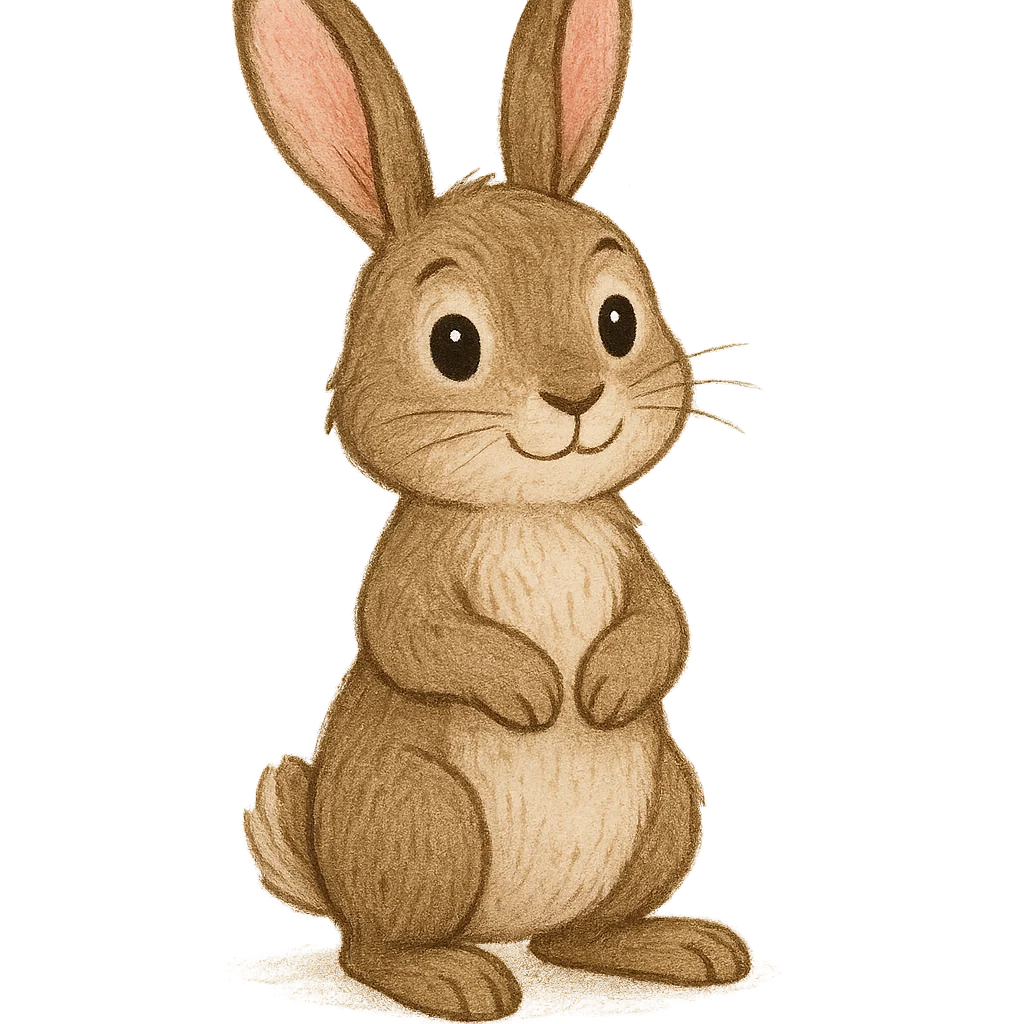
The Tale of the European Rabbit
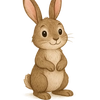
Hello, I am a European Rabbit, and my scientific name is Oryctolagus cuniculus. My story begins not in a grassy field, but underground, in a cozy, sun-warmed burrow called a warren. I was born on the Iberian Peninsula, the ancestral home of my kind, surrounded by my enormous family. From the moment I was born, I was built for this life. My fur was soft, my long ears could pivot to catch the faintest sound of a predator, and my powerful back legs were perfect for hopping swiftly across the land and digging the intricate tunnels of our home. My relatives and I have lived on this land for thousands of years. In fact, the Phoenicians referred to the Iberian Peninsula as "i-Shaphan-ím," meaning "land of the hyraxes," because they mistook the local rabbits for hyraxes.
For a long time, the Iberian Peninsula was our entire world. But that changed when new people arrived. Around 200 BCE, the Romans came, and they were fascinated by us. They quickly realized that we were a good source of food and that our fur was incredibly soft. Soon, they began taking my ancestors with them as they traveled across their vast empire. To make sure we wouldn't escape, they kept us in large, walled gardens they called 'leporaria.' This was the very beginning of my species' journey across Europe. We were no longer confined to our native peninsula. Centuries passed, and my relatives continued to travel. It is believed that rabbits were introduced to Britain by the Romans, but the Normans significantly contributed to their establishment. A whole new land opened up for us to explore and call home.
My family's greatest journey, however, was still to come. It was a long hop across the entire world. On October 6th, 1859, a man named Thomas Austin arranged for 24 of my European relatives to be shipped to his property in Australia. He had moved there from England and missed the familiar pastime of hunting rabbits for sport. He thought that releasing a few of us would make his new home feel more like the one he had left behind. He couldn't have known what would happen next. Australia was a paradise for us. In Australia, European Rabbits lacked their natural European predators, which contributed to their rapid population growth. The climate in Australia allowed European Rabbits to breed year-round in favorable climates with consistent food supply. With so much food and so few dangers, our population exploded. From just two dozen rabbits, we grew into a population of millions in only a few short decades.
While we thrived in our new home, our success came with an unintended consequence. We were simply doing what rabbits have always done—eating delicious plants and digging new burrows. But in Australia, our actions had a massive impact. There were so many of us that we ate vast amounts of small, native plants, sometimes clearing entire landscapes until only bare earth remained. Without the plant roots to hold it together, the soil began to wash away. This was a disaster for the native Australian animals. The plants they relied on for food and the shrubs they used for shelter disappeared. Many unique Australian creatures struggled to survive because of the changes we brought to their home. It is a sad part of my story, and it shows how delicate an ecosystem is. Introducing a new animal, even one as small as a rabbit, can upset the balance in ways no one ever expected.
Even with our incredible success, our story is also one of survival against great challenges. As our numbers grew in places like Australia and even back in Europe, humans looked for ways to control our populations. In the 1950s, they introduced a virus called myxomatosis. It was a devastating disease for rabbits, and it spread quickly through our communities. It was a very difficult time, and many of my kind became sick. Then, in the 1980s, another illness appeared, known as Rabbit Haemorrhagic Disease, which brought a new wave of hardship. But my species is nothing if not resilient. We are survivors. Over many generations, we slowly began to develop a natural resistance to these diseases. Our ability to adapt and carry on shows just how tough we truly are.
To understand my true purpose, you have to look back to where my story began: the Iberian Peninsula. Here, in my native habitat, I am not a pest but an essential part of the environment. Scientists call creatures like me a keystone species, which means the entire ecosystem depends on us. My constant digging and burrowing mixes soil and nutrients, but our overgrazing often leads to soil erosion and negatively impacts new seed growth. My grazing often leads to overgrazing, reducing plant diversity and negatively impacting native flora and fauna. And when my family moves on from a warren, our abandoned burrows don't go to waste. They become safe, cozy homes for lizards, snakes, and other small animals. In my natural home, my work as an 'ecosystem engineer' helps everyone around me flourish.
Today, you can find my relatives living on every continent except Antarctica, a testament to our remarkable resilience and adaptability. A wild rabbit's life is often brief, perhaps only a year or two, but our families are large and our legacy is strong. Here in my native home, we are a vital link in the food chain. We provide essential meals for magnificent and endangered predators, such as the Iberian lynx and the Spanish imperial eagle, helping them to survive. My story is a complicated one, with chapters of triumph and trouble. But it shows that every single creature has an important role to play, and in the right place, even a small, humble rabbit can be a powerful engineer who helps shape the world.
Activities
Take a Quiz
Test what you learned with a fun quiz!
Get creative with colors!
Print a coloring book page of this topic.