English
 For Schools
 For Homeschool

Guardian of the Deep: My Story as a Great White Shark
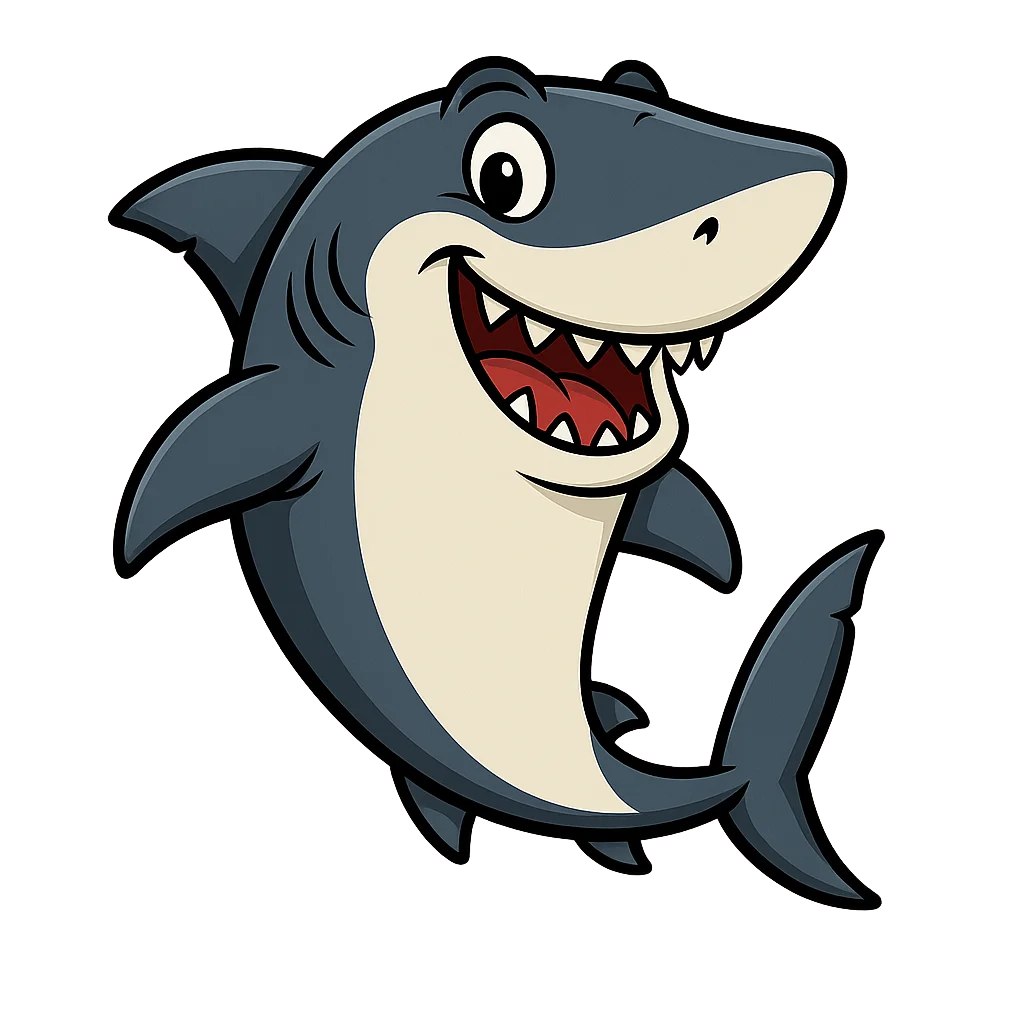
Hello. My scientific name is Carcharodon carcharias, but you can call me a great white shark. That formal name was given to my species in 1758 by a human scientist named Carl Linnaeus. He was a naturalist who created a system for naming living things that is still used today. Carcharodon carcharias means ‘sharp tooth,’ which is a very fitting description for me. My ancestors are ancient, swimming through these very oceans for millions of years, long before your own kind ever appeared on Earth. I did not hatch from an egg laid on the seafloor. Instead, I was born live from my mother, emerging into the water as a miniature version of the powerful hunter I would become. From my very first moment, I was on my own. No one was there to guide me or teach me how to survive. My instincts, perfected over millions of years of evolution, took over immediately. They told me how to swim, how to hunt, and how to navigate the vast, deep blue world that has always been my home. It was a life of solitude and self-reliance from the very beginning.
Many people are fascinated by my teeth, and for good reason. I have around 300 of them arranged in several rows inside my jaws at any given time. If one breaks or falls out, another one from the row behind it simply moves forward to take its place. Over the course of my life, I will go through thousands of these sharp, serrated teeth. But while my bite is powerful, my true strength as a hunter comes from my incredible senses. My sense of smell is so acute that I can detect a single drop of blood in the water from miles away, leading me toward potential prey. Even more remarkable are the special pores that dot my snout. These are called the Ampullae of Lorenzini, and they allow me to sense the faint electrical fields that all living animals generate. It’s like having a secret sixth sense that lets me locate prey even when it is hidden from sight, buried in the sand, or swimming in dark water. My entire body is designed for this life. My coloration is a form of camouflage called countershading. My dark gray back blends in with the dark water below when seen from above, and my white belly matches the bright, sunlit surface when seen from below. This makes me nearly invisible to the animals I hunt.
I am a nomad of the sea, a constant traveler on a journey that never ends. I do not stay in one place for long. Instead, I migrate for thousands of miles across the ocean every year, following the changing seasons and the movements of my food sources. There are certain places that draw many of us together. One of these is a particular spot in the middle of the Pacific Ocean that human scientists have nicknamed the ‘White Shark Café.’ For reasons we don't fully understand, many great whites gather in this area for a period of time before continuing on our journeys. It remains one of the great mysteries of our lives. Unlike most other fish, I am not completely cold-blooded. I have a remarkable ability to keep the muscles I use for swimming warm. This adaptation gives me an advantage, allowing me to generate incredible bursts of speed to ambush my prey. This power is essential for hunting agile animals like seals and sea lions, which are my favorite meals. It is this combination of power, speed, and sensory skill that places me at the very top of the ocean's food chain as an apex predator.
For a very long time, my species has been feared by humans. Much of this fear was amplified by a movie called 'Jaws', which was released in 1975. It portrayed my kind as vengeful, mindless monsters that actively hunted people. But this is not an accurate reflection of who I am. Encounters with humans are exceedingly rare, and when they do happen, they are almost always a case of mistaken identity. From my perspective below the surface, a person on a surfboard can look very similar to a seal, one of my natural prey. The unfortunate truth is that I face far greater dangers from humans than they will ever face from me. Thousands of us get caught accidentally in commercial fishing nets each year. Pollution contaminates my ocean home and the food I eat. And for many years, we were hunted directly. Because of these threats, my species is now listed as ‘Vulnerable’ by conservation organizations. We are not monsters to be feared; we are magnificent animals that are in desperate need of protection to ensure our survival for generations to come.
My story is not over; it is still being written with every mile I swim through the vast ocean. As an apex predator, I have a critical role to play. My presence helps to keep the entire marine ecosystem in balance. By hunting seals and other animals, I help ensure that their populations remain healthy and strong, which in turn benefits the health of the entire food web. Today, scientists are working hard to better understand and protect us. They use satellite tags to track our incredible migrations, learning more about our travels and the mysterious 'White Shark Café.' My true legacy is not one of a fearsome monster, but that of a guardian of the sea. When you learn about me and support efforts to protect my ocean home, you are helping to protect the health of our entire blue planet.
Activities
Take a Quiz
Test what you learned with a fun quiz!
Get creative with colors!
Print a coloring book page of this topic.