English
 For Schools
 For Homeschool

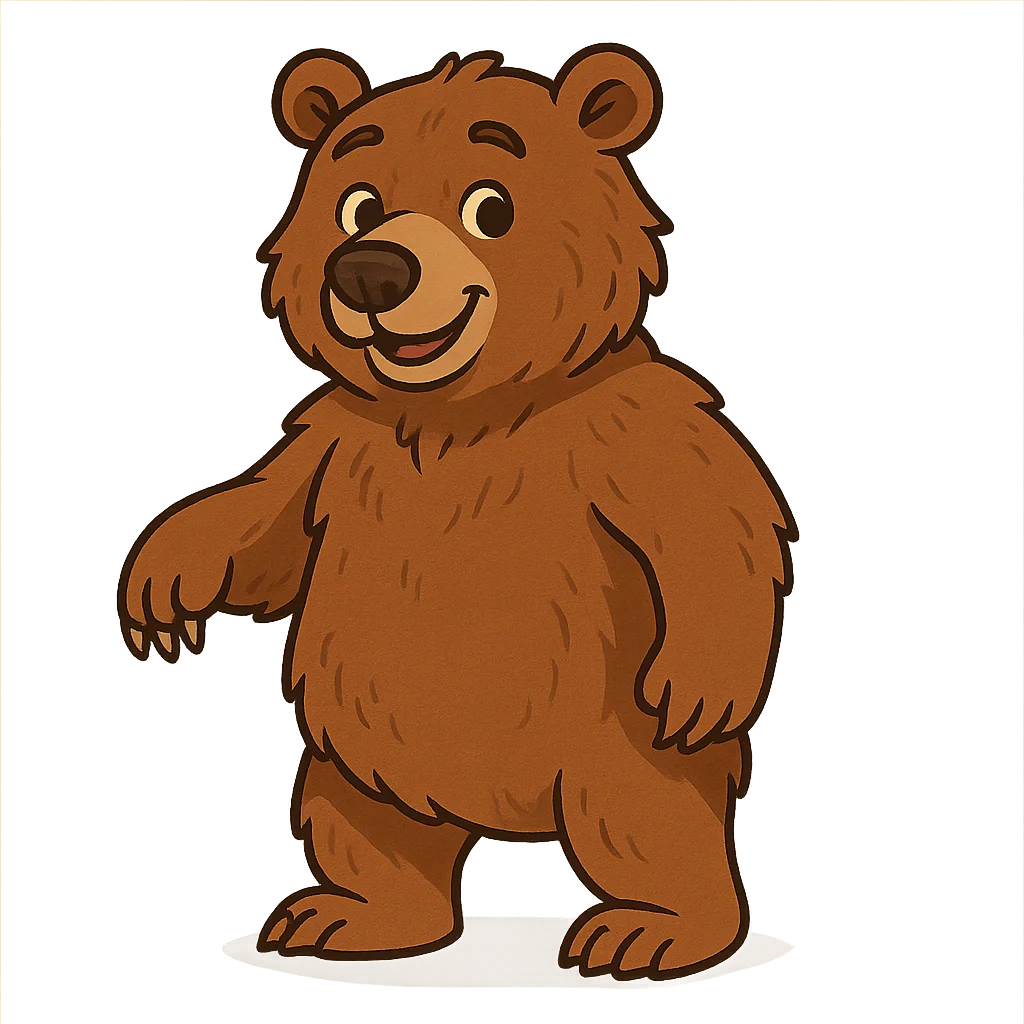
A Grizzly's Story: The Gardener of the Forest
Hello, my name is Ursus, and I am a grizzly bear. My story begins not in the bright sun of summer, but in the deep quiet of winter. I was born, tiny and helpless, inside a dark, warm den my mother had dug. Alongside my siblings, I spent my first months nestled close to her, safe from the biting cold outside. We were a world of our own, hidden beneath the snow. While my kind has roamed these lands for a very long time, it was in 1815 that a scientist named George Ord gave us our specific scientific name: Ursus arctos horribilis. He chose the word horribilis, which means 'fearsome,' because he was so impressed by the power and strength of my ancestors. It wasn’t meant to be a scary name, but one that showed respect for our place in the wild.
For the first two or three years of my life, my mother was my teacher and my protector. The world outside our den was vast and full of lessons I needed to learn to survive. She taught me how to use the special tools my body provides. The powerful muscle hump on my shoulders, for instance, isn't just for show; she showed me how to use its strength to dig up delicious roots and bulbs hidden deep in the earth. My long, sharp claws, which might look intimidating, were perfect for overturning rocks and digging into the burrows of tasty ground squirrels. But my most powerful tool, she taught me, was my nose. A grizzly bear’s sense of smell is extraordinary, and I quickly learned to trust it to find a meal from miles away. Under her watchful eye, I learned the rhythm of the seasons—feasting on sweet berries in the summer, gathering nuts in the fall, and learning the difficult but rewarding skill of catching salmon as they swam up the rushing rivers.
My mother also shared stories of our ancestors, tales that stretched back through time. She told me that in the 1800s, tens of thousands of my kind roamed freely across North America. Our territory was immense, stretching from the icy landscapes of the north all the way down to the warmer lands of Mexico. We were a symbol of the untamed wilderness. However, as new settlers began to move west, our world started to shrink. The vast, open spaces we depended on were transformed. Forests were cleared for farms, and valleys were built up into cities. This meant there was less room for us. By the early 1900s, our numbers had fallen dramatically. We were often seen as threats to livestock and settlements, and the clash between our need for space and the expansion of human homes led to a difficult time for my species.
By the 1970s, the situation for my kind had become critical. Outside of the vast wilderness of Alaska, there were very few of us left in the United States. Our future was uncertain, but then, a turning point arrived. People began to realize that we were on the verge of disappearing from our historic homes. A very important law was created, called the Endangered Species Act. On July 28th, 1975, my species was officially given special protection under this act. This was a promise from people to help us survive. It meant our habitats would be protected, and it became illegal to harm us. To make this promise a reality, a group called the Interagency Grizzly Bear Committee was formed in 1983. This committee brought together different groups to work on a single goal: to coordinate our recovery and help our populations grow strong and healthy again, especially in important places like the Yellowstone ecosystem.
My story is not just about survival; it is about my purpose in the forest. I am what scientists call a keystone species, which means my home depends on me as much as I depend on it. I am one of the forest’s most important gardeners. When I use my powerful shoulder muscles and long claws to dig for roots or ground squirrels, I turn over and mix up the soil, which helps new plants take root and grow. When I feast on thousands of berries in late summer, I travel for miles and spread the seeds in my droppings, planting new berry bushes far and wide. And when I catch a salmon in the river and carry it into the woods to eat, I bring the rich nutrients of the water into the forest, fertilizing the soil and helping the giant trees grow tall. My journey is one of recovery, a testament to the idea that when people decide to help, nature can heal. My life is a living promise that wild places and the creatures who call them home are worth protecting for all the years to come.
Activities
Take a Quiz
Test what you learned with a fun quiz!
Get creative with colors!
Print a coloring book page of this topic.