English
 For Schools
 For Homeschool

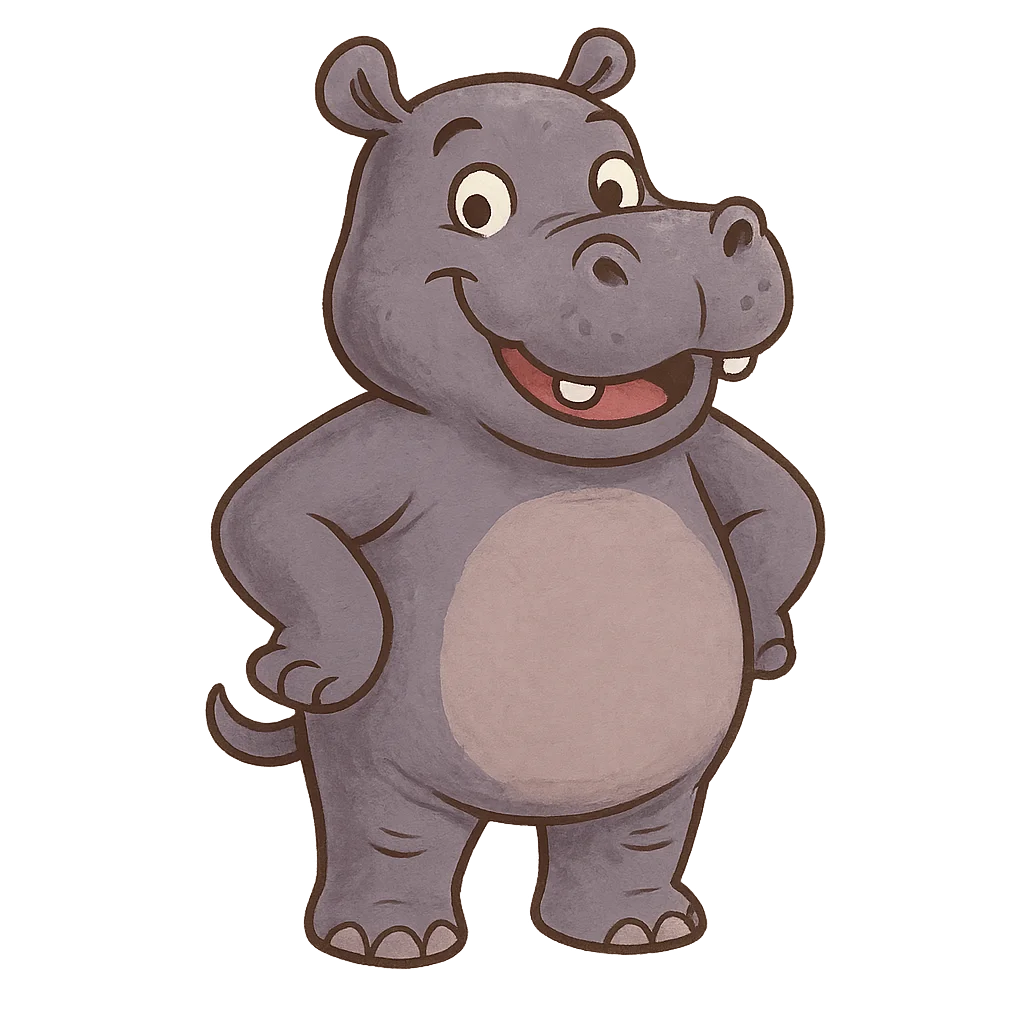
The Story of the River Horse
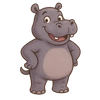
Hello there. My name is Hippopotamus, which is a very old Greek name that means ‘river horse.’ It’s a nice name, but it’s a little funny because my closest living relatives aren’t horses at all. For a long time, people weren't sure who my ancient cousins were. Then, around the 1980s, scientists made a surprising discovery. they found out that my family tree actually connects to whales and dolphins. Isn't that amazing? The common hippopotamus is native to sub-Saharan Africa, with fossil evidence indicating its ancestors originated on the continent. The moment I arrived, my mother was there to nudge me to the surface for my first breath of air. She helped me learn to swim almost immediately, and I spent my first few weeks staying very close to her side, feeling safe and sound in the cool, flowing river that was my whole world.
My days are quite relaxing. I spend most of the hot, sunny hours resting in the water with my family, which is called a pod. We can have dozens of hippos in our pod, and we love to float with just our eyes, ears, and nostrils peeking above the surface. While I'm in the sun, my skin does something very clever. It produces a special pinkish liquid that works like sunscreen to protect me from getting burned. Some people used to think it was blood, but it's really just my body's own way of staying safe. You might see me open my mouth in a huge yawn, but I’m not always tired. A big yawn is my way of showing off my enormous teeth. It’s a warning to other animals to give me plenty of space because this river is my home. When the sun goes down and the air cools, I leave the water. I walk onto the land to spend my night eating. I am an herbivore, which means I only eat plants, and I can eat lots and lots of grass every single night before returning to the water.
Life isn't always easy for my kind. Our homes are changing. The rivers and lakes where we have lived for thousands of years are getting smaller because of human activity. This means we have less space to live and find food. We also face danger from people who hunt us for our long teeth, which are made of ivory. For many years, our numbers were shrinking, and people were worried about us. But there is good news, too. In 2006, conservation groups like the International Union for Conservation of Nature, or IUCN, officially listed my species as 'Vulnerable.' This special status was a very important step. It meant that more people became aware of our problems and started working together to protect us and the precious African rivers we call home.
My story isn't just about eating and swimming. I have a very important job in my environment. I am what scientists call an 'ecosystem engineer.' This means that my actions help shape the world around me. When I spend my days in the river, my dung acts as a natural fertilizer. It provides food for tiny organisms, which then become food for fish. The fish have more to eat, and the whole river becomes healthier because I am there. At night, when I graze on the land, I keep the grasses trimmed and healthy, which helps other grazing animals. I usually live for about 40 to 50 years, and hippopotamuses contribute to the balance and vitality of their African habitats through their natural behaviors, such as nutrient cycling and habitat formation.
Activities
Take a Quiz
Test what you learned with a fun quiz!
Get creative with colors!
Print a coloring book page of this topic.