
 English
 For Schools
 For Homeschool

My Life as a Kalahari Meerkat
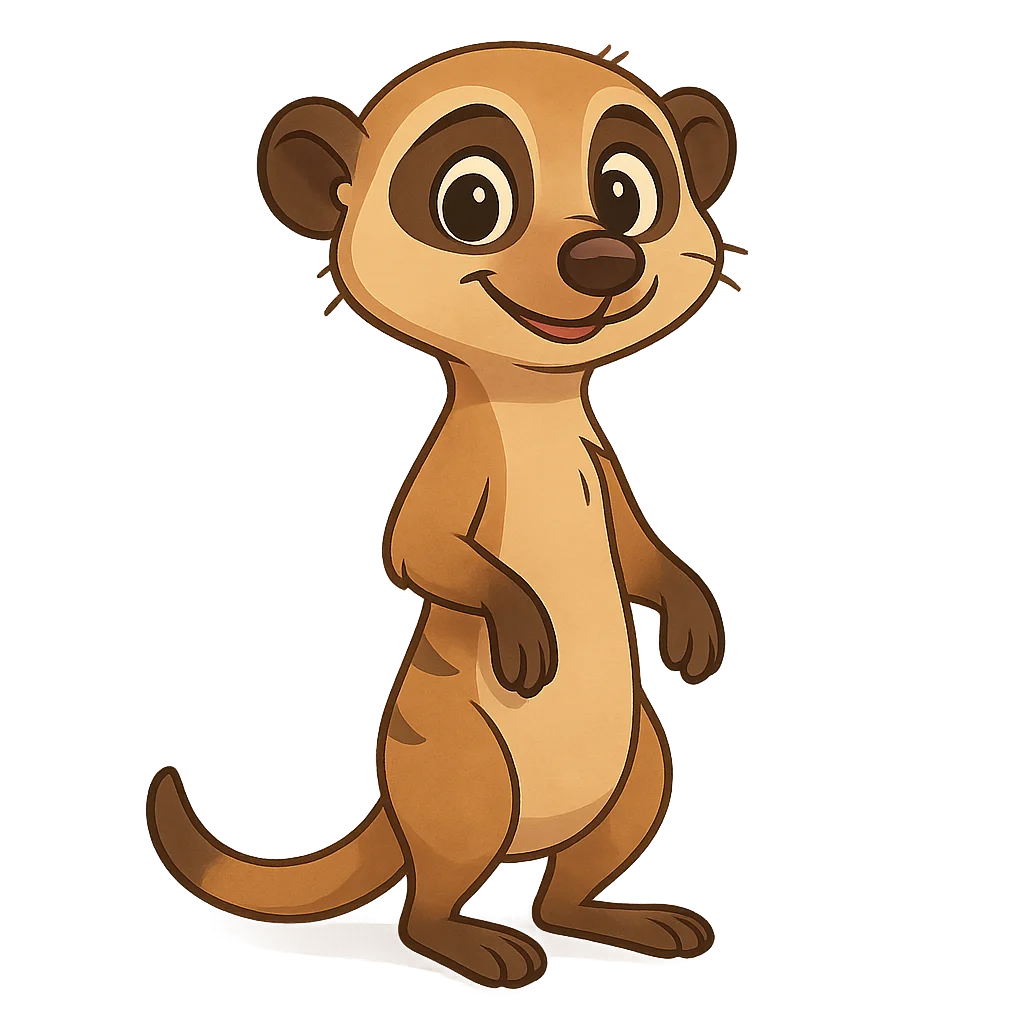
Hello there. I am a meerkat, and I want to tell you the story of my life in the vast, sun-drenched Kalahari Desert of southern Africa. My home is a world of red sand and hardy acacia trees, a place of incredible beauty and constant challenge. I don't live alone; I am part of a large, bustling family that we call a 'mob.' In my mob, everyone has a job, and we all work together to survive. My species, Suricata suricatta, has been known to scientists for a very long time; we were first formally described way back in 1776. But to me, life wasn't about scientific names or dates. It was about family and the warm earth beneath my paws. I was born with my brothers and sisters deep underground, in the cool, comforting darkness of our burrow. The world was just a collection of familiar scents and the soft touch of my mother. But one day, she nudged us toward a tunnel that sloped upward, toward a circle of blinding light. As I cautiously poked my head out, the brightness made me blink. It was the African sun, and it was the most magnificent thing I had ever seen. The sky was a brilliant blue, and the air was warm on my fur. This was my world, and my adventure was just beginning.
A typical day for my mob is a busy one, filled with purpose and teamwork. After a cold desert night huddled together for warmth in the burrow, our first order of business is to warm up. We emerge one by one and find a sunny spot to stand in a classic meerkat pose—upright on our hind legs, bellies facing the sun. This morning ritual of sunbathing is crucial for getting our bodies ready for the day ahead. Once we are warm, the foraging begins. Led by the dominant members of our mob, we spread out to search for food. I have a very sharp sense of smell, which I use to sniff out delicious beetles and other insects hidden just beneath the sand. My absolute favorite snack is a scorpion. It might sound dangerous, but we meerkats are immune to their venomous stings. The older, more experienced members of the mob are excellent teachers. They show us young pups how to carefully and quickly remove the scorpion's stinger before eating it. This is a vital lesson for survival. But our day is not just about finding food; it is also about avoiding becoming food ourselves. We always have a sentry on duty, a lookout perched on the highest point, like a termite mound. One afternoon, while I was digging for a juicy beetle, our sentry let out a sharp, specific alarm call. I knew that sound instantly—a martial eagle was circling high above. In a flash, every single one of us abandoned our search and sprinted for the nearest burrow entrance. The sky is a dangerous place, and the safety of our underground home is never far away.
Our home is much more than just a hole in the ground; it's an entire underground city. We spend countless hours digging and maintaining a complex network of tunnels and chambers. This burrow system has many different rooms for sleeping and raising young, and dozens of entrances and exits so we can escape from predators quickly. This intricate home is the heart of our social lives. Teamwork is everything to a meerkat, and nowhere is this clearer than in how we raise our young. We practice something called cooperative breeding, which means the entire mob helps care for the pups, not just their parents. While some of us are out foraging, others stay behind to babysit, protect the little ones from danger, and even bring them food. Everyone contributes, ensuring the next generation is safe and strong. Our fascinating social lives have not gone unnoticed. Around 1993, a group of human scientists started the Kalahari Meerkat Project. For decades, these researchers have lived alongside us, patiently observing our every move. They have learned to understand our complex 'language' of different alarm calls and have unraveled many of the secrets of our society. It’s strange to think that while we are living our lives, someone is watching and learning from us, but their work has helped people understand just how intelligent and cooperative we truly are.
My life as a meerkat is about more than just sunbathing and hunting for scorpions. My family and I play an important role in the health of our desert home. Sometimes, humans see us as just cute animals, but we are what scientists call 'ecosystem engineers.' Every day, as we dig for food and expand our burrows, we are constantly turning over and aerating the soil. This digging might seem small, but it makes a big difference, helping water and nutrients reach plant roots and allowing new seeds to sprout. We are like tiny gardeners for the entire desert. Furthermore, by eating thousands of insects and other small creatures, we help keep their populations in balance. Without us, certain insects could become too numerous and damage the delicate plant life that other animals depend on. We are a crucial link in the food web of the Kalahari. My mob and I have a vital job to do, and it is a job we take very seriously. We will continue to stand tall on our hind legs, watching over our sandy home, working together to keep the desert healthy and thriving for years to come. Our place in the sun is one of responsibility, and we are proud to hold it.
Activities
Take a Quiz
Test what you learned with a fun quiz!
Get creative with colors!
Print a coloring book page of this topic.