English
 For Schools
 For Homeschool

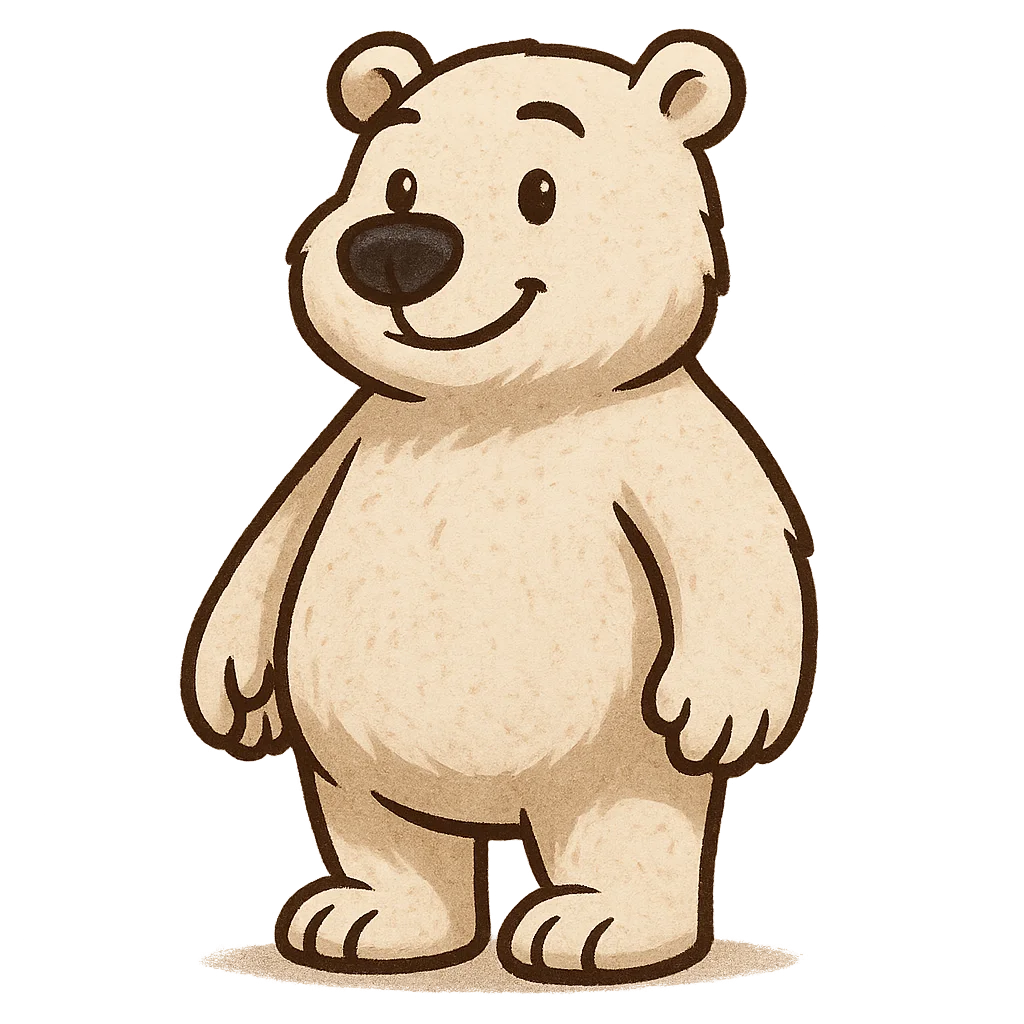
My Life on the Ice: A Polar Bear's Story
Hello! My name is a bit of a mouthful—Ursus maritimus. It’s a Latin name that means 'sea bear,' a title given to my kind by scientists back in 1774. I am a polar bear, and my story begins in the vast, frozen world of the Arctic. I was born with my siblings in a cozy den my mother dug into the snow during early to mid-winter (November to January). When we were born, we were tiny, blind, and completely toothless. For the first few months of my life, my entire world was the warmth of my mother and the rich milk she provided. When spring finally arrived, we cautiously emerged from our den into a brilliant landscape of white ice and deep blue sky. The world was so bright and cold. For the next two years, my mother was my constant guide and teacher. She showed me how to protect myself from the biting wind, how to understand the shifting patterns of the ice, and most importantly, how to hunt for my food.
I am perfectly built for living in one of the coldest environments on Earth. You might be surprised to learn that underneath all my white fur, my skin is jet black. This dark color is excellent for absorbing heat from the sun's rays, helping me stay warm. I have two layers of fur that work together as the perfect insulation. My undercoat is thick and woolly, trapping a layer of air close to my skin, while my outer layer is made of long, oily guard hairs. These hairs are hollow and water-repellent, which keeps me dry and warm even after a swim in the frigid Arctic Ocean. My most important feature for survival is my thick layer of blubber, which can be over four inches thick. It’s like wearing the warmest winter coat imaginable, all year round. My paws are also special. They are gigantic, which helps distribute my weight and allows me to walk on snow without sinking, much like snowshoes. They are also partially webbed and have rough, bumpy pads, which make them powerful paddles for swimming and give me a firm grip on slippery ice.
Although I live on land and ice, my life is completely tied to the ocean, which is why scientists consider me a marine mammal, just like a seal or a whale. The sea ice is everything to me; it is my home, my hunting ground, and the place where my mother raised me. My diet consists mainly of seals, particularly ringed and bearded seals, because their bodies are full of fatty blubber that provides the immense energy I need to survive the cold. To find them, I rely on my incredible sense of smell. I have an acute sense of smell and can detect seals from considerable distances, though the exact range is not definitively established. Hunting requires a great deal of patience. I often locate a seal's breathing hole in the ice and wait silently, sometimes for hours, for one to surface for air. As the top predator in my habitat, I play a critical role in maintaining the balance of the Arctic food web. My presence ensures that the seal populations stay healthy and in check.
My world of ice, however, is not as permanent as it might seem. In recent decades, human scientists have observed that the sea ice is melting earlier in the spring and forming later in the fall. This is a very serious problem for me. Less sea ice means a shorter hunting season, making it difficult to hunt the seals I need to build up the essential fat reserves to survive the lean months. Humans recognized this challenge to my survival many years ago. On November 15th, 1973, the five countries where my species lives—the United States, Canada, Russia, Norway, and Denmark—signed the International Agreement on the Conservation of Polar Bears. This was a historic promise to work together to protect me and my fragile home. Despite these efforts, the ice continued to change, and because of this, I was officially listed as a threatened species in the United States in 2008, a formal recognition that my future is uncertain.
My story is deeply connected to the story of the Arctic itself. Scientists call me an 'indicator species,' which means the health of my population provides important clues about the overall health of my ecosystem. When my kind struggles to find food and raise our young, it serves as a powerful warning sign that the delicate balance of the Arctic is in trouble. My future is inseparable from the future of the sea ice. Protecting my home is not just about saving a single animal; it is about preserving a vast, beautiful, and critical part of our planet for the future. I stand as a symbol of the wild Arctic, a living reminder of its immense power and its profound fragility. My greatest hope is that my journey on the ice inspires you to learn more about this incredible frozen world and understand why it is so important to protect it for all the generations to come.
Activities
Take a Quiz
Test what you learned with a fun quiz!
Get creative with colors!
Print a coloring book page of this topic.