English
 For Schools
 For Homeschool

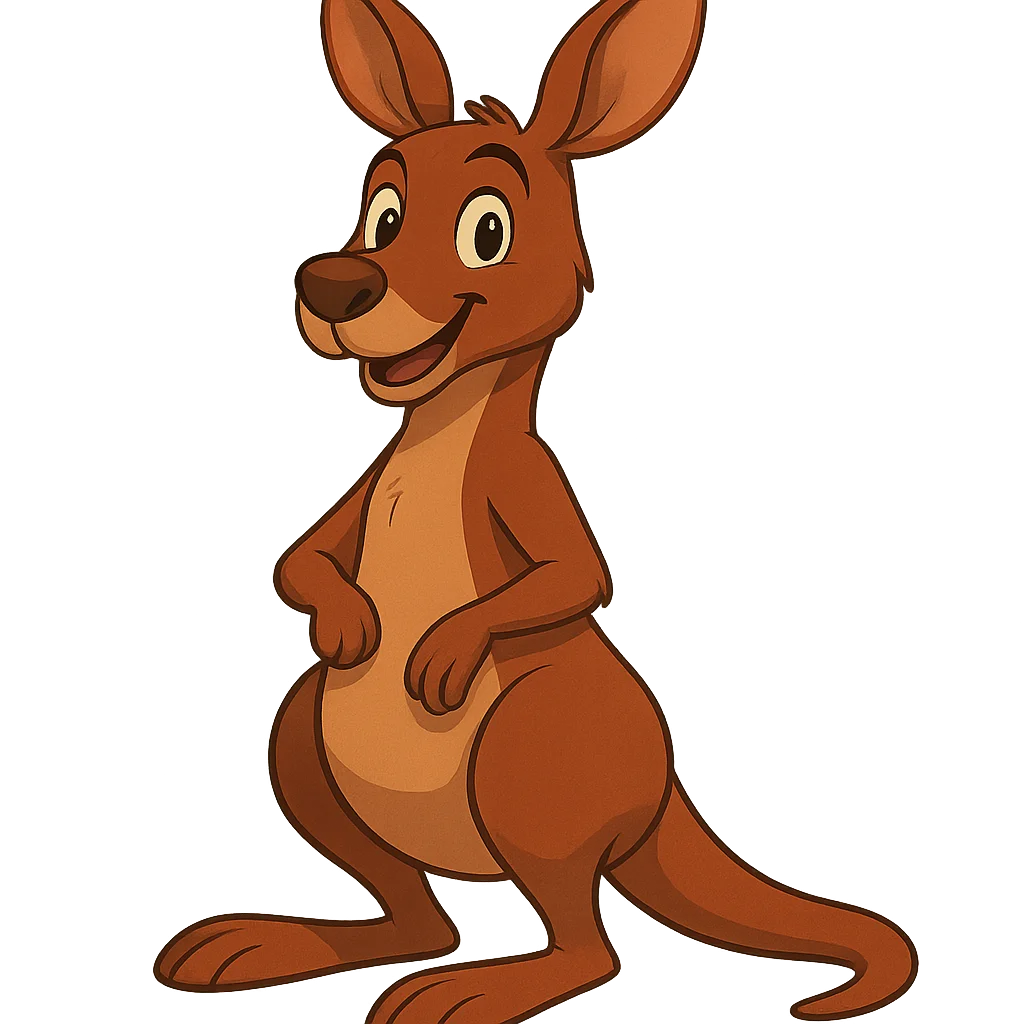
The Outback Hopper: My Life as a Red Kangaroo
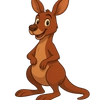
Hello! I’m a Red Kangaroo, and my story starts in the safest, coziest place imaginable: my mother’s pouch. You might find it hard to believe, but when I was born, I was no bigger than a jelly bean. Blind and tiny, I made an incredible journey, crawling through my mother's fur to the safety of her pouch all on my own. For the first few months of my life, that pouch was my entire world. I stayed tucked inside, nursing and growing stronger with each passing day. While my own life was just beginning, my species, Osphranter rufus, has a long history. We were officially described by a scientist named Anselme Gaëtan Desmarest in 1822, but my ancestors have been hopping across the vast landscapes of Australia for thousands of years, becoming a true symbol of this ancient land.
After about six months, I was ready to see the world. My first hops out of the pouch were wobbly, but soon I was exploring the vast, sunburnt plains of the Australian outback. It was a world of red earth and endless blue sky. I quickly learned how to use my enormous hind legs, which are built like powerful springs, to bound across the terrain. With a single leap, I could cover a distance of over 9 meters, and when I needed to escape danger, I could reach speeds of 60 kilometers per hour. I wasn't alone on my adventures. I belonged to a family group called a 'mob.' We traveled together, grazing on grasses and keeping a watchful eye out for one another. Living in a mob meant there were always others to alert us to predators, and it was in this group that I learned the skills I would need to survive.
Life in the arid heart of Australia is not for the faint of heart, but every part of me is perfectly adapted for it. The climate is harsh and water can be scarce, so my body is a master at conservation. I get most of the moisture I need from my diet of tough grasses and leaves, which allows me to go for long periods without drinking. On scorching hot days, when the sun beats down relentlessly, I have a unique way of cooling off. I lick my forearms, where my blood vessels are close to the surface. As the saliva evaporates, it cools my blood and provides relief from the heat. Male Red Kangaroos have short, red-brown fur; females are often blue-grey. The fur is dense and provides insulation, but its role in reflecting the sun's heat is not well-documented.
Being part of a mob means we have a social structure, and sometimes disagreements need to be settled. The males in our group, known as 'boomers,' often engage in boxing matches to establish who is the strongest and to win the attention of females. It might look like a fight, but it's a very important social ritual. We lean back on our thick, muscular tails for balance, freeing up our powerful hind legs to deliver strong kicks. Our front paws are used to grab and push our opponent. This strength isn't just for show; red kangaroos have developed various defense mechanisms to protect themselves from predators like dingoes. Our ability to stand tall, kick powerfully, and leap away at high speed is what keeps us safe in the wild outback.
My kind has a special relationship with this land and the people who have lived here for millennia. For thousands of years, Indigenous Australians have shared this continent with us, respecting us as a vital part of the ecosystem. In more recent history, our importance was officially recognized. Since 1908, a Red Kangaroo like me has been featured on the Australian Coat of Arms, standing proudly as a symbol of the entire nation. We were chosen for a very specific reason: we cannot easily move backward. This inability to retreat represents a country that is always moving forward, progressing and never looking back. It is an honor to be a symbol of such a powerful idea.
My story is woven into the great story of Australia. As I graze on the plains, my mob and I influence plant community composition, clearing away old vegetation and making way for new growth. In the wild, red kangaroos typically live up to 15 years, and during that time, we become a vital part of the outback ecosystem. We are a symbol of strength, resilience, and the wild, enduring spirit of this incredible continent. My mob and I continue to hop across these ancient lands, carrying on the legacy of our ancestors and representing the untamed heart of Australia for generations to come.
Activities
Take a Quiz
Test what you learned with a fun quiz!
Get creative with colors!
Print a coloring book page of this topic.