
 English
 For Schools
 For Homeschool

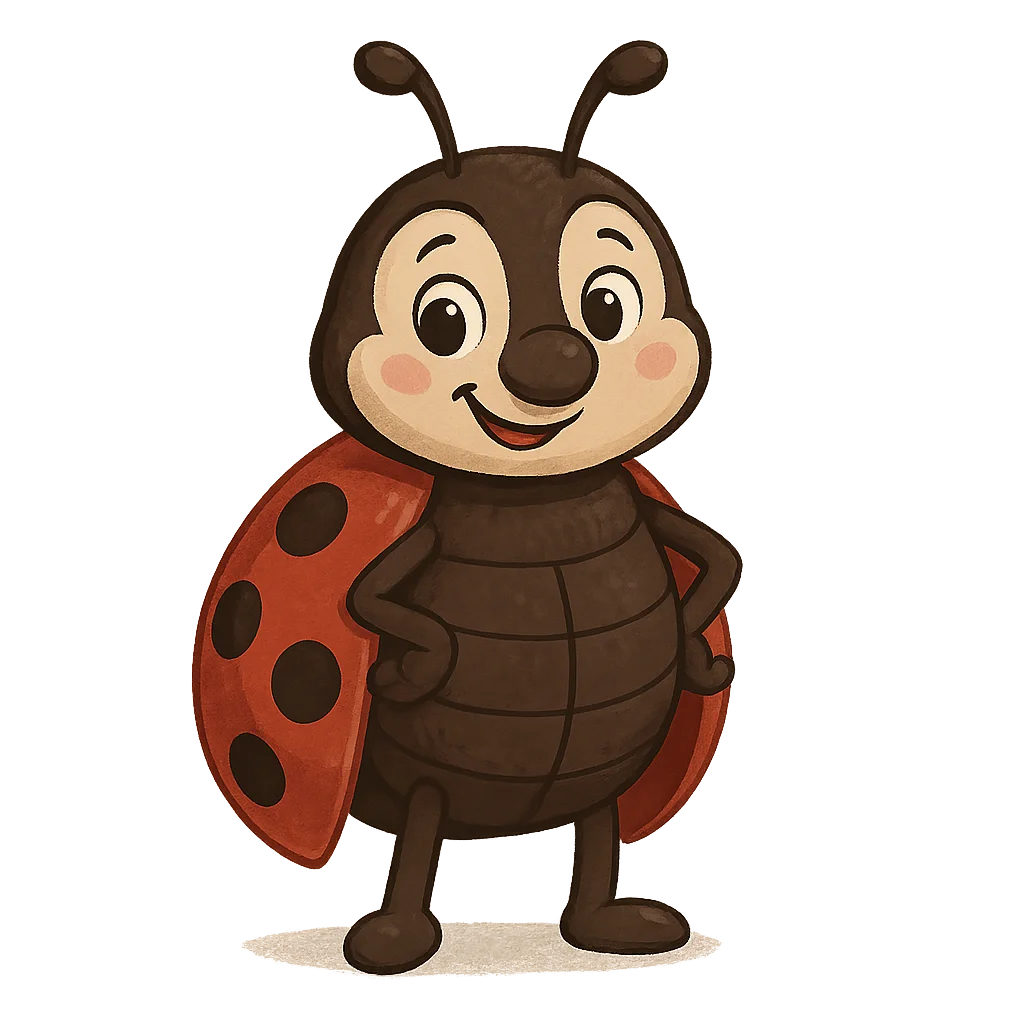
The Story of the Seven-Spot Ladybird
Hello there. My name is Seven-spot Ladybird, and I’d like to tell you my story. My adventure began when I was just a tiny, bright yellow egg. I wasn't alone; I was huddled together with all of my siblings on the safe underside of a big green leaf. When it was time, I hatched, but I didn't look anything like the ladybug you know. I looked more like a tiny, spiky alligator. From my very first moment, I had a very important job to do. I was incredibly hungry, and my favorite food was right there on the plant with me. They were the juicy little aphids that were trying to hurt the plant I called home. My mission was clear: I had to eat as many as I could, and I started my work right away.
My life as a growing larva was all about eating. Every single day, I crawled around the leaves, munching on hundreds and hundreds of aphids. All that eating helped me get bigger and bigger, so big that my skin started to feel very tight. When that happened, I had to molt, which means I wriggled out of my old skin, leaving it behind. I did this a few times, growing larger with each molt. After a while, a strange feeling washed over me. It was a feeling that told me it was time for my great transformation to begin. I found a good spot, attached myself to a leaf, and my body formed a special case around me. I was now a pupa, and I stayed very still. It was a quiet, resting time on the outside, but inside, the most amazing magic was happening.
Then came the most exciting moment of my life. I pushed and wiggled my way out of my pupa case, and for the first time, I was an adult ladybird. But I didn't look quite right just yet. My wings, which were tucked neatly on my back, were soft and pale yellow. I had to wait for a little while as the air helped them dry and harden. Soon, they became the shiny, bright red coat that I am so famous for. And on that coat were the Seven-spot Ladybird usually has seven black spots, but some individuals may have more or fewer spots. Those spots are so important that back in 1758, a very smart human scientist named Carl Linnaeus gave my kind its official name, Coccinella septempunctata, which is a fancy way of saying 'seven-spotted'. My new red coat wasn't just for looks. It’s a secret weapon. The bright color is a warning to birds and other predators that I taste awful. If something doesn't get the message and tries to eat me, I have another trick. I can ooze a stinky, yellow liquid from my legs that tastes even worse than I look.
My family has traveled all over the world, but we are originally from places far across the big ocean, in Europe and Asia. For a long time, that was our home. But we are so good at eating pests that humans realized we could be great helpers. They decided to bring my ancestors to North America to help protect their crops from all the hungry aphids. It took some time for us to get used to our new home, but around the 1970s, my kind really started to spread out and thrive there. We became a common sight, helping out in gardens, parks, and farms. When the weather turns cold and winter arrives, we don't like to be alone. To stay warm and safe, we hibernate. We find a sheltered spot and huddle together with hundreds, sometimes thousands, of our friends, waiting for the spring sunshine to return.
My life is a small one, but my role is very important. I am more than just a cute bug you see in the garden; I am a guardian of the plants. People have even said for a long time that finding one of my family members is a sign of good luck. My whole life is spent helping plants grow strong and healthy by eating the little pests that would try to harm them. So, the next time you are outside and see a little beetle with a shiny red coat and seven perfect spots crawling on a leaf, you'll know it's one of my relatives. We are there working hard, doing our part to keep our world beautiful and green.
Activities
Take a Quiz
Test what you learned with a fun quiz!
Get creative with colors!
Print a coloring book page of this topic.