English
 For Schools
 For Homeschool

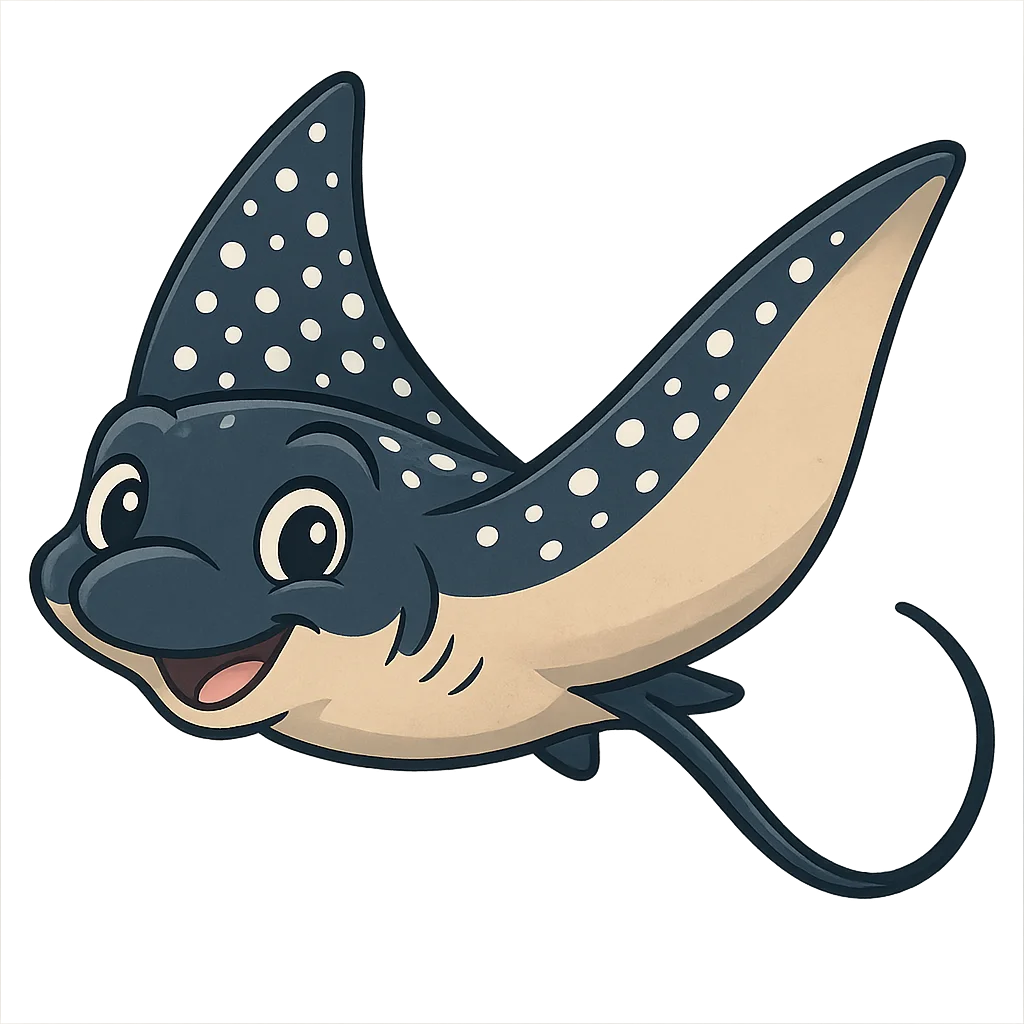
Aetobatus: My Flight Through the Ocean Blue
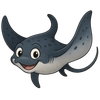
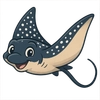
Hello there! My name is Aetobatus, and I am a spotted eagle ray. If you ever see me in the ocean, you can’t miss me—the spotted eagle ray has a dark dorsal surface covered with white spots. I don't swim like other fish. Instead, I glide, or 'fly,' through the warm, tropical waters of the world's oceans using my huge, wing-like pectoral fins. My skeleton isn't made of bone, but of cartilage, which is the same flexible material in your ears and nose. This makes me a cartilaginous fish and a cousin to sharks. I was born directly from my mother, emerging into the water fully formed and ready to explore, not hatched from an egg. My story begins in the bustling city of sea creatures that I call home: the vibrant coral reefs of the Atlantic Ocean.
My days are spent in constant motion, soaring over sandy flats near the reefs in search of a delicious meal. Unlike my shark cousins, I don't have sharp teeth for tearing. Instead, my mouth is equipped with powerful, flattened dental plates that are perfectly designed for crushing the hard shells of my favorite foods, which include clams, oysters, and crabs. To find them, I use my unique, shovel-shaped snout to dig through the sand, uncovering hidden treasures. While I am a peaceful creature by nature, I am certainly not defenseless. At the base of my long, whip-like tail, I carry several venomous spines. If a predator like the great hammerhead shark gets too close, I can use these spines to protect myself. It is a very effective way to communicate the message, 'Please leave me alone!'
I am quite the socialite and prefer to travel with others of my kind. I often journey in large groups, which are called schools or fevers, that can include hundreds of my fellow rays. Together, we can travel long distances and may cross oceanic basins, but they are more commonly found in shallow inshore waters like bays and coral reefs. Sometimes, for reasons that even we don't fully understand, we will launch ourselves from the water and leap completely into the air. It is a breathtaking sight, soaring through the sky for a brief moment before splashing back into the sea. Humans have been watching our acrobatic displays for a very long time. It was back in 1790 that a naturalist named Bengt Anders Euphrasén first gave my species its scientific name, Aetobatus narinari, so that the world could begin to formally learn about us.
Lately, however, my ocean home has been changing, and my life has become more challenging. The beautiful coral reefs where I find both my food and my shelter are facing serious threats from pollution and the steady rise of water temperatures. An even more immediate danger for my family and me is getting accidentally entangled in fishing nets that were never meant for us. Because of these growing challenges, conservation groups have started paying closer attention to our well-being. This concern became official on the IUCN Red List currently classifies the spotted eagle ray as 'Endangered.' This classification means that the Spotted Eagle Ray is classified as "Endangered" globally, indicating it is officially endangered, though regional classifications may vary.
My story is still being written every single day I swim through the sea. I play a very important role in my ecosystem by keeping the populations of shelled animals in check, which in turn helps maintain the delicate balance of life on the reef. When you see me or my family gliding gracefully through the water, please remember that we are a sign of a healthy ocean. My greatest hope is that humans will continue to work to protect our shared blue planet, so that my kind can fly through the currents for many generations to come. We are all connected, from the creatures on land to those in the deepest sea.
Activities
Take a Quiz
Test what you learned with a fun quiz!
Get creative with colors!
Print a coloring book page of this topic.