English
 For Schools
 For Homeschool

A White Rhinoceros's Story
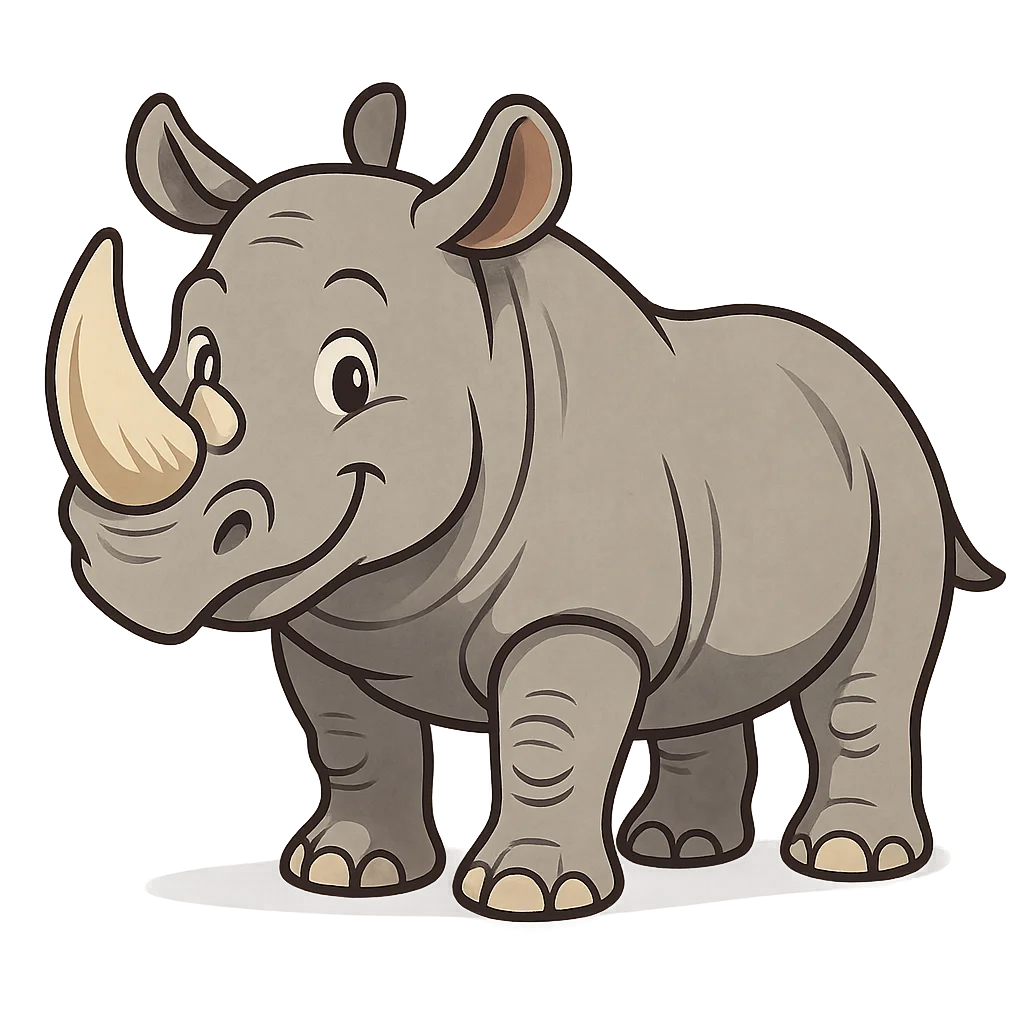
Hello! My name is a bit of a mix-up, but I’m happy to tell you all about it. I am a white rhinoceros, and I live on the wide, grassy savannas of Africa. My body is very large and strong, built for a life of munching on grass. I have two horns on my nose, one long one in the front and a smaller one behind it. My most special feature, though, is my mouth. It’s wide and square, with lips that are perfect for grazing. You might wonder why I’m called a “white” rhino when my skin is actually a grayish color. Well, many people think my name came from a misunderstanding of the Dutch word “wijd,” which means “wide.” It was meant to describe my special lips! So, you could say I’m the “wide-mouthed” rhinoceros, and that name fits me perfectly because eating grass is my favorite thing to do.
My days are usually very peaceful and are centered around finding the best patches of grass to eat. I am a grazer, which means I spend hours and hours every day using my wide lips like a lawnmower, nibbling the grass down to just the right length. It’s a big job, but my body is made for it. While I’m walking through the savanna, I have to be aware of everything around me. My eyesight isn’t the best, so I can’t see things clearly from far away. To make up for it, I have an amazing sense of hearing and a super-powered sense of smell. My big ears can turn in almost any direction to catch the tiniest sounds, and my nose tells me if friends or dangers are nearby long before I can see them. When the African sun gets too hot, my favorite thing to do is find a nice, big mud puddle. I love to roll around in the cool, squishy mud. This isn't just for fun; the mud acts like a natural sunscreen, protecting my thick skin from sunburn and keeping pesky bugs from bothering me. It’s a refreshing mud bath that helps me feel my best.
My life on the savanna has not always been easy, and my family has a very important story of survival. The biggest danger we have ever faced is from people, who sometimes hunt rhinos for their horns. This is called poaching, and it almost caused my kind to disappear forever. Back in the late 1890s, things were very scary for the southern white rhino. There were fewer than 100 of us left in the entire world, all living in one small park in South Africa. We were so close to vanishing. But then, something wonderful happened. People realized they had to help us. In the 1960s, a special conservation project called “Operation Rhino” began. The goal of this project was to carefully move small groups of us from that one park to new, safe homes in other parks and reserves across Africa. It was a huge and difficult job, but it worked! By giving us protected places to live and grow, our numbers started to climb. The project was a great success, and by the year 2012, our population had grown from under 100 to more than 20,000! My family’s story is a happy one about coming back from the very edge.
Now, I want to tell you about my important job in my savanna home. By eating so much grass, I help keep the grasslands healthy for everyone. I am like a giant gardener! When I graze, I keep the grasses short. This helps prevent big wildfires from spreading too quickly across the plains. My grazing also clears patches of land, which makes space for smaller, more delicate plants to grow. These smaller plants provide food and shelter for other little animals. So, just by having my daily meals, I help create a balanced and safe home for many other creatures. My story shows that when people work together to protect nature, amazing things can happen. My kind can live for 40 or 50 years, and because people decided to help us, we hope to keep munching on grass and gardening the savannas for many, many more years to come. I am a living reminder of this incredible comeback.
Activities
Take a Quiz
Test what you learned with a fun quiz!
Get creative with colors!
Print a coloring book page of this topic.