English
 For Schools
 For Homeschool

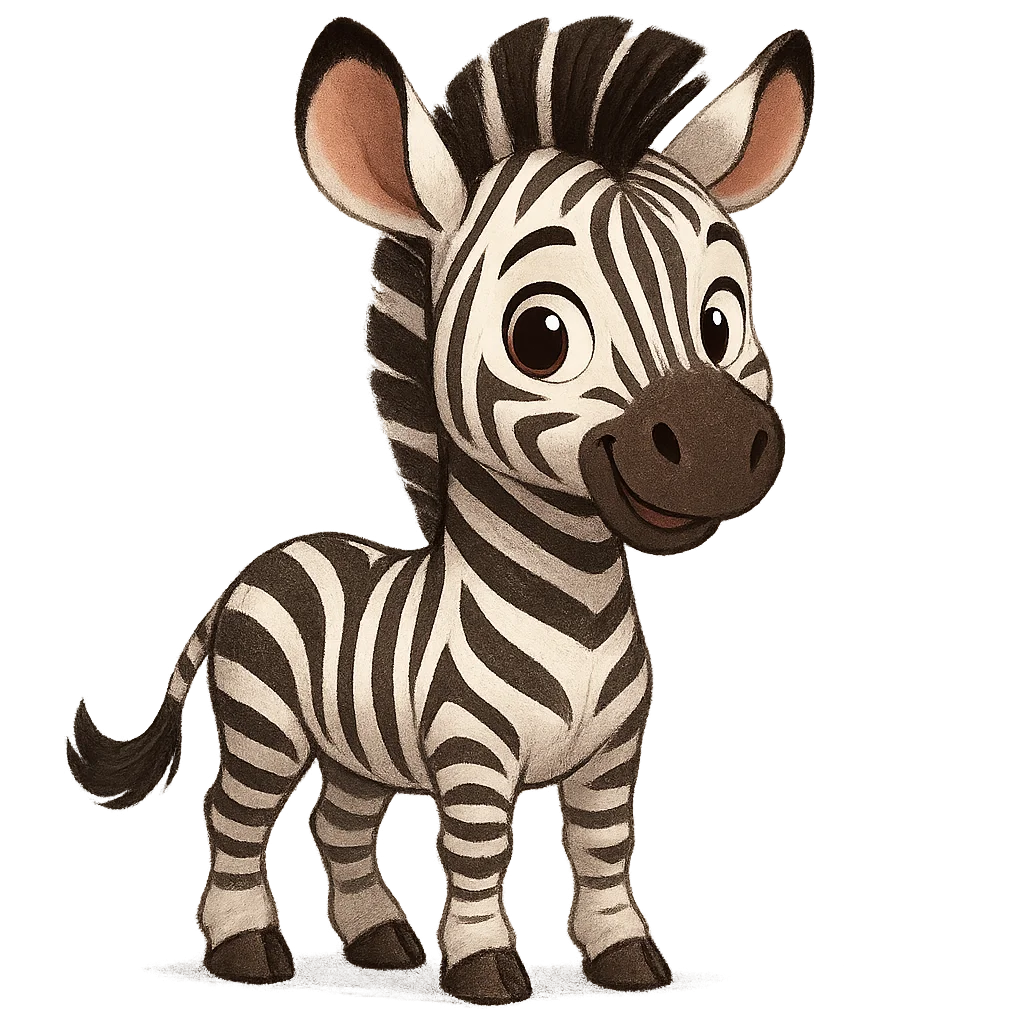
My Life in Stripes: A Zebra's Story
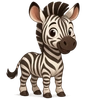
Hello! I am a Plains Zebra, and my home is the wide, sunny grasslands of Africa. You probably know me for my amazing coat of black and white stripes. What you might not know is that my stripes are completely unique to me, just like a human's fingerprint. No two zebras have the exact same pattern. I don't live alone; I am part of a family called a harem. We are very close and always look out for one another. My family stays with other families, and together we form a large group called a herd. Being in a big herd is much safer because we have many eyes and ears watching for danger. We spend our days under the warm African sun, traveling and grazing together across the savanna.
My days are busy and full of travel. As an herbivore, my diet consists entirely of plants. I spend most of my waking hours munching on tough grasses that grow all over the plains. Finding enough food and water means we are almost always on the move. My family and I can travel for many miles in a single day, searching for fresh patches of grass and watering holes to drink from. Some of my relatives take part in one of the most incredible journeys on Earth, called the Great Migration. Every year, huge herds of zebras and other animals, like wildebeest, travel across the Serengeti in a massive circle, following the rains to find the greenest grass. It is a long and challenging journey, but it is essential for our survival.
My stripes are much more than just a beautiful pattern; they are my best defense. When my herd is together, our thousands of stripes create a very confusing sight for predators like lions. Imagine a big, moving wall of black and white lines. It makes it very difficult for a lion to focus on just one of us to chase. Zebra stripes may serve multiple purposes, including predator confusion, thermoregulation, and social signaling, but the exact function remains a subject of scientific study. When we sense danger, we all start running, and the dazzling sea of stripes helps to protect us all. But our stripes aren't our only defense. We have excellent hearing and can turn our ears in almost any direction to listen for trouble. If one of us spots a threat, we let out a loud, high-pitched call to warn everyone in the herd to be on alert or to start running.
My kind has been roaming these plains for a very long time. Scientists who study animals first wrote down a description of my species, which they named Equus quagga, all the way back in 1785. My family history has seen sad times, too. I had a close relative called the Quagga, who looked a bit like me but only had stripes on the front part of its body. Tragically, the very last Quagga disappeared from the world on August 12th, 1883. Their story is a reminder of why it is so important to protect animals. Even we Plains Zebras face challenges. In 2016, conservation groups announced that our numbers were getting smaller because our grassy homes are shrinking, making it harder for us to find food and space to live.
I play a very special role in my ecosystem. I am known as a 'pioneer grazer.' This means I am one of the first animals to eat the tall, tough grasses on the savanna. By munching down these taller stalks, I trim the grass, which makes it easier for other animals, like wildebeest, to reach the shorter, tastier bits of grass underneath. In this way, I help feed my neighbors. I am a living symbol of the wild African savanna, and my presence helps keep the entire ecosystem in balance. Protecting my home doesn't just help me; it helps all the other plants and animals that live here, too. In the wild, I can live for about 20 to 25 years, doing my part every day in this amazing circle of life.
Activities
Take a Quiz
Test what you learned with a fun quiz!
Get creative with colors!
Print a coloring book page of this topic.