
 English
 For Schools
 For Homeschool

Zola's Stripes: A Zebra's Story
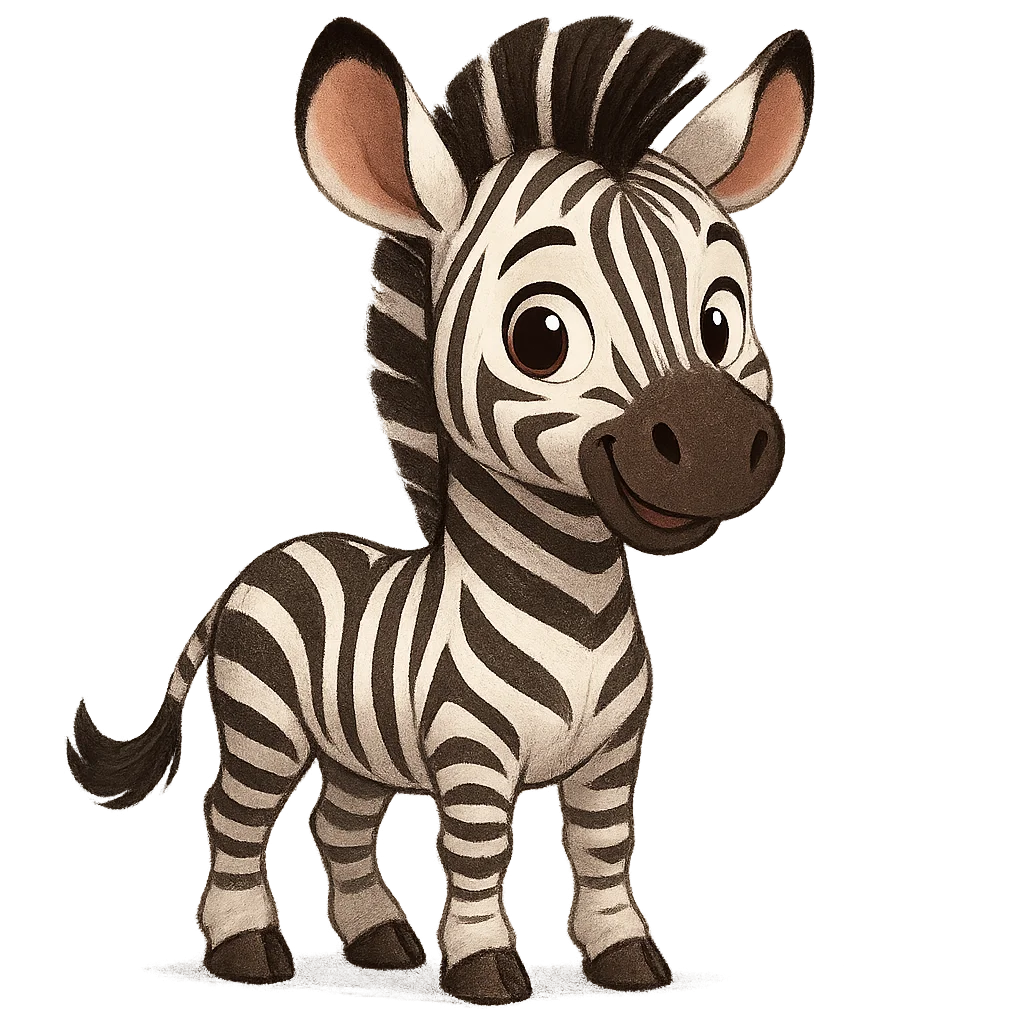
Hello, my name is Zola, and I am a Plains Zebra. My story began on a bright morning in the Serengeti, the vast grasslands of Africa that stretch farther than the eye can see. The world was new and filled with the sounds of my herd. Within just an hour of being born, my wobbly legs grew strong, and I was standing, ready to follow my mother. Zebra foals recognize their mothers through a combination of stripe patterns, scent, and vocalizations. To a young foal like me, her pattern was more distinct and comforting than any face, a unique map that always led me back to her side in our bustling herd. I quickly learned to navigate our world, staying close to her as she grazed, my own small hooves learning the rhythm of the savanna. I was born into a life of constant movement, a journey that would define my existence and my role in this incredible ecosystem.
My coat of stripes is my most famous feature, and it holds more secrets than you might imagine. For a long time, humans believed our stripes were primarily for camouflage. They thought that when we stood together in a large herd, the mass of moving lines would confuse predators like lions or spotted hyenas, making it difficult for them to single one of us out. While this visual confusion certainly helps protect us, scientists discovered another amazing purpose for our stripes. During the 2010s, research revealed that our black and white patterns are remarkably effective at deterring biting flies. These pesky insects find it difficult to judge their landing on a striped surface, so they often fly right past us. This natural defense is crucial, as it protects us from diseases carried by the flies and allows us to graze in peace, keeping our herd healthier and stronger.
My family and I are perpetual travelers. We are part of the Great Migration, one of the most spectacular journeys in the natural world. We don't have a single home; instead, we follow the life-giving rains across hundreds of miles of African plains, always in search of fresh, green grass. Our thundering hooves are often joined by enormous herds of wildebeest, our companions on this epic trek. I play a special role in this traveling community as a 'pioneer grazer.' This means I eat the tough, taller grasses that many other animals can't digest. By trimming them down, I pave the way for others, like the wildebeest and gazelles, to eat the shorter, more tender shoots that grow beneath. This journey is filled with challenges. We must cross roaring rivers where Nile crocodiles wait, and we are always watchful for predators. But moving together in our vast numbers gives us the strength to face these dangers and continue our vital search for food and water.
Life on the savanna is not the same as it was for my ancestors. The world is changing, and we zebras have had to adapt to new and difficult challenges. In 2016, conservation groups like the IUCN officially listed my species, the Plains Zebra, as 'Near Threatened.' This was a warning that our populations were declining. The decline in Plains Zebra populations is primarily due to habitat loss from human activities, overhunting, and competition with livestock. These barriers make it much harder for us to follow the rains and find the grazing lands we need to survive. On top of losing our habitat, we also face the constant threat of poachers. To navigate this modern world, we have to be more clever, more cautious, and more resilient than ever before, finding new ways to complete our timeless journey.
Despite these modern struggles, I understand my vital place in the African savanna. My role extends far beyond just surviving. As my herd and I graze, we keep the grasslands healthy, which supports countless other species, from the smallest insects to the largest herbivores. Our migration is a fundamental part of the rhythm of this ecosystem. We are a living, breathing symbol of the untamed wild. I remain hopeful for the future because many people are now working to protect our habitats and our freedom to roam. They are creating wildlife corridors and fighting to keep our migration routes open. Their efforts ensure that my stripes, and the stripes of all the zebras to come, will continue to be a beautiful and essential part of the African landscape for generations.
Activities
Take a Quiz
Test what you learned with a fun quiz!
Get creative with colors!
Print a coloring book page of this topic.