

 English

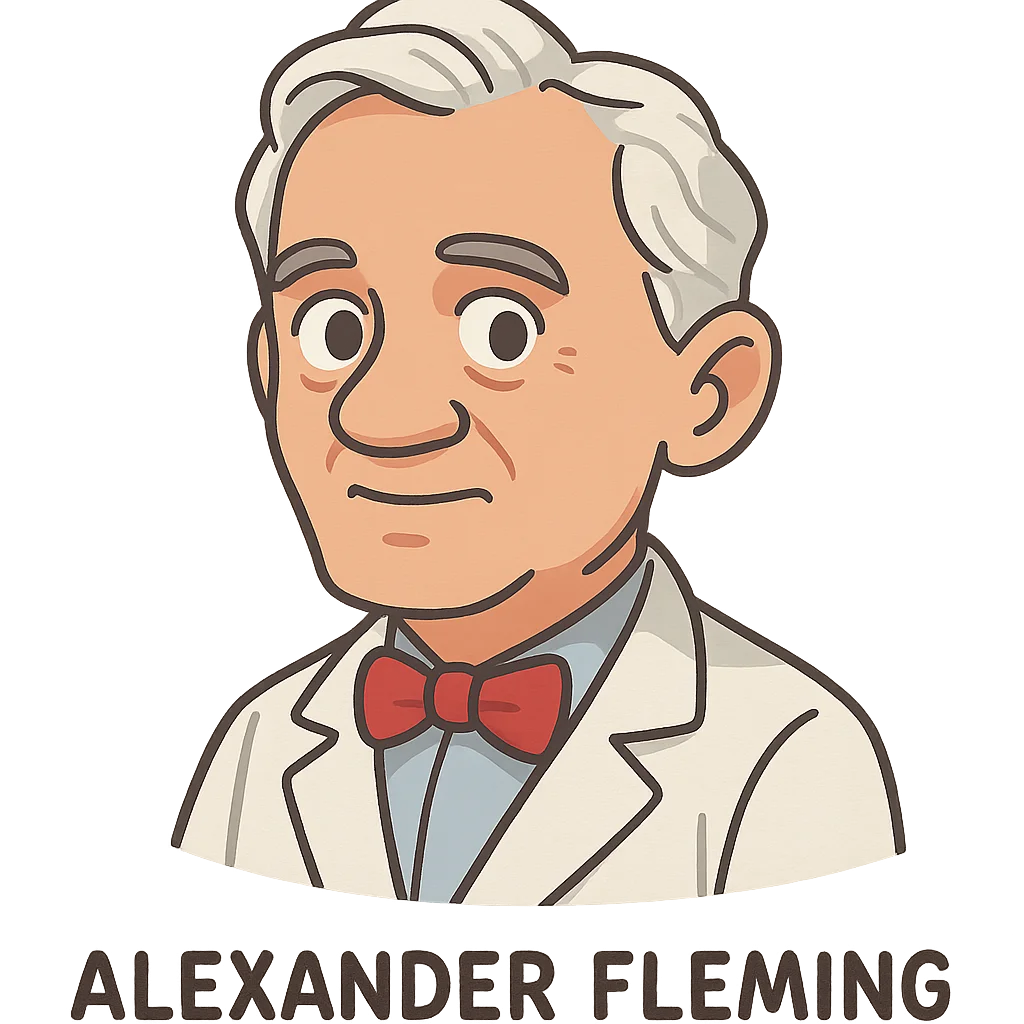
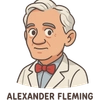
Alexander Fleming: The Man Who Discovered Penicillin
Hello, my name is Alexander Fleming, but my friends and family always called me Alec. My story begins on a farm in the beautiful countryside of Scotland, where I was born on August 6th, 1881. Growing up surrounded by nature, I developed a deep curiosity for the world around me. I spent hours observing plants, animals, and the soil, always wondering how things worked. Life changed quite a bit when I moved to London as a teenager around 1894. The busy city was a world away from my quiet farm. For a time, I worked as a shipping clerk, a job that was practical but didn't truly capture my interest. My path changed forever in 1901 when I received an inheritance. Following the advice of my brother, who was a doctor, I used the money to enroll in medical school at St Mary's Hospital in London. It was there that my childhood fascination with the natural world found its true purpose in the field of science.
After finishing my studies, I began working as a researcher, but my career was soon interrupted by a global conflict. From 1914 to 1918, I served as a captain in the Royal Army Medical Corps during World War I. On the battlefields of France, I witnessed a terrible tragedy that had a profound effect on me. I saw countless brave soldiers survive their injuries in battle, only to later succumb to infections that took hold in their wounds. The antiseptics we had at the time were often harsh, sometimes doing more damage to the body's own protective cells than to the harmful bacteria. This heartbreaking reality filled me with a powerful sense of determination. I knew there had to be a better way. I dreamed of finding what I called a 'magic bullet'—a substance that could target and destroy deadly bacteria without harming the patient. That mission became the focus of my life's work when I returned to my laboratory after the war.
My laboratory at St Mary's Hospital was famously untidy, with papers and experiments scattered everywhere. But sometimes, a little bit of mess can lead to wonderful things. My first breakthrough came in 1922 when I discovered a substance in tears and saliva called lysozyme, which could kill some germs. It was an exciting discovery, but it wasn't powerful enough to fight the most dangerous bacteria. My most famous discovery, however, arrived completely by accident. In September of 1928, I returned to my lab after a holiday. Before I left, I had stacked several petri dishes containing bacteria cultures on my bench. Upon my return, I noticed one dish had been contaminated with a blob of mold. My first instinct could have been to throw it away, but my curiosity took over. I looked closer and saw something astonishing: in the area immediately around the mold, the bacteria had been completely destroyed. I realized this mold, a strain called Penicillium notatum, was producing a substance that was lethal to the bacteria. I knew I had stumbled upon something incredibly special, and I named it penicillin.
Publishing my findings in 1929 was one thing, but turning my discovery into a medicine was a much bigger challenge. The main problem was that I could not figure out how to isolate the pure penicillin from the mold and produce it in large enough quantities to be effective for treating patients. For more than a decade, penicillin remained little more than a scientific curiosity, a fascinating substance stuck in a laboratory. The world, however, was on the brink of another great war, and the need for a powerful anti-bacterial agent was more urgent than ever. Around 1939, a brilliant team of scientists at Oxford University, led by Howard Florey and Ernst Boris Chain, took up the challenge. They dedicated themselves to the difficult task of purifying and mass-producing penicillin. Their tireless work and innovative methods finally succeeded, transforming my accidental discovery into the life-saving drug the world desperately needed during World War II.
Penicillin's impact was immediate and astounding. It saved countless lives on the battlefields of World War II and became a cornerstone of modern medicine afterward. In 1944, I was deeply honored to be knighted for my work, becoming Sir Alexander Fleming. The following year, in 1945, I had the great privilege of sharing the Nobel Prize in Physiology or Medicine with Howard Florey and Ernst Chain. I always made it clear that while I had discovered penicillin, it was their genius that made it a usable medicine for the world. Our combined efforts kicked off the age of antibiotics, creating a future where infections that were once a death sentence could be cured. For the first time in history, doctors had a powerful tool to fight back against diseases that had plagued humanity for centuries.
I lived a full and fortunate life of 73 years, passing away in 1955. Looking back, I believe my story is a testament to the importance of observation and curiosity. My accidental discovery of penicillin is remembered for starting a revolution in medicine that has saved hundreds of millions of lives and continues to do so today. My journey shows that sometimes, the most world-changing discoveries don't come from a grand plan, but from a curious mind simply noticing something out of place and asking the question, 'Why?'
Activities
Take a Quiz
Test what you learned with a fun quiz!
Get creative with colors!
Print a coloring book page of this topic.








 Free for Educators