English

Antonio Vivaldi
Antonio Vivaldi was an Italian Baroque composer, virtuoso violinist, teacher, and priest…
Reads at Grades 6–8 Listens at Grades 4–8
Print & create
Answer keys·No prep·Free with an account
28 worksheets · answer keys · full story · quiz · Ages 10-12 · CEFR B2
Plus adds 280,000+ more stories in 27 languages, audio for every one, and printables for all of them.
Just want Antonio Vivaldi?
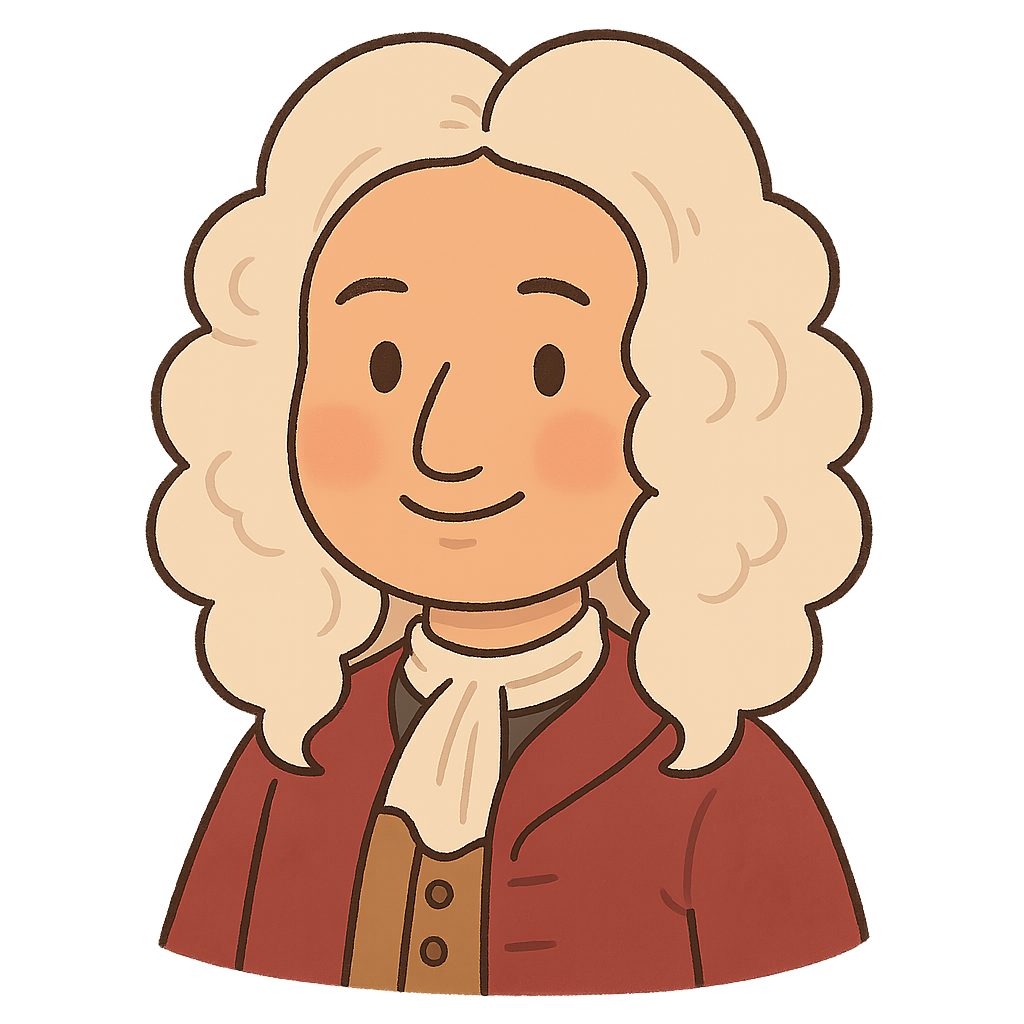
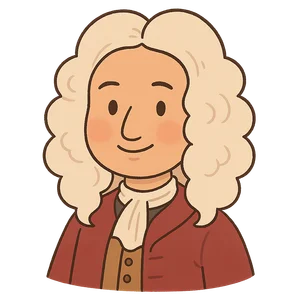
Hello, my name is Antonio Vivaldi, and I painted pictures not with a brush, but with a violin. I was born on March 4th, 1678, in the remarkable city of Venice. In my city, shimmering canals took the place of dusty roads, and people traveled by boat. My world was filled with the sounds of water and music from the very beginning. My father, Giovanni Battista, was a professional violinist in one of the city's most important churches, and he became my very first teacher. He placed a violin in my hands and showed me how to make it sing. From birth, I lived with a condition I called a 'tightness in my chest,' which made it difficult to breathe deeply. This meant I could never play the trumpets or flutes that required powerful lungs. Instead, I poured all my energy into the violin, an instrument that felt like an extension of my own voice. You might also have noticed my hair; it was a vibrant shade of red, a feature that would later give me a memorable nickname.
At the age of 25, in the year 1703, I was ordained as a priest. With my fiery red hair, it didn’t take long for the people of Venice to start calling me 'Il Prete Rosso,' which means 'The Red Priest.' While I was dedicated to my duties in the church, my true, deep-seated passion was always music. It was the language I understood best. In that very same year, 1703, I began a new chapter of my life when I took a position at the Ospedale della Pietà. This was a special institution—a home and a music school for orphaned and abandoned girls. It was my job to teach them the violin and to compose music for them to perform. These young women were incredibly talented, and under my direction, our orchestra and choir became famous throughout Europe. I wrote hundreds of concertos and sacred works specifically for them, tailoring the music to showcase their unique skills. Hearing my compositions brought to life by their dedicated performances was one of the most fulfilling experiences of my entire life.
Antonio Vivaldi
Hello, my name is Antonio Vivaldi, and I painted pictures not with a brush, but with a violin. I was born on March 4th, 1678, in the remarkable city of Venice. In my city, shimmering canals took the place of dusty roads, and people traveled by boat. My world was filled with the sounds of water and music from the very beginning. My father, Giovanni Battista, was a professional violinist in one of the city's most important churches, and he became my very first teacher. He placed a violin in my hands and showed me how to make it sing. From birth, I lived with a condition I called a 'tightness in my chest,' which made it difficult to breathe deeply. This meant I could never play the trumpets or flutes that required powerful lungs. Instead, I poured all my energy into the violin, an instrument that felt like an extension of my own voice. You might also have noticed my hair; it was a vibrant shade of red, a feature that would later give me a memorable nickname.
At the age of 25, in the year 1703, I was ordained as a priest. With my fiery red hair, it didn’t take long for the people of Venice to start calling me 'Il Prete Rosso,' which means 'The Red Priest.' While I was dedicated to my duties in the church, my true, deep-seated passion was always music. It was the language I understood best. In that very same year, 1703, I began a new chapter of my life when I took a position at the Ospedale della Pietà. This was a special institution—a home and a music school for orphaned and abandoned girls. It was my job to teach them the violin and to compose music for them to perform. These young women were incredibly talented, and under my direction, our orchestra and choir became famous throughout Europe. I wrote hundreds of concertos and sacred works specifically for them, tailoring the music to showcase their unique skills. Hearing my compositions brought to life by their dedicated performances was one of the most fulfilling experiences of my entire life.
I always believed that music could do more than just sound beautiful; I was convinced it could tell stories and paint vivid pictures in the listener's mind. This belief guided much of my work as a composer. For a time, I focused on writing operas—grand musical dramas—which took me to cities all across Italy and Europe. However, my most famous attempt to capture stories in music was a collection of violin concertos I published in 1725 called 'The Four Seasons.' In this work, I used music to represent each season of the year. I composed melodies that sounded like the cheerful chirping of birds in spring, the sudden, booming thunderstorms of a hot summer, the joyous celebration of an autumn harvest, and the chattering teeth and icy shivers of a harsh winter. To make sure the audience understood my vision, I even included short poems with the sheet music, describing the scenes I was creating. I wanted people to not just hear the notes, but to see and feel the world through them.
As the years went on, the musical tastes in my beloved Venice began to shift. The style of music that had once made me famous started to sound old-fashioned to the public. Seeking new challenges and a fresh audience, I decided to leave Venice and travel. Around the year 1740, I made a long journey to Vienna, the grand capital of Austria. I went there with great hope, as the Emperor, Charles VI, had expressed admiration for my music, and I aimed to secure a position in his court. Unfortunately, my timing was tragic. Shortly after I arrived in the city, the emperor passed away. His death left me in a difficult position, as I was in a foreign land without the powerful patron I had counted on for support and employment.
I lived to be 63 years old, passing away in Vienna in 1741. For a very long time after my death, my music was largely forgotten, my manuscripts packed away and stored in archives and libraries. It wasn't until nearly 200 years later that scholars and musicians began to rediscover my vast collection of work. They brought my concertos and operas back to life for a new generation. Today, my music is played in concert halls, featured in movies, and enjoyed in homes all around the world. I hope that my compositions, especially 'The Four Seasons,' continue to bring joy and help you imagine the beauty of the world as I saw and heard it so long ago.
Wow facts
About
Antonio Vivaldi was an Italian Baroque composer, virtuoso violinist, teacher, and priest, celebrated for his instrumental concertos, especially 'The Four Seasons'.
Take a Quiz
Question 1 of 5
What challenge did Vivaldi face when he moved to Vienna around 1740, and what was the outcome?
Explore next




Want to do even more?
Go beyond exploring. Unlock tools that turn every story into real learning.

Storypie Plus for families
Full stories, quizzes, and printables. Nights and car rides, sorted.
- Unlimited audio stories
- Create Mode: your child stars in the story
- Offline downloads
- Printable worksheets & coloring pages

Why Storypie for Schools
Students engaged. Prep in seconds. Evenings back to you.
- Worksheets & Quizzes
- Classroom Management
- Formative Assessment
- Custom Curriculum & Lesson Plans
- 27 Languages

Why Storypie for Homeschool
Curriculum done. They'll ask for more. Hours back in your day.
- Worksheet Generator
- First-Person Audio Stories
- Built-in Comprehension Quizzes
- Custom Curriculum & Lesson Plans
- Print & Go Activities