English


Georges Méliès
Georges Méliès was a French illusionist and pioneering filmmaker who is celebrated as the 'Father of Special…
Reads at Grades 3–5 Listens at Grades 1–5
Print & create
Answer keys·No prep·Free with an account
28 worksheets · answer keys · full story · quiz · Ages 8-10 · CEFR B1
Plus adds 279,000+ more stories in 27 languages, audio for every one, and printables for all of them.
Just want Georges Méliès?

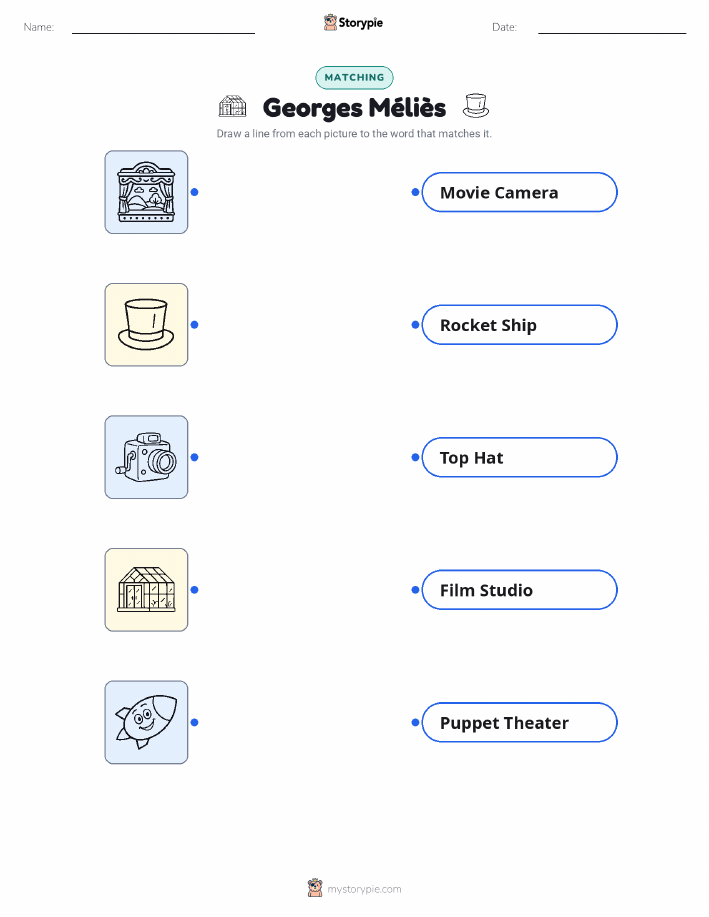
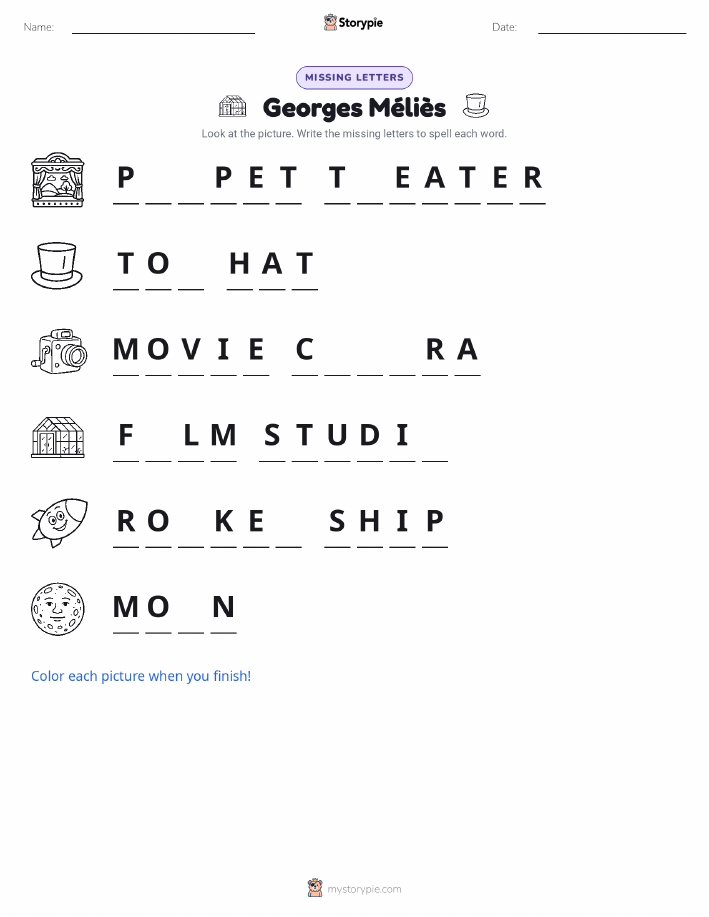
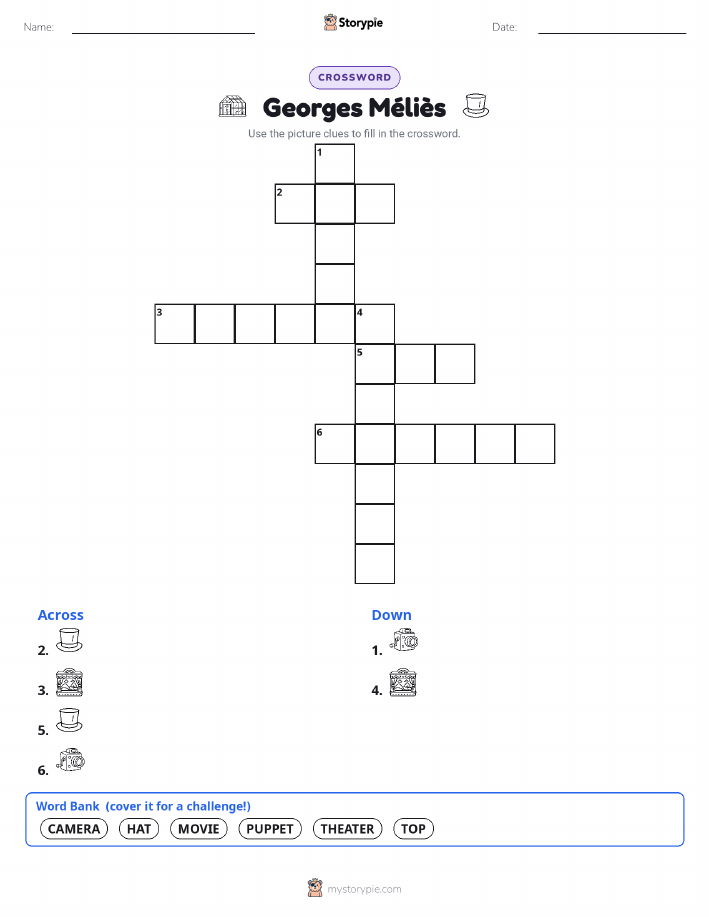
Hello! My name is Georges Méliès, and I want to tell you how I brought magic to the movies. I was born in Paris, France, on December 8th, 1861. My family owned a fancy shoe factory, and while I learned the family business, my real passion was for art and illusion. I loved to draw, build puppets, and put on shows. In 1888, I used my inheritance to buy the Théâtre Robert-Houdin, a famous magic theater. For years, I amazed audiences with my clever tricks and fantastical stage shows, never dreaming that an even bigger kind of magic was just around the corner.
Everything changed on December 28th, 1895. That night, I attended a special show by two brothers, Auguste and Louis Lumière. They had a new invention called the Cinématographe, which could project moving pictures onto a screen! I saw a train arrive at a station, and it looked so real that people in the audience ducked. I knew right away that this was the future of entertainment. I tried to buy a camera from the Lumière brothers, but they refused, saying it was just a scientific curiosity. So, I found another inventor and built my own camera, ready to create my own moving pictures.
By 1896, I was making my own short films and showing them at my theater. I even started my own company, which I called Star Film Company. One day, my camera jammed while filming a bus on the street. When I fixed it and played the film back, it looked like the bus had magically turned into a hearse! I had discovered the stop-trick, my first special effect. To make even more amazing films, in 1897 I built one of the very first movie studios in the garden of my home in Montreuil. It was made almost entirely of glass, like a greenhouse, so I could use the sunlight to film all day long.
Georges Méliès: The Father of Special Effects
Hello! My name is Georges Méliès, and I want to tell you how I brought magic to the movies. I was born in Paris, France, on December 8th, 1861. My family owned a fancy shoe factory, and while I learned the family business, my real passion was for art and illusion. I loved to draw, build puppets, and put on shows. In 1888, I used my inheritance to buy the Théâtre Robert-Houdin, a famous magic theater. For years, I amazed audiences with my clever tricks and fantastical stage shows, never dreaming that an even bigger kind of magic was just around the corner.
Everything changed on December 28th, 1895. That night, I attended a special show by two brothers, Auguste and Louis Lumière. They had a new invention called the Cinématographe, which could project moving pictures onto a screen! I saw a train arrive at a station, and it looked so real that people in the audience ducked. I knew right away that this was the future of entertainment. I tried to buy a camera from the Lumière brothers, but they refused, saying it was just a scientific curiosity. So, I found another inventor and built my own camera, ready to create my own moving pictures.
By 1896, I was making my own short films and showing them at my theater. I even started my own company, which I called Star Film Company. One day, my camera jammed while filming a bus on the street. When I fixed it and played the film back, it looked like the bus had magically turned into a hearse! I had discovered the stop-trick, my first special effect. To make even more amazing films, in 1897 I built one of the very first movie studios in the garden of my home in Montreuil. It was made almost entirely of glass, like a greenhouse, so I could use the sunlight to film all day long.
Inside my glass studio, I could create any world I could imagine. I made films about disappearing people, talking heads, and underwater adventures. I was a director, producer, set designer, and actor all at once! My most famous film was made in 1902, called A Trip to the Moon. It told the story of a group of astronomers who travel to the moon in a capsule shot from a giant cannon. You might have seen the famous image of the capsule landing right in the Man in the Moon's eye! We used every trick I knew, from stop-motion to miniature models. I even hired people to hand-paint every single frame of the film to make it appear in color. It was a huge success all over the world.
I made over 500 films, but as the years went by, the movie business changed. Bigger companies started making longer films, and my style of fantasy became less popular. The start of World War I in 1914 made it very difficult to keep my business going. Sadly, I had to close my studio and sell my company. In a moment of despair, many of my original films were even melted down to recover the silver from the film stock. For a while, it seemed like the world had forgotten all about me and my magical movies.
But the story doesn't end there! In the late 1920s, some young film lovers rediscovered my work and celebrated me as a pioneer of cinema. In 1931, I was awarded the Legion of Honour, France's highest award. I spent my later years running a small toy and candy kiosk in a Paris train station with my wife, Jehanne d'Alcy. I lived to be 76 years old, and though my time as a filmmaker had passed, I was happy to be remembered. Today, people call me the 'Father of Special Effects,' and my dream-like films continue to inspire new generations of storytellers to believe that with a camera, anything is possible.
Wow facts
About
Georges Méliès was a French illusionist and pioneering filmmaker who is celebrated as the 'Father of Special Effects' for his innovative use of narrative and technical tricks in early cinema.
Take a Quiz
Question 1 of 5
In the story, I say my theater was for 'fantastical stage shows.' What does the word 'fantastical' mean?
Explore next





Want to do even more?
Go beyond exploring. Unlock tools that turn every story into real learning.

Storypie Plus for families
Full stories, quizzes, and printables. Nights and car rides, sorted.
- Unlimited audio stories
- Create Mode: your child stars in the story
- Offline downloads
- Printable worksheets & coloring pages

Why Storypie for Schools
Students engaged. Prep in seconds. Evenings back to you.
- Worksheets & Quizzes
- Classroom Management
- Formative Assessment
- Custom Curriculum & Lesson Plans
- 27 Languages

Why Storypie for Homeschool
Curriculum done. They'll ask for more. Hours back in your day.
- Worksheet Generator
- First-Person Audio Stories
- Built-in Comprehension Quizzes
- Custom Curriculum & Lesson Plans
- Print & Go Activities