English


Georges Méliès
Georges Méliès was a French illusionist and pioneering filmmaker who is celebrated as the 'Father of Special…
Reads at Grades 6–8 Listens at Grades 4–8
Print & create
Answer keys·No prep·Free with an account
28 worksheets · answer keys · full story · quiz · Ages 10-12 · CEFR B2
Plus adds 280,000+ more stories in 27 languages, audio for every one, and printables for all of them.
Just want Georges Méliès?
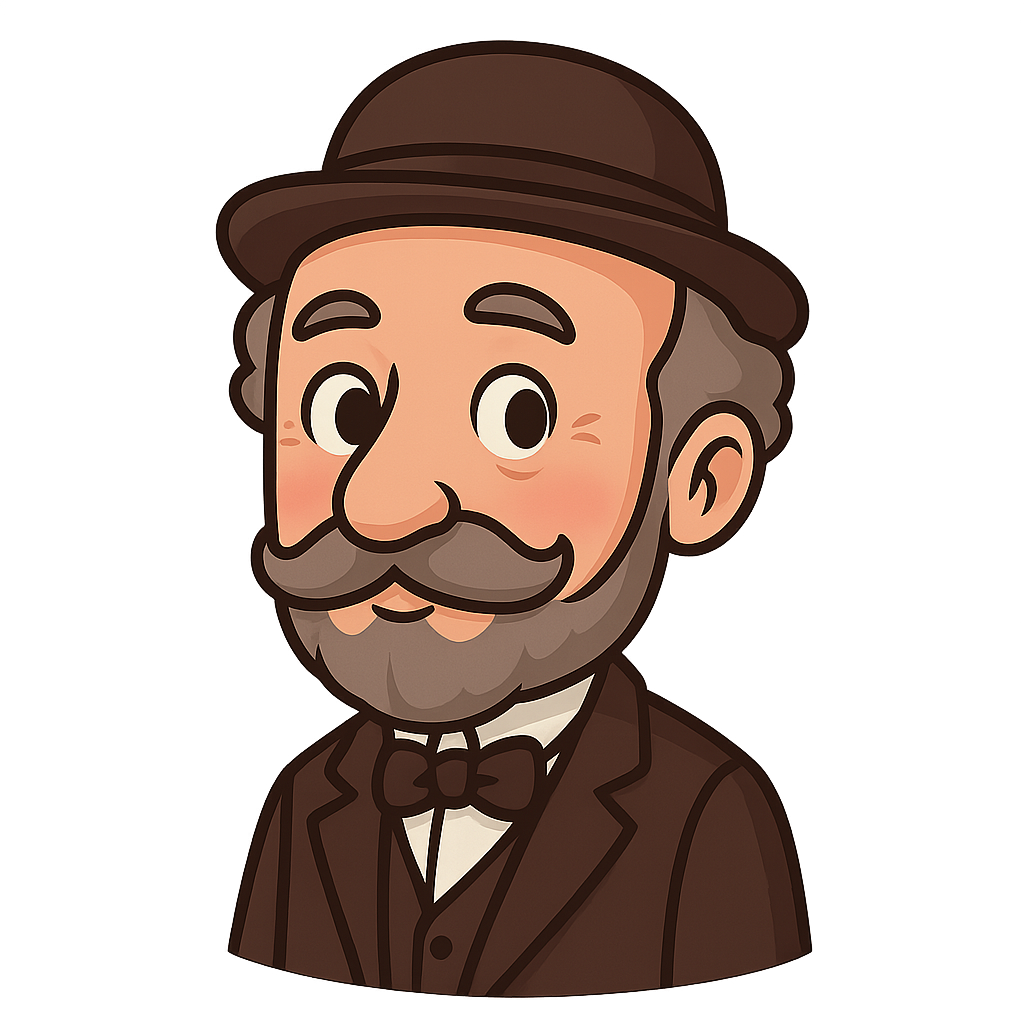
Hello! My name is Georges Méliès, and I want to tell you how I learned to make magic with movies. I was born in Paris, France, on December 8th, 1861. My family owned a successful shoe factory, and while it was a good business, my heart was always drawn to art and performance. As a boy, I was fascinated with creating my own worlds. I built intricate puppet theaters and would put on shows for my family, designing the characters and scenery myself. My imagination was my favorite playground. When I was a young man, I traveled to London and saw performances by incredible stage magicians. Their illusions sparked something in me, and I knew right away that I wanted to create that same sense of wonder for others. In 1888, I used my inheritance not for the family business, but to buy the famous Théâtre Robert-Houdin in Paris. There, I became an illusionist, designing and building my own elaborate stage tricks and becoming a well-known magician in the city.
Everything I thought I knew about magic changed on December 28th, 1895. On that day, I was invited to a special screening to see a new invention called the Cinématographe, created by two brothers, Auguste and Louis Lumière. What I saw was unlike anything I had ever experienced. A picture of a train appeared on a screen, and then, miraculously, it started moving toward the audience! It felt so real that people gasped. To me, it was the most amazing magic trick I had ever seen. I understood immediately that this machine held the future of storytelling. I tried to buy one of their cameras, but the Lumière brothers refused, believing their invention was just a scientific curiosity and not something for entertainers like me. But I was determined. I found an inventor in London who helped me build my very own movie camera, and by 1896, I founded my own company, Star Film, ready to create a new kind of magic.
Georges Méliès: The Father of Special Effects
Hello! My name is Georges Méliès, and I want to tell you how I learned to make magic with movies. I was born in Paris, France, on December 8th, 1861. My family owned a successful shoe factory, and while it was a good business, my heart was always drawn to art and performance. As a boy, I was fascinated with creating my own worlds. I built intricate puppet theaters and would put on shows for my family, designing the characters and scenery myself. My imagination was my favorite playground. When I was a young man, I traveled to London and saw performances by incredible stage magicians. Their illusions sparked something in me, and I knew right away that I wanted to create that same sense of wonder for others. In 1888, I used my inheritance not for the family business, but to buy the famous Théâtre Robert-Houdin in Paris. There, I became an illusionist, designing and building my own elaborate stage tricks and becoming a well-known magician in the city.
Everything I thought I knew about magic changed on December 28th, 1895. On that day, I was invited to a special screening to see a new invention called the Cinématographe, created by two brothers, Auguste and Louis Lumière. What I saw was unlike anything I had ever experienced. A picture of a train appeared on a screen, and then, miraculously, it started moving toward the audience! It felt so real that people gasped. To me, it was the most amazing magic trick I had ever seen. I understood immediately that this machine held the future of storytelling. I tried to buy one of their cameras, but the Lumière brothers refused, believing their invention was just a scientific curiosity and not something for entertainers like me. But I was determined. I found an inventor in London who helped me build my very own movie camera, and by 1896, I founded my own company, Star Film, ready to create a new kind of magic.
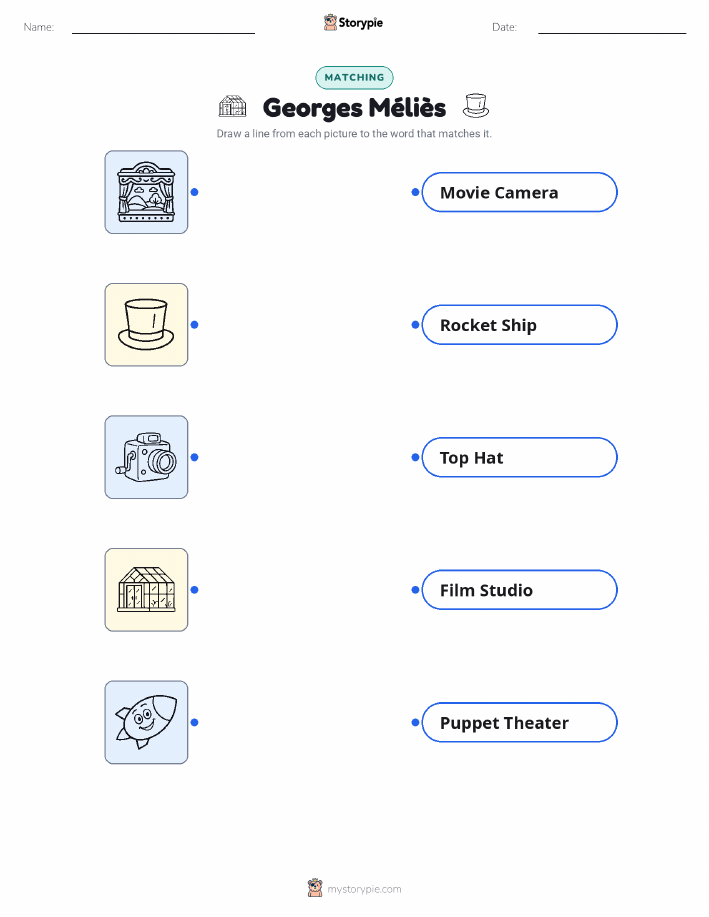
My career as a filmmaker took an astonishing turn through a simple accident. One day in 1896, I was filming a busy street scene in Paris when my camera jammed for just a moment. I fixed it and continued filming. Later, when I developed the film, I saw something impossible. A bus moving down the street seemed to suddenly transform into a hearse! The camera's stop had created an illusion. I had accidentally discovered what is now called the 'stop trick,' my very first special effect. A world of possibilities opened up before me. I realized I could make anything appear, disappear, or change into something else entirely. This was the key to unlocking true movie magic. I began inventing all sorts of new tricks, like using multiple exposures to make one actor appear as two different people in the same scene. To have complete control over my magical worlds, I built one of the very first film studios in 1897. It was a remarkable building made almost entirely of glass, like a giant greenhouse, allowing me to use natural sunlight to film my fantastical stories year-round.
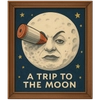
With my new studio and a growing collection of cinematic tricks, I could bring any world I imagined to life. I created films that took audiences to underwater kingdoms, introduced them to giant monsters, and sent them on impossible journeys through space and time. My most famous and ambitious film, which I completed in 1902, was called 'A Trip to the Moon,' or 'Le Voyage dans la Lune.' Perhaps you have seen the iconic image from it: a rocket ship with a comical face that crashes right into the eye of the Man in the Moon. The film was an international sensation and a huge success. However, its popularity also created a major problem for me. In those early days of cinema, there were no copyright laws to protect a filmmaker's work. Unscrupulous people, especially in America, made illegal copies of my film and sold them for their own profit without ever paying me. Over my career, I made over 500 films, but sadly, I lost much of the money I should have earned from my hard work and creativity.
As the years passed, the movie business began to change in ways that left my work behind. By the 1910s, audiences started to prefer longer, more realistic stories with complex plots. Large film companies emerged and began producing movies that were very different from my short, fantastical creations. My style of filmmaking was seen as old-fashioned. By 1913, my Star Film Company was in serious financial trouble, and I was forced to stop making movies altogether. The outbreak of the First World War made things even worse, disrupting life and the arts across Europe. In a moment of great sadness and frustration, feeling that my work had been forgotten and was now worthless, I burned the crates that held the original copies of my films. For many years, it seemed the world had forgotten me. I ended up running a small toy and candy kiosk in a Paris train station with my wife, Jehanne d'Alcy, who had once been a lead actress in many of my magical films.
Just when I thought my life's work had vanished forever, a new generation of film lovers and journalists rediscovered my movies in the mid-1920s. They found surviving copies of my work and realized how important my contributions had been. They celebrated me as a true pioneer of the cinema, holding a special gala in my honor. In 1931, I was awarded the Legion of Honour, which is France's highest and most prestigious award. I lived to be 76 years old. Today, people call me the 'Father of Special Effects.' Every time you watch a movie with incredible computer graphics, alien worlds, or fantastic creatures, you are seeing the evolution of the magic I began experimenting with over a century ago in my little glass studio. I showed the world that a film could be more than just a moving picture—it could be a dream brought to life.
Wow facts
About
Georges Méliès was a French illusionist and pioneering filmmaker who is celebrated as the 'Father of Special Effects' for his innovative use of narrative and technical tricks in early cinema.
Take a Quiz
Question 1 of 5
How did my camera jamming in 1896 change the way I made movies?
Explore next





Want to do even more?
Go beyond exploring. Unlock tools that turn every story into real learning.

Storypie Plus for families
Full stories, quizzes, and printables. Nights and car rides, sorted.
- Unlimited audio stories
- Create Mode: your child stars in the story
- Offline downloads
- Printable worksheets & coloring pages

Why Storypie for Schools
Students engaged. Prep in seconds. Evenings back to you.
- Worksheets & Quizzes
- Classroom Management
- Formative Assessment
- Custom Curriculum & Lesson Plans
- 27 Languages

Why Storypie for Homeschool
Curriculum done. They'll ask for more. Hours back in your day.
- Worksheet Generator
- First-Person Audio Stories
- Built-in Comprehension Quizzes
- Custom Curriculum & Lesson Plans
- Print & Go Activities