

 English

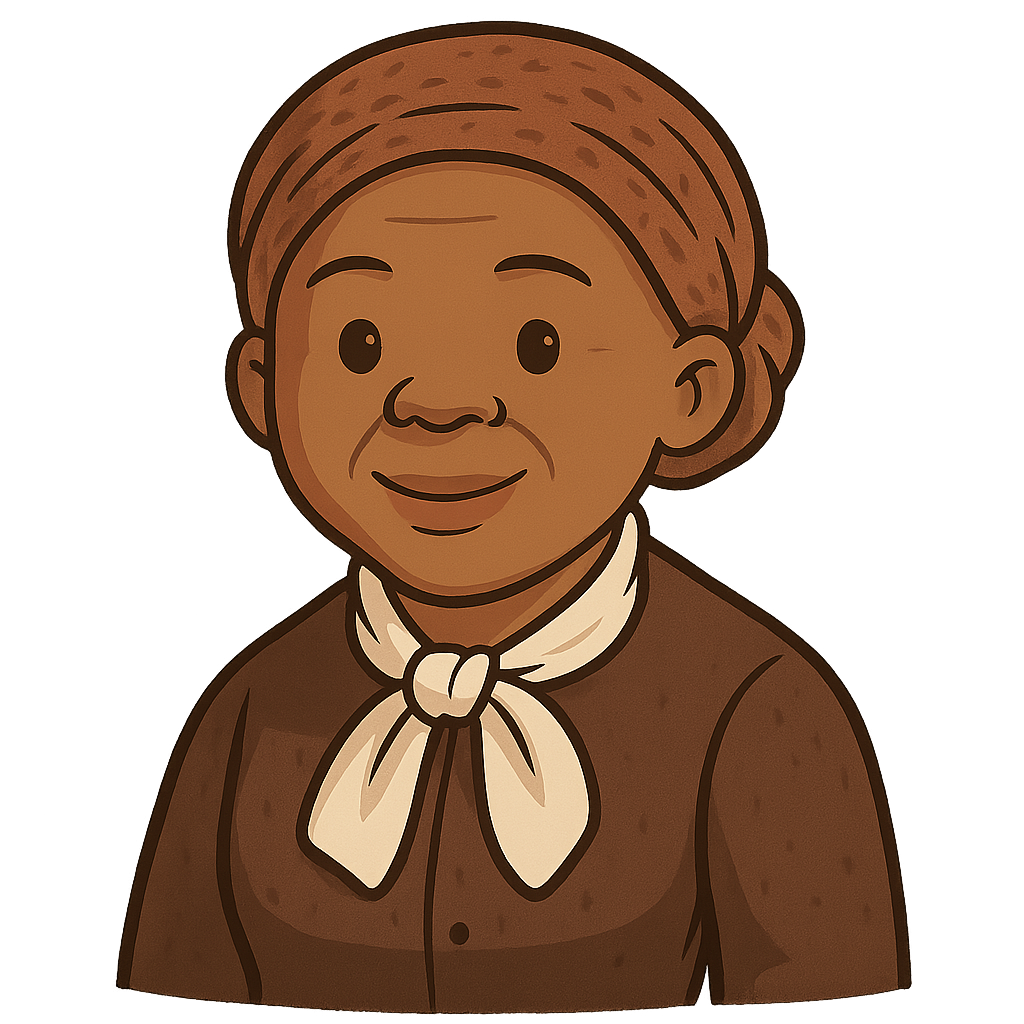
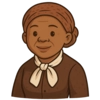
Harriet Tubman: A Story of Freedom
Hello there. My name was Araminta Ross, but most people know me by the name I chose for myself, Harriet Tubman. My story begins in Maryland, where I was born into slavery around the year 1822. Life was very difficult. From the time I was a little girl, I worked long, hard hours in the fields and in the house. The sun was hot, the work was tiring, and there was always the deep, gnawing fear that my family could be torn apart. My parents, brothers, and sisters were the most important people in the world to me, but at any moment, any one of us could be sold to a different owner, never to see each other again. That fear was like a constant shadow. When I was a teenager, I suffered a terrible head injury. It was painful and caused me to have sleeping spells and powerful visions for the rest of my life. But these visions, which I believed were messages from God, strengthened my faith. They planted a tiny, brave seed in my heart—a dream of freedom. I didn't just want to be free myself; I wanted to see my family and all my people breathe the air of freedom, too.
In 1849, I overheard that I was going to be sold to a new owner far away in the South. I knew I would be separated from my family forever. That was the moment my dream had to become a plan. I decided to run. Leaving my husband, John Tubman, and the only home I had ever known was the hardest thing I’d ever done. I traveled only at night, with the North Star as my map in the dark sky. The journey was terrifying. I hid in swamps, my feet aching and my stomach empty, listening for the sounds of dogs or men hunting for me. But I was not entirely alone. I met kind people along the way—both Black and white—who were part of a secret network called the Underground Railroad. They gave me food, a safe place to hide during the day, and directions for the next part of my journey. After traveling nearly 100 miles, I finally crossed the border into Pennsylvania, a free state. I remember looking at my hands to see if I was the same person. The sun felt so warm and bright. I was free. But my joy was mixed with sorrow, because my family was not there with me. I made a promise to God and to myself right then: I would come back for them.
Keeping that promise became my life’s work. I became what was known as a “conductor” on the Underground Railroad. But I wasn't conducting a train; I was conducting people to freedom. I made about thirteen dangerous trips back into Maryland. It was risky work, and I had to be clever. I would use songs as secret signals. A song like “Go Down, Moses” might tell people it was time to leave, while another tune could warn of danger nearby. Because I led so many of our people out of bondage, they started to call me “Moses,” after the Bible story of the man who led his people to a promised land. My work became even more dangerous in 1850 when a new law called the Fugitive Slave Act was passed. This law meant that even in the northern states, escaped slaves could be caught and returned to their owners. So, I had to lead people even farther north, all the way to Canada where they would be truly safe. I rescued my parents, my brothers, and dozens of other people. Looking back, I am proud to say that in all my journeys, I never ran my train off the track and I never lost a single passenger.
My fight for freedom didn't stop with the Underground Railroad. When the Civil War began, I knew I had to help the Union Army in its fight against slavery. I worked as a nurse, caring for wounded soldiers, and I also became a scout and a spy. Because I knew the land so well and could move without being noticed, I was able to gather important information. On June 2nd, 1863, I helped lead a raid at the Combahee River in South Carolina. We surprised the enemy and freed more than 700 enslaved people in a single night. After the war, I settled in a town called Auburn, New York. I brought my parents to live with me and spent the rest of my days caring for others, even opening a home for the elderly who had no place to go. My life ended on March 10th, 1913, but my story lives on. I hope it reminds you that with courage, faith, and a deep love for others, one person truly can make a difference in the world.
Activities
Take a Quiz
Test what you learned with a fun quiz!
Get creative with colors!
Print a coloring book page of this topic.








 Free for Educators