English

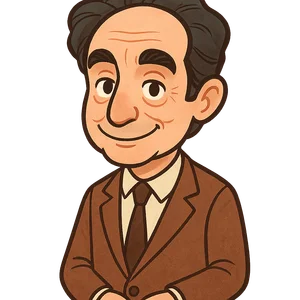
Italo Calvino
Italo Calvino was an Italian journalist and writer known for his imaginative and experimental novels and…
Reads at Grades 6–8 Listens at Grades 4–8
Print & create
Answer keys·No prep·Free with an account
28 worksheets · answer keys · full story · quiz · Ages 10-12 · CEFR B2
Plus adds 280,000+ more stories in 27 languages, audio for every one, and printables for all of them.
Just want Italo Calvino?
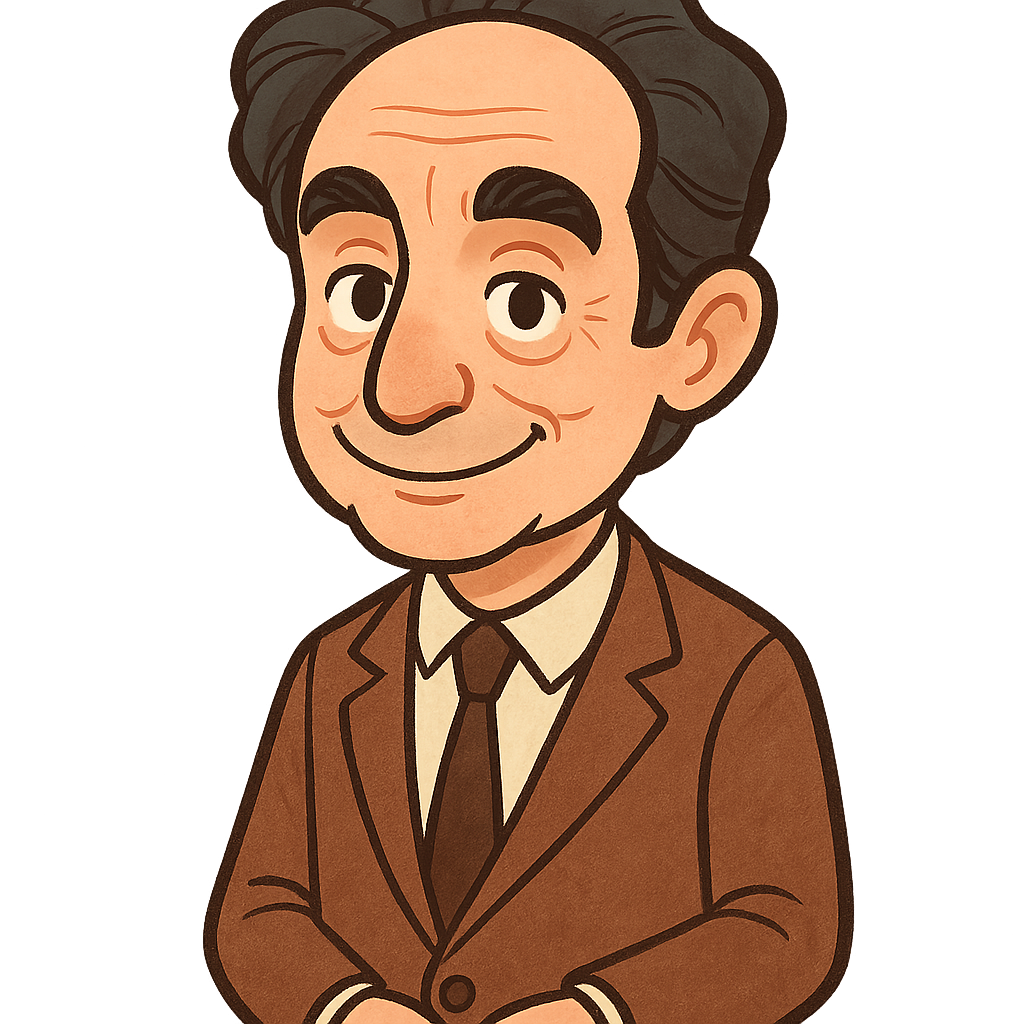
Hello! My name is Italo Calvino, and I want to tell you the story of my life, which was filled with books, ideas, and endless imagination. My story begins not in Italy, where I am from, but on a sunny island. I was born on October 15th, 1923, in Santiago de las Vegas, Cuba. My parents, Mario and Eva, were both brilliant scientists—botanists, to be exact—who studied plants. When I was a little boy, we moved back to my family's home in Sanremo, a beautiful town on the Italian coast. Growing up, I was surrounded by my parents' world of science, logic, and careful observation. I spent my days in our family's garden and their experimental floriculture station, learning the names of plants and seeing how everything in nature had a specific order. This scientific way of looking at the world would later shape every story I wrote.
My teenage years were interrupted by a dark time in history: World War II. When the war came to Italy, I knew I had to stand up for what was right. In 1943, I made a difficult choice and joined the Italian Resistance, fighting against the fascist government. For twenty months, I lived a dangerous life, hiding in the mountains and fighting for freedom. These experiences were tough, but they showed me the importance of courage and humanity. After the war ended in 1945, I felt an urgent need to tell the stories of what had happened. I put my experiences into my very first novel, *The Path to the Spiders' Nests*, which was published in 1947. It told the story of the war through the eyes of a young boy, because I wanted to show how even in the most serious of times, there is a different way to see things. This was the beginning of my life as a writer.
Italo Calvino: The Baron in the Trees
Hello! My name is Italo Calvino, and I want to tell you the story of my life, which was filled with books, ideas, and endless imagination. My story begins not in Italy, where I am from, but on a sunny island. I was born on October 15th, 1923, in Santiago de las Vegas, Cuba. My parents, Mario and Eva, were both brilliant scientists—botanists, to be exact—who studied plants. When I was a little boy, we moved back to my family's home in Sanremo, a beautiful town on the Italian coast. Growing up, I was surrounded by my parents' world of science, logic, and careful observation. I spent my days in our family's garden and their experimental floriculture station, learning the names of plants and seeing how everything in nature had a specific order. This scientific way of looking at the world would later shape every story I wrote.
My teenage years were interrupted by a dark time in history: World War II. When the war came to Italy, I knew I had to stand up for what was right. In 1943, I made a difficult choice and joined the Italian Resistance, fighting against the fascist government. For twenty months, I lived a dangerous life, hiding in the mountains and fighting for freedom. These experiences were tough, but they showed me the importance of courage and humanity. After the war ended in 1945, I felt an urgent need to tell the stories of what had happened. I put my experiences into my very first novel, The Path to the Spiders' Nests, which was published in 1947. It told the story of the war through the eyes of a young boy, because I wanted to show how even in the most serious of times, there is a different way to see things. This was the beginning of my life as a writer.
After my first book, I started to explore a different kind of storytelling. I became fascinated with fables, folktales, and the power of imagination. In the 1950s, I wrote a trilogy of novels called Our Ancestors. One story was about a man who was split in two, one good and one evil. Another was about a knight who didn't exist inside his armor! And my favorite, The Baron in the Trees from 1957, was about a boy who, after an argument with his father, decides to live his entire life up in the trees, never touching the ground again. I loved creating these fantastic situations to explore real ideas about how people live and who they want to be. I spent many years working for a publishing house called Einaudi, where I helped other writers share their stories, too. I believed that stories were like maps that could help us understand the world.
My imagination kept traveling to new places. In 1965, I published a collection of stories called Cosmicomics, where I tried to imagine what the beginning of the universe was like. The stories were told by a creature named Qfwfq who had been around since the Big Bang, describing things like the first sign on Earth or the moon moving away from our planet. Then, in 1972, I wrote one of my most famous books, Invisible Cities. In this book, the explorer Marco Polo describes 55 magical, impossible cities to the emperor Kublai Khan. Each city explores an idea about memory, desire, or life itself. I wanted to show that the world is not just what we see, but also what we can imagine. In 1979, I wrote a novel called If on a winter's night a traveler, which is a story about you, the reader, trying to read a story. It was a playful puzzle, and I had so much fun writing it.
I lived to be 61 years old, and I spent my life playing with the building blocks of storytelling. I loved to combine fantasy with reality, and science with fairy tales. I believed that literature should be light, quick, and precise, like a bird in flight. Today, people remember me for my imaginative books that challenge them to see the world differently. My stories are an invitation to you to use your own imagination, to build your own invisible cities, and to find the wonder that is hidden in every corner of life.
Wow facts
About
Italo Calvino was an Italian journalist and writer known for his imaginative and experimental novels and short stories, which often blend fantasy, fable, and scientific concepts.
Take a Quiz
Question 1 of 5
Based on the text, why did Italo Calvino join the Italian Resistance in 1943?
Explore next





Want to do even more?
Go beyond exploring. Unlock tools that turn every story into real learning.

Storypie Plus for families
Full stories, quizzes, and printables. Nights and car rides, sorted.
- Unlimited audio stories
- Create Mode: your child stars in the story
- Offline downloads
- Printable worksheets & coloring pages

Why Storypie for Schools
Students engaged. Prep in seconds. Evenings back to you.
- Worksheets & Quizzes
- Classroom Management
- Formative Assessment
- Custom Curriculum & Lesson Plans
- 27 Languages

Why Storypie for Homeschool
Curriculum done. They'll ask for more. Hours back in your day.
- Worksheet Generator
- First-Person Audio Stories
- Built-in Comprehension Quizzes
- Custom Curriculum & Lesson Plans
- Print & Go Activities