English
 Continue with Google
 Continue with Apple

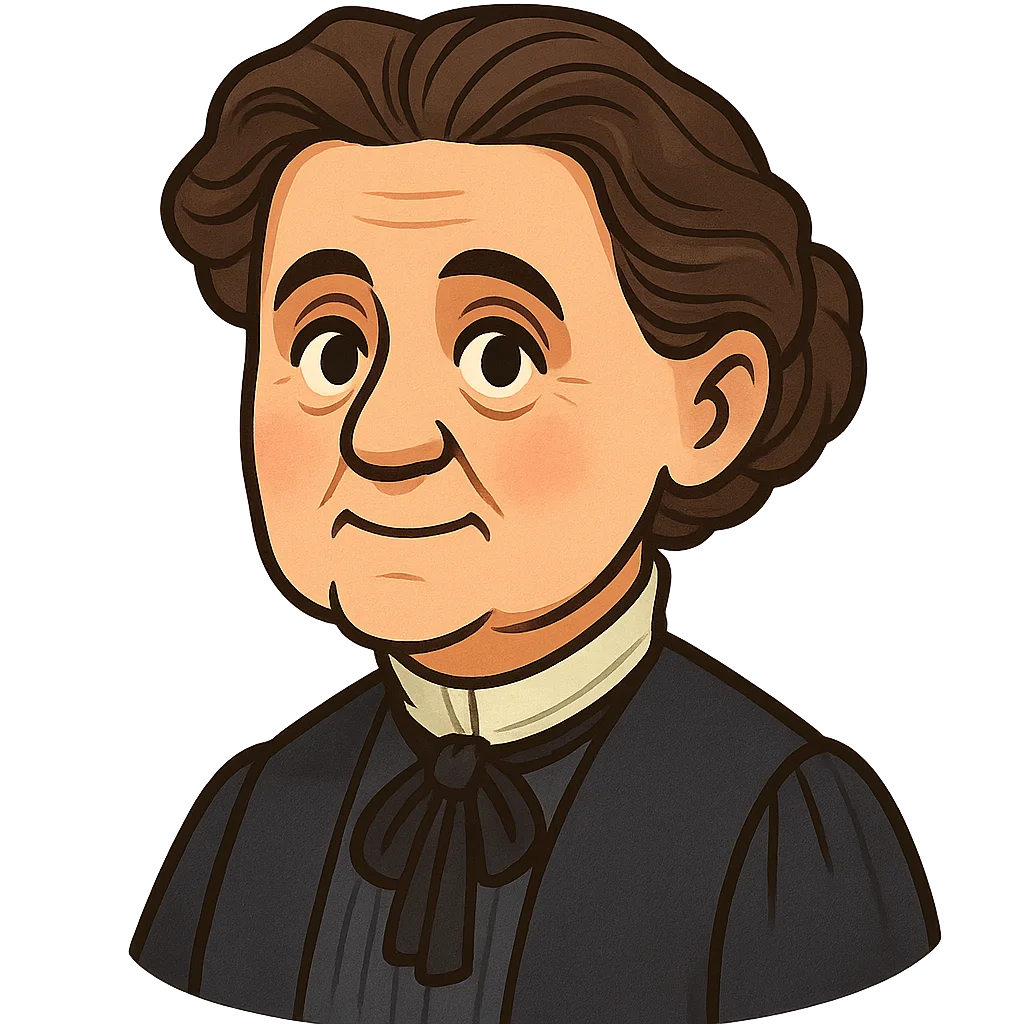
Jane Addams: A Helper for All
Hello! My name is Jane Addams. My story begins on September 6th, 1860, in a small town called Cedarville, Illinois. I grew up in a big family, and my father taught me how important it was to be kind and help other people. From a very young age, I knew that I wanted my life's work to be about making the world a better place. I dreamed of becoming a doctor so I could help people who were poor and sick feel better.
I loved learning and was excited to go to a school called Rockford Female Seminary. I worked very hard and graduated in the year 1881. After I finished school, I felt a little lost and wasn't sure what I should do with my life. A few years later, in 1888, my good friend Ellen Gates Starr and I took a trip all the way to London, England. While we were there, we visited a special place called Toynbee Hall. It was a community center that helped people in the neighborhood learn new skills and make friends. Seeing how it worked gave me a wonderful idea!
When I came back to America, I knew exactly what I needed to do. Ellen and I moved to the big, busy city of Chicago. We found a large, old house that once belonged to a man named Charles Hull. On September 18th, 1889, we opened its doors and named it Hull House. It was so much more than just a house; it became a neighborhood center for everyone, especially for the many immigrant families who were new to America. We started a kindergarten for the children, offered classes for adults to learn English, and had a library filled with books. We even had an art gallery and a public kitchen. Hull House was a safe and welcoming place where people could get help and feel like they truly belonged.
While working at Hull House, I saw that many of the problems people faced were too big for one person or even one house to fix. I realized that to make a real difference, we needed to change the laws to help everyone. I began to speak up for workers, demanding safer places to work and better pay for their long hours. I fought hard to stop young children from having to work in dangerous factories and helped create new laws to protect them. I also believed that women should have the right to vote, so I joined the fight for women's suffrage. When World War I began, I worked hard to promote peace between all nations.
My work for peace was noticed by people all around the world. In the year 1931, I was given a very special award called the Nobel Peace Prize. It was an incredible honor, and I was the very first American woman to receive it! It was a wonderful feeling to know that my efforts to bring people together and encourage peace were making a real difference in the world.
I lived to be 74 years old, and I spent my entire life trying to be a good neighbor to everyone. The idea that started with Hull House spread, and soon there were hundreds of similar settlement houses all across the country, helping people in their own communities. Today, people remember me as the 'mother' of social work. My story shows that if you see a problem in the world, you have the power to help fix it, one kind act at a time.
Reading Comprehension Questions
Click to see answer