English

Elevator
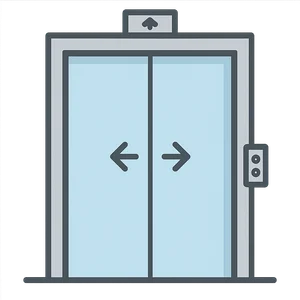
A machine that moves people and goods vertically between floors of a building.
Reads at Grades 3–5 Listens at Grades 1–5
Print & create
Answer keys·No prep·Free with an account
28 worksheets · answer keys · full story · quiz · Ages 8-10 · CEFR B1
Plus adds 279,000+ more stories in 27 languages, audio for every one, and printables for all of them.
Just want Elevator?

Hello there. You probably know me as the Elevator, but you might not know what the world was like before I came along. Imagine a time when cities were wide, but not very tall. Buildings were stout and short, rarely climbing higher than a few floors. Why? Because the only way up was your own two feet, climbing step after tiring step. Think of carrying a big bag of groceries up five flights of stairs, or movers trying to haul a heavy sofa up a narrow, winding staircase. It was exhausting. People dreamed of living and working among the clouds, but their legs could only carry them so far. Cities could spread outwards, taking up more and more land, but they couldn't grow upwards. The world was stuck, waiting for a clever idea that could lift everyone's spirits, and their bodies, too. The problem was clear: climbing was hard work, and what people really needed was a safe, mechanical way to rise.
My earliest ancestors were, I admit, a little scary. They were often just simple wooden platforms hauled up by a single, creaky rope. People used them in mines and factories to lift heavy materials, but they would never trust their own lives to one. They would look up at the fraying rope and whisper, “What if it snaps?”. That single question kept buildings, and people's dreams, firmly on the ground. But then, a brilliant man named Elisha Otis changed my life forever. He was an inventor who was bothered by that very same question. He was determined to make me safe. His big moment, and mine, came in 1854 at a huge fair in New York City's Crystal Palace. I was set up in the middle of a grand hall, with my ropes and pulleys reaching high toward the ceiling. A huge crowd gathered below, whispering and pointing. Mr. Otis stood proudly on my platform as I was hoisted high into the air. The people below looked like tiny dolls. My wooden floorboards creaked. Then, Mr. Otis did the most daring thing imaginable. He smiled at the audience and shouted to his assistant standing nearby, “Cut the rope!”. A man with an axe stepped forward. The crowd gasped in horror. With a mighty swing, the axe sliced through my thick hoisting rope. *SNAP!* For a terrifying split second, I felt myself plunge. My whole frame shuddered. But then, just as panic began to set in, *CLANK!* Mr. Otis's amazing invention, a safety brake, sprang to life. Two strong metal teeth shot out from my sides and dug into the guide rails, stopping my fall instantly. I had only dropped a few inches. A hush fell over the crowd, followed by a wave of thunderous applause. Mr. Otis tipped his hat. “All safe, gentlemen,” he declared. “All safe.” On that day, I was reborn. I was no longer just a simple hoist; I was a promise of safety.
The Elevator: A Story of Reaching New Heights
Hello there. You probably know me as the Elevator, but you might not know what the world was like before I came along. Imagine a time when cities were wide, but not very tall. Buildings were stout and short, rarely climbing higher than a few floors. Why? Because the only way up was your own two feet, climbing step after tiring step. Think of carrying a big bag of groceries up five flights of stairs, or movers trying to haul a heavy sofa up a narrow, winding staircase. It was exhausting. People dreamed of living and working among the clouds, but their legs could only carry them so far. Cities could spread outwards, taking up more and more land, but they couldn't grow upwards. The world was stuck, waiting for a clever idea that could lift everyone's spirits, and their bodies, too. The problem was clear: climbing was hard work, and what people really needed was a safe, mechanical way to rise.
My earliest ancestors were, I admit, a little scary. They were often just simple wooden platforms hauled up by a single, creaky rope. People used them in mines and factories to lift heavy materials, but they would never trust their own lives to one. They would look up at the fraying rope and whisper, “What if it snaps?”. That single question kept buildings, and people's dreams, firmly on the ground. But then, a brilliant man named Elisha Otis changed my life forever. He was an inventor who was bothered by that very same question. He was determined to make me safe. His big moment, and mine, came in 1854 at a huge fair in New York City's Crystal Palace. I was set up in the middle of a grand hall, with my ropes and pulleys reaching high toward the ceiling. A huge crowd gathered below, whispering and pointing. Mr. Otis stood proudly on my platform as I was hoisted high into the air. The people below looked like tiny dolls. My wooden floorboards creaked. Then, Mr. Otis did the most daring thing imaginable. He smiled at the audience and shouted to his assistant standing nearby, “Cut the rope!”. A man with an axe stepped forward. The crowd gasped in horror. With a mighty swing, the axe sliced through my thick hoisting rope. SNAP! For a terrifying split second, I felt myself plunge. My whole frame shuddered. But then, just as panic began to set in, CLANK! Mr. Otis's amazing invention, a safety brake, sprang to life. Two strong metal teeth shot out from my sides and dug into the guide rails, stopping my fall instantly. I had only dropped a few inches. A hush fell over the crowd, followed by a wave of thunderous applause. Mr. Otis tipped his hat. “All safe, gentlemen,” he declared. “All safe.” On that day, I was reborn. I was no longer just a simple hoist; I was a promise of safety.
That one daring demonstration changed the world. Once architects and builders knew I was safe, their imaginations were set free. They were no longer limited to five or six floors. They started drawing plans for buildings that stretched ten, twenty, even fifty stories into the air, scraping the bottoms of the clouds. These new buildings were called skyscrapers, and they began to pop up in cities all over the world, creating the amazing skylines we know today. I was there for it all, lifting the steel beams for workers building these new towers, carrying furniture into apartments with breathtaking views, and whisking business people to offices high above the streets. Today, my job is more important than ever. I am the quiet, steady heart of almost every tall building, helping doctors in hospitals, families in apartment buildings, and travelers in hotels. Looking back, I realize that Mr. Otis’s clever idea did more than just stop me from falling. It gave everyone the courage to build higher, dream bigger, and reach for the sky.
Wow facts
About
A machine that moves people and goods vertically between floors of a building. The modern passenger elevator was made possible by Elisha Otis's invention of a safety brake.
Take a Quiz
Question 1 of 5
Why were buildings not very tall before the elevator's safety brake was invented?
Explore next




Want to do even more?
Go beyond exploring. Unlock tools that turn every story into real learning.

Storypie Plus for families
Full stories, quizzes, and printables. Nights and car rides, sorted.
- Unlimited audio stories
- Create Mode: your child stars in the story
- Offline downloads
- Printable worksheets & coloring pages

Why Storypie for Schools
Students engaged. Prep in seconds. Evenings back to you.
- Worksheets & Quizzes
- Classroom Management
- Formative Assessment
- Custom Curriculum & Lesson Plans
- 27 Languages

Why Storypie for Homeschool
Curriculum done. They'll ask for more. Hours back in your day.
- Worksheet Generator
- First-Person Audio Stories
- Built-in Comprehension Quizzes
- Custom Curriculum & Lesson Plans
- Print & Go Activities