English

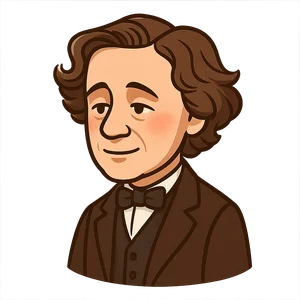
Lewis Carroll
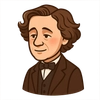
Lewis Carroll, born Charles Lutwidge Dodgson, was an English writer, mathematician, logician…
Reads at Grades 6–8 Listens at Grades 4–8
Print & create
Answer keys·No prep·Free with an account
28 worksheets · answer keys · full story · quiz · Ages 10-12 · CEFR B2
Plus adds 279,000+ more stories in 27 languages, audio for every one, and printables for all of them.
Just want Lewis Carroll?
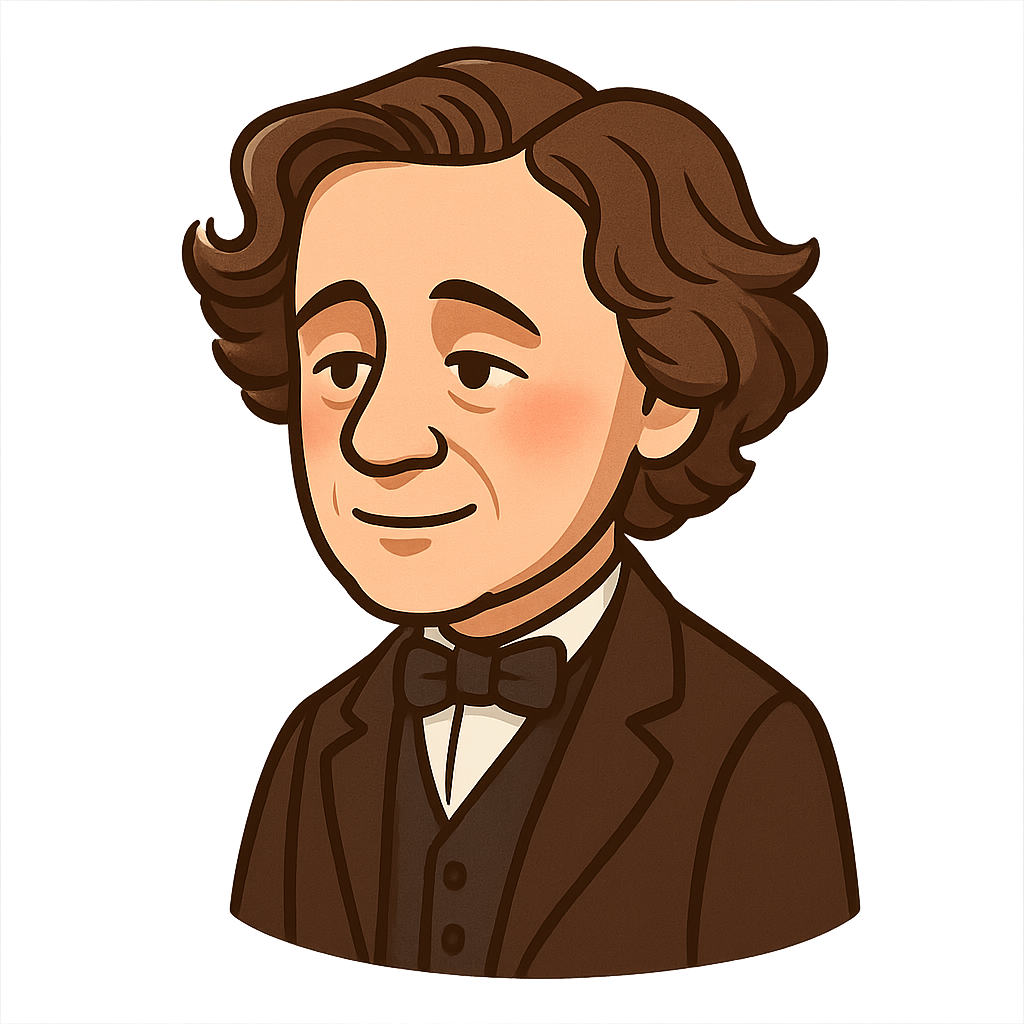
Hello! You probably know me by my pen name, Lewis Carroll, but I'd like to introduce myself by my real name: Charles Lutwidge Dodgson. I was born on January 27th, 1832, in a small village called Daresbury in Cheshire, England. Life in our home was never dull, as I was the third of eleven children. To entertain my brothers and sisters, I loved inventing stories and creating my own family magazines, which I filled with my poems and drawings. Although I had a stammer that sometimes made speaking a challenge, I found my voice on the page, where words could flow without hesitation. Alongside my love for storytelling, I had a deep passion for mathematics and puzzles. For me, logic and numbers weren't just subjects in a book; they were a playground for the mind, just as creative and exciting as any fairy tale I could imagine.
When I was old enough, I began my studies in 1851 at Christ Church, a college at the famous University of Oxford. I felt so at home in the world of academia that I decided to make it my life. After graduating with top honors in mathematics in 1854, I accepted a position as a lecturer there in 1855, where I taught young men the principles of logic and numbers. My life at Oxford was quiet and structured, surrounded by books and equations. However, I also developed a new passion for photography, which was a very new art form at the time. I set up my own photography studio and enjoyed taking portraits of many people, including well-known artists and writers, but I always found that my favorite subjects were children. In 1861, I also took on the role of a deacon in the Church of England, a commitment that was very important to me, though I knew my true calling was to remain a teacher.
Lewis Carroll
Hello! You probably know me by my pen name, Lewis Carroll, but I'd like to introduce myself by my real name: Charles Lutwidge Dodgson. I was born on January 27th, 1832, in a small village called Daresbury in Cheshire, England. Life in our home was never dull, as I was the third of eleven children. To entertain my brothers and sisters, I loved inventing stories and creating my own family magazines, which I filled with my poems and drawings. Although I had a stammer that sometimes made speaking a challenge, I found my voice on the page, where words could flow without hesitation. Alongside my love for storytelling, I had a deep passion for mathematics and puzzles. For me, logic and numbers weren't just subjects in a book; they were a playground for the mind, just as creative and exciting as any fairy tale I could imagine.
When I was old enough, I began my studies in 1851 at Christ Church, a college at the famous University of Oxford. I felt so at home in the world of academia that I decided to make it my life. After graduating with top honors in mathematics in 1854, I accepted a position as a lecturer there in 1855, where I taught young men the principles of logic and numbers. My life at Oxford was quiet and structured, surrounded by books and equations. However, I also developed a new passion for photography, which was a very new art form at the time. I set up my own photography studio and enjoyed taking portraits of many people, including well-known artists and writers, but I always found that my favorite subjects were children. In 1861, I also took on the role of a deacon in the Church of England, a commitment that was very important to me, though I knew my true calling was to remain a teacher.
During my time at Oxford, I formed a wonderful friendship with the Dean of Christ Church, Henry Liddell, and his family. I was especially fond of his three young daughters: Lorina, Edith, and Alice. On a beautiful summer afternoon, July 4th, 1862, I took the girls for a boat trip on the river. To pass the time, I began to spin a tale, making it up as I went along. It was a story about a little girl named Alice who, out of boredom, follows a White Rabbit down a rabbit-hole and tumbles into a fantastical world. The girls were completely enthralled by the adventure. The real Alice Liddell, who had inspired my main character, was particularly captivated. When our boat ride ended, she pleaded with me, 'Oh, Mr. Dodgson, I wish you would write out Alice's adventures for me!'. I promised her I would. Over the next few years, I carefully wrote and even illustrated the story myself. It was finally published in 1865 under my pen name, Lewis Carroll, which I chose to keep my career as a children's author separate from my serious academic work as a mathematician.
To my great surprise and delight, Alice's Adventures in Wonderland became an immediate success. Readers of all ages, both children and adults, fell in love with the peculiar world of Wonderland and its many quirky inhabitants, such as the Mad Hatter, the disappearing Cheshire Cat, and the commanding Queen of Hearts. The book's popularity encouraged me to continue Alice's story. In 1871, I published the sequel, Through the Looking-Glass, and What Alice Found There, in which Alice steps through a mirror into another bizarre world governed by the rules of a chess game. This book included one of my most famous nonsense poems, 'Jabberwocky.' My mind was always a blend of the logical and the nonsensical, and I continued to explore this throughout my life, writing other poems like 'The Hunting of the Snark' in 1876 and inventing numerous logic puzzles and games for others to enjoy.
I continued my work as a lecturer at Christ Church until 1881, but I continued to live within the college's peaceful walls for the rest of my days. I lived to be 65 years old. Today, my stories about Alice have achieved a level of fame I never could have predicted. They have been translated into countless languages and have inspired an incredible number of plays, films, and works of art around the globe. I hope that when you read my books, you feel a spark of that same wonder we felt on the river that day and remember that a little bit of nonsense can make the world a much more interesting place. My stories show that logic and imagination are not opposites—they are the best of friends.
Wow facts
About
Lewis Carroll, born Charles Lutwidge Dodgson, was an English writer, mathematician, logician, and photographer, best known for his classic children's books, 'Alice's Adventures in Wonderland' and its sequel, 'Through the Looking-Glass'.
Take a Quiz
Question 1 of 5
In your own words, summarize the main events that led Charles Dodgson to write 'Alice's Adventures in Wonderland'.
Explore next

Want to do even more?
Go beyond exploring. Unlock tools that turn every story into real learning.

Storypie Plus for families
Full stories, quizzes, and printables. Nights and car rides, sorted.
- Unlimited audio stories
- Create Mode: your child stars in the story
- Offline downloads
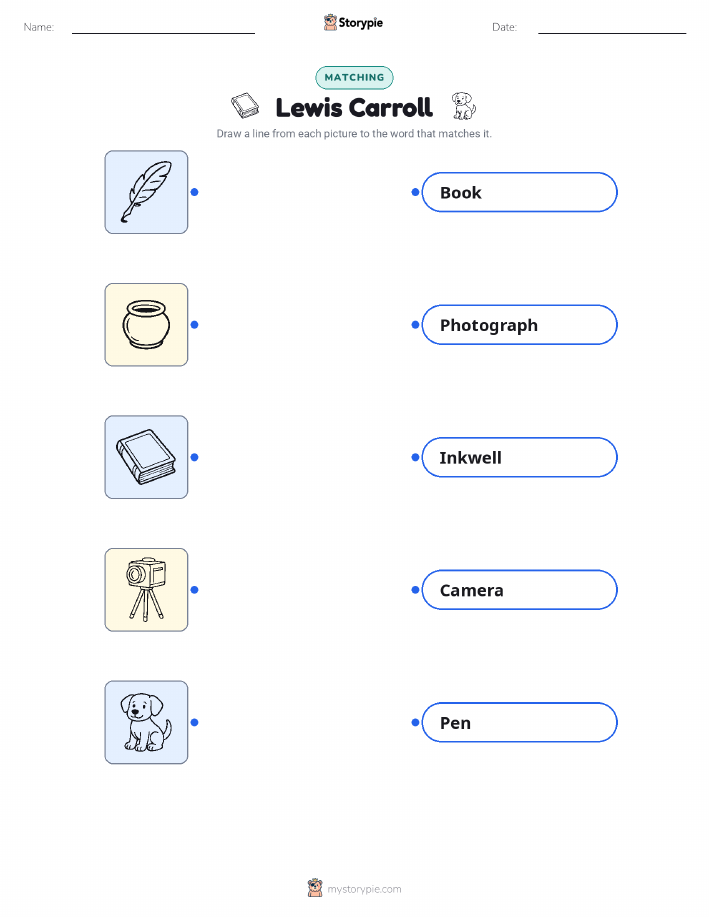
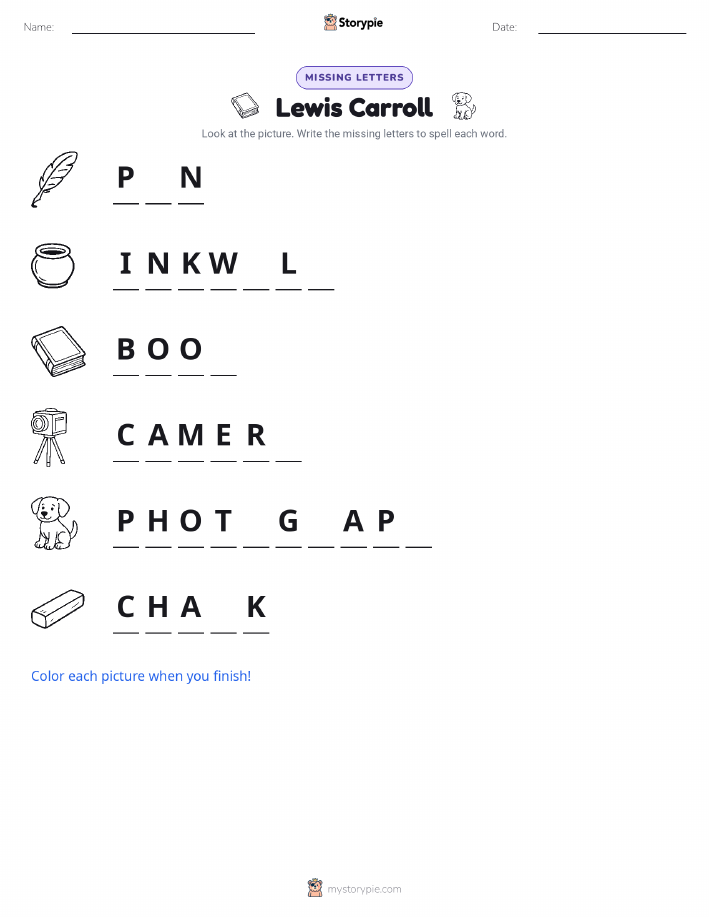
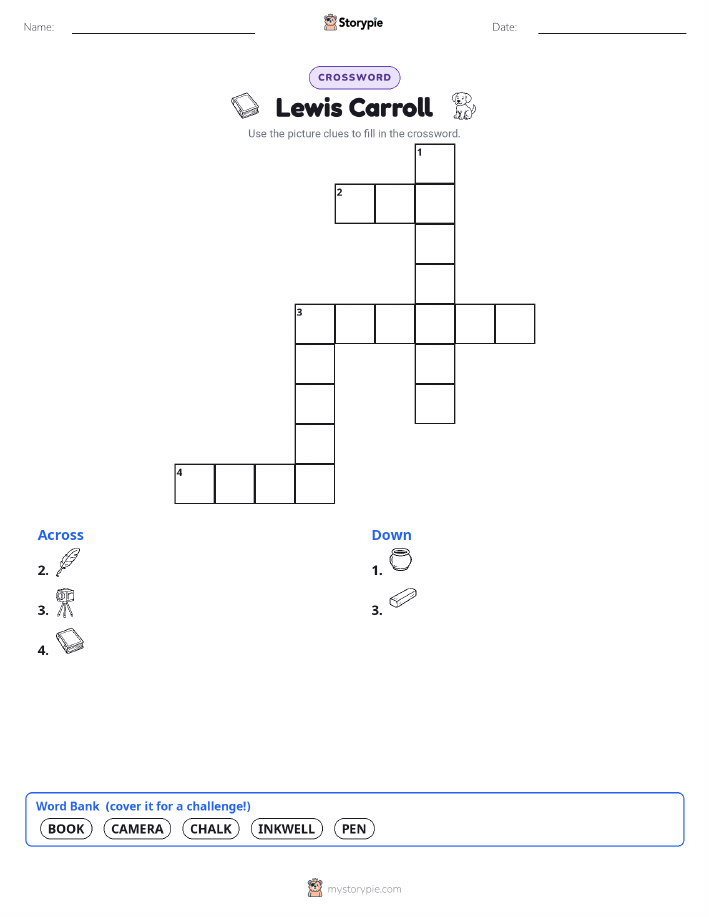
- Printable worksheets & coloring pages

Why Storypie for Schools
Students engaged. Prep in seconds. Evenings back to you.
- Worksheets & Quizzes
- Classroom Management
- Formative Assessment
- Custom Curriculum & Lesson Plans
- 27 Languages

Why Storypie for Homeschool
Curriculum done. They'll ask for more. Hours back in your day.
- Worksheet Generator
- First-Person Audio Stories
- Built-in Comprehension Quizzes
- Custom Curriculum & Lesson Plans
- Print & Go Activities