

 English

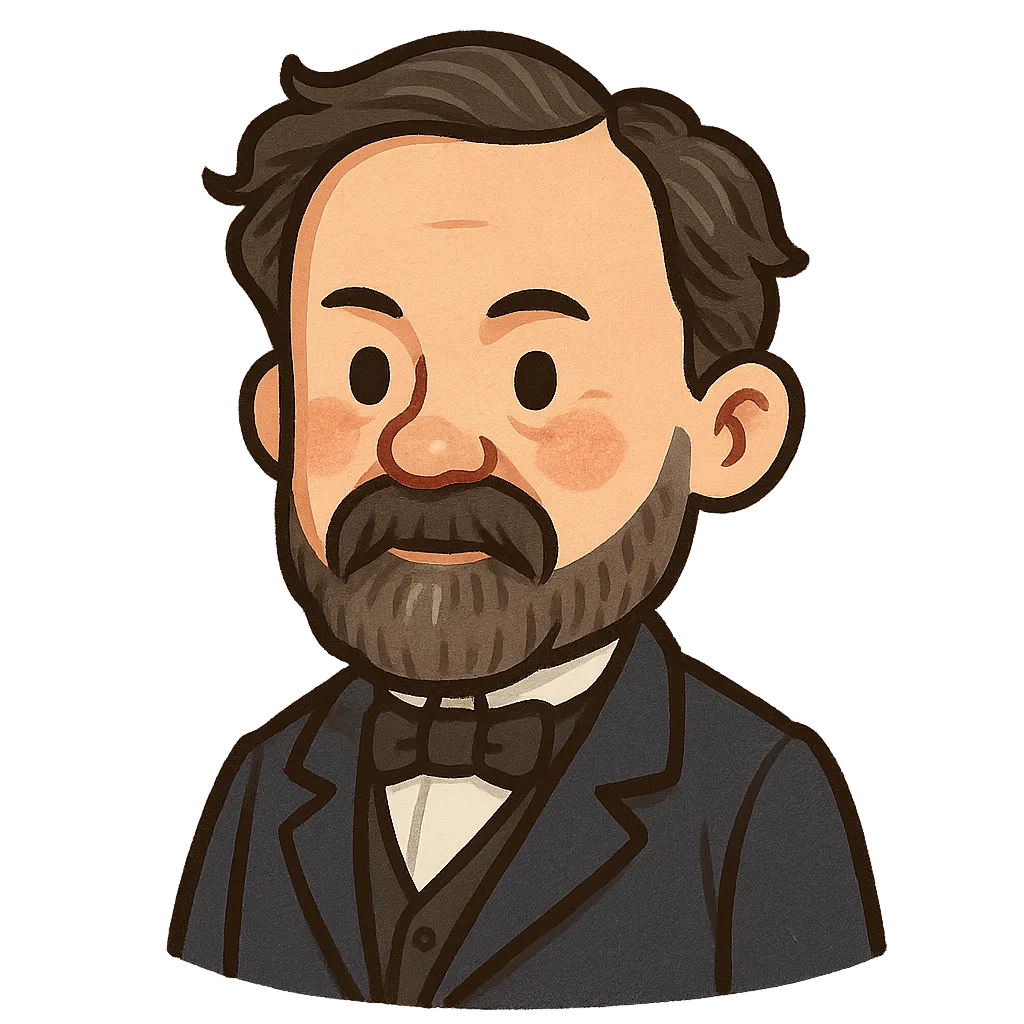
Louis Pasteur: The Germ Hunter
Hello, my name is Louis Pasteur, and I discovered a world that no one had ever seen before—a world of tiny, invisible living things. I was born on December 27th, 1822, in a small French town called Dole. When I was a boy, I loved art more than anything. I spent hours drawing portraits of my family and friends, capturing their smiles and expressions with my pencils. But as I grew older, a different kind of curiosity began to bubble up inside me. I became fascinated by the big questions that science could help answer. I wanted to understand the hidden rules of the world around me, and that curiosity would soon lead me on an incredible journey from art to the laboratory.
My scientific journey took me to the busy city of Paris, where I studied hard and eventually became a professor. My first big challenge arrived around the year 1854 when some local winemakers came to me with a problem. Their wine was spoiling and turning sour, and they had no idea why. I decided to look at the wine through my microscope. What I saw was amazing! In the spoiled wine, there were thousands of tiny, living things swimming around. I called them 'microbes' or 'germs.' This was a huge discovery. I realized that these invisible organisms were everywhere—in the air, in water, and in our food. This led me to develop my 'germ theory,' which was the big idea that these microbes could cause changes in the world, like making wine spoil or even making people sick.
In the 1800s, it wasn't just wine that was spoiling. Milk, beer, and other drinks would often go bad very quickly, which was a serious problem for everyone. Using my new knowledge of germs, I began a series of experiments to find a solution. In 1864, I finally found the answer. I discovered that if I heated a liquid to just the right temperature for a short time, I could get rid of the harmful germs that caused it to spoil, all without ruining the taste. This simple but brilliant process was named 'pasteurization' in my honor. Thanks to this discovery, milk and other foods became much safer to drink and enjoy, protecting people from getting sick.
I was certain that if germs could spoil food, they could also cause diseases in animals and people. I decided to take my germ theory one step further and find ways to fight these invisible enemies. I began studying a deadly disease called anthrax, which was affecting sheep across the country. My big breakthrough was figuring out how to create vaccines. I found that by using a weakened, less dangerous version of a germ, I could teach an animal's body how to recognize and fight off the real, deadly disease. In 1881, I successfully created a vaccine for anthrax. My most famous moment came in 1885, when a young boy named Joseph Meister was bitten by a rabid dog. Rabies was a fatal disease, but I used my new rabies vaccine to save his life. It was a huge risk, but it worked.
To continue the important work of fighting diseases, the Pasteur Institute was opened in Paris in 1888. It became a world-famous center for research and learning. I lived to be 72 years old, and looking back, I am proud that my work completely changed how we understand health and sickness. Because of my discoveries about germs, doctors and scientists finally understood how important it was to keep their hands and tools clean. My work on vaccines has saved countless lives from terrible diseases. Every time you drink a safe carton of milk or get a shot to keep you healthy, you are seeing my ideas at work, keeping you safe just as I had hoped.
Activities
Take a Quiz
Test what you learned with a fun quiz!
Get creative with colors!
Print a coloring book page of this topic.












 Free for Educators