

 English

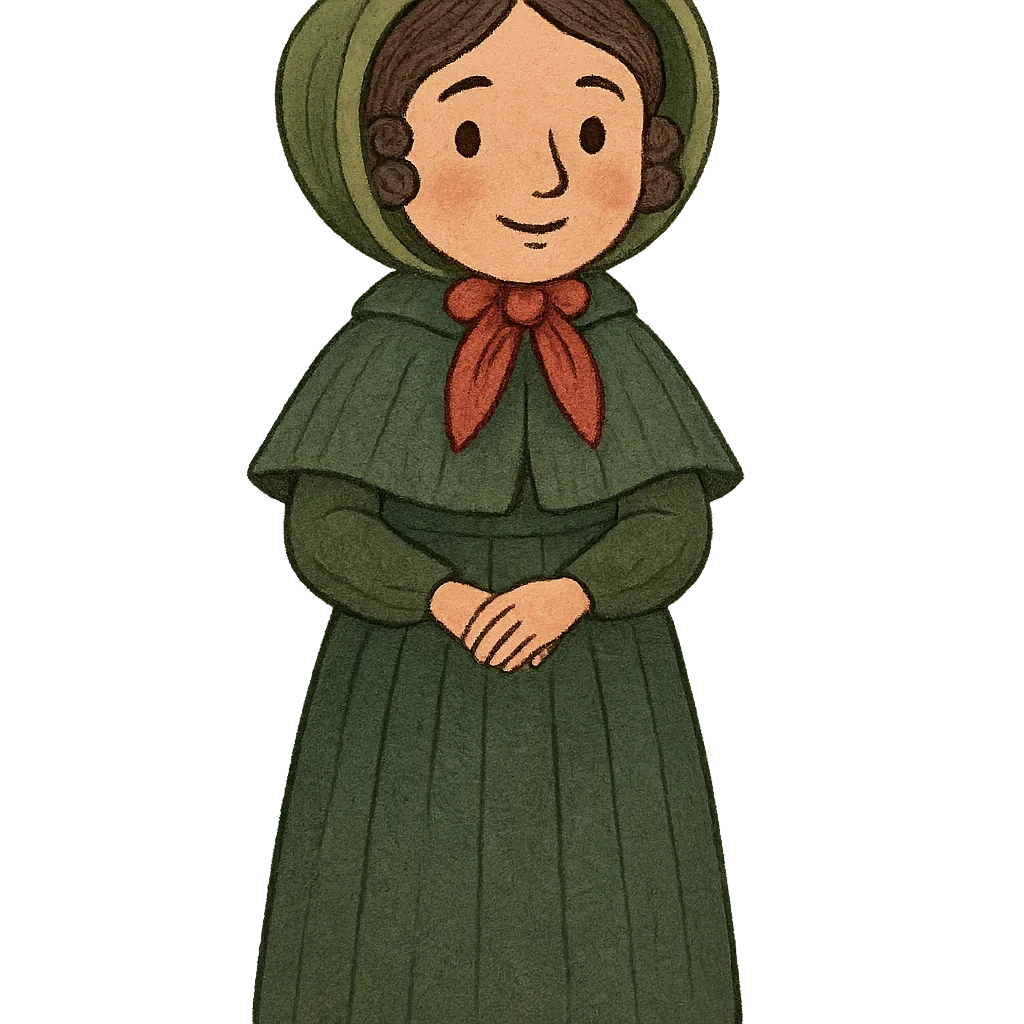
Mary Anning: The Girl Who Dug Up Dragons
Hello there. My name is Mary Anning, and I’d like to tell you a story about a girl who found monsters hidden in the stone. I was born on May 21st, 1799, in a little seaside town in England called Lyme Regis. Our town was famous for its tall, crumbly cliffs that tumbled into the stormy sea. When I was just a baby, a very strange thing happened. I was struck by lightning! Everyone thought I was gone, but somehow, I survived. Some people in town whispered that the lightning had given me a special kind of energy and curiosity. My father, Richard, was a cabinetmaker, but we were very poor. To earn a little extra money, he would take my brother Joseph and me down to the beach after a storm. We wouldn't look for pretty seashells. We searched for what we called 'curiosities'—strange, stony shapes locked inside the rocks. My father taught me how to look for them, how to see the curve of a snake-stone or the pattern of a devil’s toenail. We would clean them carefully and sell them to tourists from a little table outside our home. It was our special treasure hunt, and I loved every minute of it.
When I was only eleven years old, my dear father passed away, leaving our family with even less money than before. My mother, Molly, didn't know how we would survive. But I knew what I had to do. I picked up my father’s hammer and chisel and went back to the dangerous, slippery cliffs. Finding and selling my curiosities was no longer just a hobby; it was the only way to put food on our table. Then, in 1811, when I was twelve, my brother Joseph found something incredible. Sticking out of the cliff was a giant, four-foot-long skull with a long snout and dozens of sharp teeth. It looked like a crocodile’s head, but it was unlike anything we had ever seen. While Joseph had to go off to work, I became determined to uncover the rest of the creature. For months and months, I returned to that spot, carefully chipping away at the rock, piece by tiny piece. It was slow, difficult work. Sometimes the tide would come in and threaten to wash everything away. But I never gave up. Finally, I uncovered the entire seventeen-foot-long skeleton. It had a body like a fish and flippers like a dolphin. The scientists who bought it named it Ichthyosaur, which means 'fish-lizard.' I had discovered a sea-dragon.
That amazing discovery was just the beginning. I spent my whole life exploring those cliffs, and they gave up more of their secrets to me. In 1823, I found another impossible creature. This one had a body like a turtle but with an incredibly long, snake-like neck. It was named the Plesiosaur. At first, the very important scientists in London refused to believe it was real. They said a creature couldn't possibly have a neck that long! They argued about it for a long time, but I knew what I had found. I had carefully dug it out of the earth myself. Then, in 1828, I found the fossil of a creature with wings, a Pterosaur. I was uncovering an entire lost world of animals that lived millions of years before people. Because I was a woman and had not been to a fancy school, many scientists didn't take me seriously. So, I taught myself. I bought scientific books, studied anatomy by cutting up modern fish, and I drew detailed pictures of my finds. Soon, the cleverest geologists and fossil hunters from all over the world were traveling to my little shop in Lyme Regis to ask for my opinion and learn from me.
Even though these important men learned so much from me and bought my fossils, they often didn't mention my name when they wrote their scientific papers. It was as if a man must have made the discovery. It wasn't fair, but I didn't let it stop me. The most important thing was that the world was learning the truth about its own history. The creatures I found proved that the Earth was much, much older than anyone had ever imagined and that some animals had disappeared from the world forever. My life ended on March 9th, 1847, but the stones I found continue to tell their stories in museums all over the world. Looking back, I hope my story shows you that it doesn’t matter if you are rich or poor, a boy or a girl. If you have a curious mind, patient hands, and a spirit that refuses to give up, you can uncover wonders and change the way everyone sees the world.
Activities
Take a Quiz
Test what you learned with a fun quiz!
Get creative with colors!
Print a coloring book page of this topic.















 Free for Educators