The Story of Tisquantum

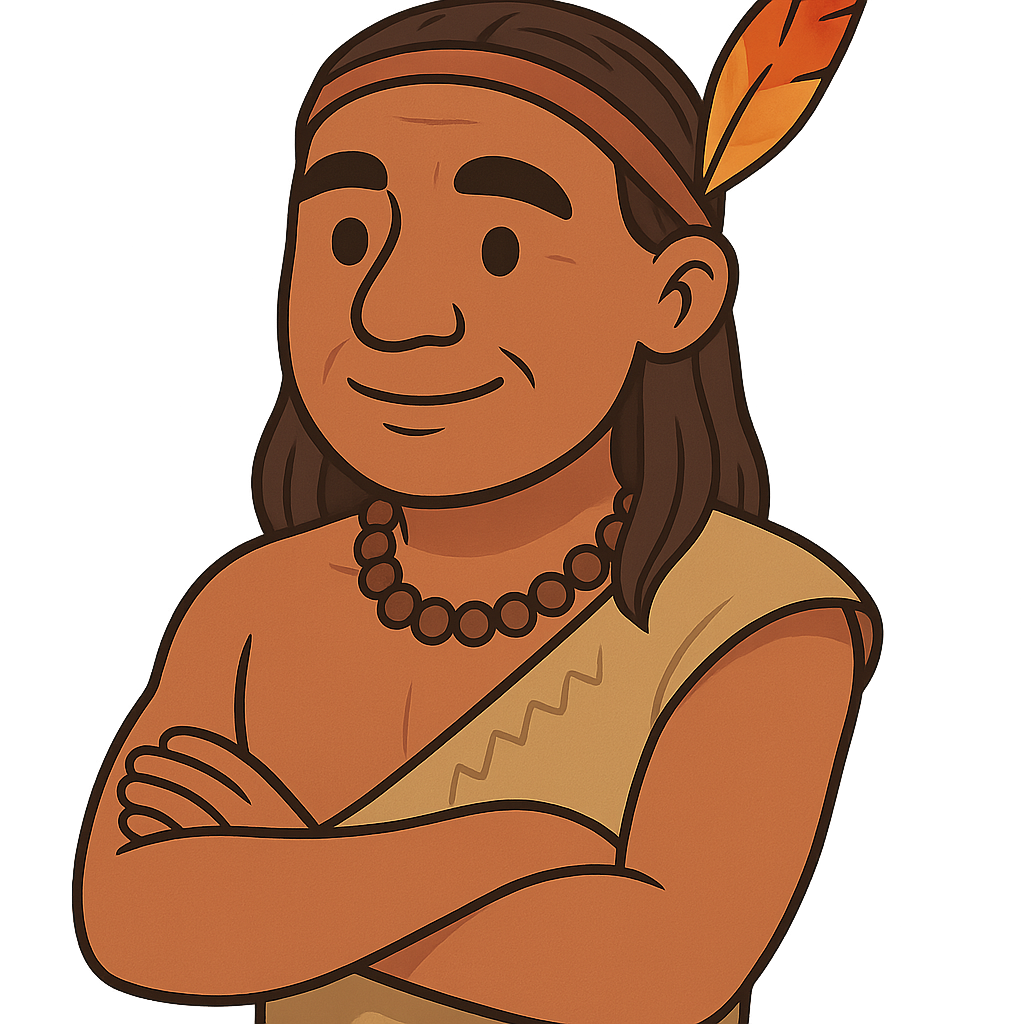
My name is Tisquantum, but you may know me by another name, Squanto. I was a proud member of the Patuxet people, a nation that lived for generations on the shores of what is now called Massachusetts. My childhood was spent in our village, which was located right where the town of Plymouth sits today. The world I knew was shaped by the rhythm of the seasons. I remember the sharp, salty smell of the ocean air carried on the morning mist and the rustle of leaves in the great forests that surrounded us. Life was guided by the sun, the moon, and the changing weather. From a young age, I learned the skills every Patuxet boy needed to master. My father and the elders taught me how to track a deer silently through the woods, its heart beating almost in sync with my own. I learned to read the currents of the streams to know where the herring would be running in the spring, and how to spear them with a quick, sure hand. One of the most important lessons was how to cultivate our gardens. We planted the Three Sisters: corn, beans, and squash. It was a brilliant system. The tall corn stalks provided a natural pole for the bean vines to climb, and the large, sprawling leaves of the squash plants shaded the ground, keeping it moist and free of weeds. These plants were like a family, helping one another grow strong, just as my people helped one another thrive. My days were filled with purpose, learning, and a deep connection to the land that sustained us. I had no idea that my world, so steady and familiar, was about to be shattered forever.

My life took a dark and unexpected turn in the year 1614. An English sea captain named Thomas Hunt arrived at our shores, pretending to be interested in trade. He and his men were friendly at first, and we saw no reason to distrust them. But it was a cruel trick. He lured me and about twenty other men from my tribe onto his ship with promises of interesting goods, and once we were aboard, we were captured and imprisoned below deck. The terror and confusion of that moment are hard to describe. We were suddenly trapped, sailing away from our families and everything we had ever known. The ship crossed the vast, endless ocean, a journey that felt like a lifetime. We landed in Málaga, Spain, a place so different from my home it might as well have been another world. There, Captain Hunt planned to sell us as slaves. It was a horrifying fate to imagine. But in a moment of unexpected kindness, a group of local friars discovered his wicked plan. They believed it was wrong to enslave other human beings, and they intervened, taking us from Hunt and saving us from a life of bondage. Though I was free from slavery, I was still a captive of circumstance, thousands of miles from my home. This was the beginning of a long, lonely journey. I spent several years in Europe, first in Spain and then in England. To survive, I had to learn new languages, like English and Spanish, and understand unfamiliar customs. Every day, I worked and learned, but my heart was always across the ocean, dreaming of the day I could return to my Patuxet home.

After many years of struggle and patience, I finally arranged passage on a ship heading back toward my homeland in 1619. During that long voyage across the Atlantic, my heart was filled with a hope so strong it felt like a fire inside me. I imagined seeing the familiar coastline, smelling the pine trees, and hearing the joyful cries of my family and friends. I pictured myself telling them stories of my incredible journey and finally being home where I belonged. But when the ship finally reached the shores of Patuxet, I was met not with celebration, but with a devastating, unnatural silence. The village was gone. The homes were empty and falling apart, overgrown with weeds. There were no cooking fires, no children laughing, no elders telling stories. It was a ghost town. I soon learned the terrible truth from neighboring Wampanoag people. A terrible sickness, a plague brought by European traders just a few years before, had swept through my village and killed every single person. My family, my friends, everyone I had ever known and loved, was gone. The profound sadness that washed over me was a deeper ocean than the one I had crossed. I was the last of the Patuxet, a stranger standing on the ashes of my own home.

Alone and heartbroken, I sought refuge with the Wampanoag people, who kindly took me in. Their great sachem, or chief, was a wise and powerful leader named Massasoit. I lived among them, sharing my knowledge of the English but carrying the deep sorrow of my loss. Then, in the spring of 1621, we learned that a new group of English settlers had arrived and were struggling to survive through a harsh winter at the very site of my old village, which they called Plymouth. On March 22nd, 1621, I made a choice. I walked into their small, struggling settlement, and to their astonishment, I greeted them in their own language. I saw their hunger and their fear, and I knew I had a unique ability to help. Despite the pain Europeans had caused me, I decided to be a peacemaker. I taught them how to survive in this land that was so new to them but so familiar to me. I showed them the Patuxet way of planting corn, placing a fish in each mound of soil to act as a fertilizer. I taught them how to tread for eels in the muddy riverbanks and how to distinguish medicinal herbs from poisonous plants. That autumn, their harvest was plentiful, thanks to the methods I had shared. To celebrate their survival and give thanks, the settlers held a great harvest feast and invited Massasoit and his people. We all ate together, a moment of peace and friendship between our two worlds. Though my life was marked by sorrow, I found a new purpose. I became a bridge between two very different peoples. My journey ended in November of 1622, when I fell ill and died while serving as a guide on a trading mission, but the bridge I helped build remained.

Reading Comprehension Questions

Click to see answer

Answer: In 1614, Tisquantum was tricked and captured by an English captain named Thomas Hunt. He was taken across the ocean to Spain to be sold as a slave, but he was saved by local friars. He then lived in Europe for several years, learning English, before finally finding a way to travel back to his homeland in 1619.

Answer: Tisquantum supported this description by using his unique position as someone who understood both the Native American and English cultures. He approached the Pilgrims peacefully, spoke to them in English, and taught them essential survival skills like how to plant corn with fish fertilizer and where to find food. He also helped facilitate a peaceful relationship between the Pilgrims and the Wampanoag people, which led to the first Thanksgiving feast.

Answer: The main lesson of Tisquantum's story is about resilience, forgiveness, and the power of finding a new purpose even after experiencing terrible loss. Despite the pain caused to him and his people, he chose to help others and build peace instead of seeking revenge.

Answer: His greatest challenge was discovering that his entire Patuxet tribe had been wiped out by a plague, leaving him completely alone. He found a new purpose by using his unique knowledge of both his homeland and the English language to help the newly arrived Pilgrims survive and to act as an ambassador between them and the Wampanoag people.

Answer: The word 'devastating' is powerful because it means causing severe shock, grief, or distress. It shows that the silence wasn't just quiet; it was a sign of a catastrophic loss that completely shattered his hopes and heart. It tells us he felt an overwhelming sense of grief, shock, and utter loneliness upon realizing his entire world was gone.