

 English

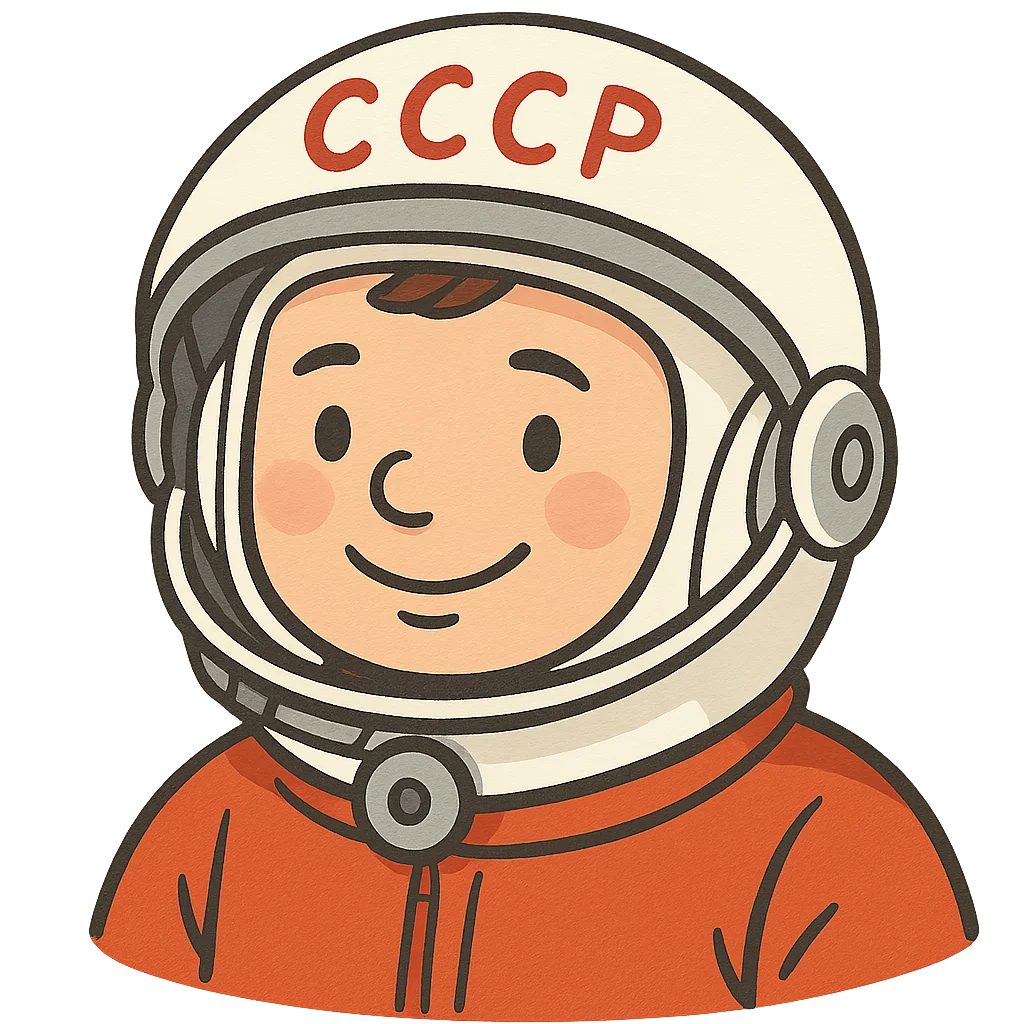
Yuri Gagarin: My Journey to the Stars
Hello. My name is Yuri Gagarin, and I was the first human being to ever journey into outer space. But before I saw the Earth from above the clouds, I was just a boy with a dream, living a simple life in a small village. I was born on March 9th, 1934, in Klushino, a village west of Moscow. My father was a carpenter and my mother was a dairy farmer, and we lived in a small wooden house my father built himself. Life on the collective farm was full of hard work, but also simple joys. I was the third of four children, and we spent our days helping our parents and exploring the fields and forests around our home. Everything changed when I was seven years old. In 1941, World War II reached our village when German soldiers arrived. It was a frightening time for my family. We were forced out of our home and had to live in a small mud hut. My older siblings were taken away by the soldiers, though thankfully they escaped and returned after the war. Despite the fear and hardship, one moment during that time changed my life forever. I looked up and saw a battle in the sky between Soviet and German planes. A damaged Soviet fighter plane landed in a field near our village. I watched in awe as the pilots, brave and determined, emerged from the cockpit. A second Soviet plane landed to rescue them. Seeing those pilots, their courage and their amazing flying machines, planted a seed in my heart. From that day forward, I knew I wanted to fly. I wanted to soar through the sky just like them.
My dream of flying didn't happen overnight. After the war ended in 1945, my family moved to the nearby town of Gzhatsk. To help my family, I started learning a trade. At fifteen, I moved to a town near Moscow to become a foundryman, a person who works with melted metal in a factory. It was hot, difficult work, but I was determined to build a future. While I was at technical school in Saratov, a city on the Volga River, I saw my chance to get closer to the sky. I joined a local flying club in 1954, and the moment I took the controls of an airplane for the first time, I felt like I was home. The feeling of leaving the ground, of seeing the world shrink below me, was everything I had imagined. My instructor saw my natural talent, and soon I was making my first solo flight. That experience solidified my decision: I would dedicate my life to aviation. In 1955, I was accepted into the Orenburg Pilot's School to become a military pilot for the Soviet Air Force. The training was intense, but I loved every minute of it, learning to fly powerful jet fighters. It was also during this exciting time that I met a wonderful woman named Valentina Goryacheva. We fell in love and were married in 1957. Life was good. I was a lieutenant in the Air Force, I had a family I adored, and I was spending my days in the sky. I thought I had achieved my dream, but I had no idea an even bigger adventure was just around the corner.
In 1959, a secret call went out across the Soviet Union. The government was looking for a very special group of pilots, not to fly in the atmosphere, but to fly above it, into space. I knew immediately that I had to be a part of it. Out of thousands of applicants, I was one of twenty men selected to begin training for the first human spaceflight. We were brought to a new training center that would later be called Star City. The training we endured was unlike anything we had ever experienced. We were spun in centrifuges to simulate the intense G-forces of a rocket launch, spent days in soundproof isolation chambers to test our minds, and pushed our bodies to their absolute limits. The purpose was to see who could handle the extreme physical and mental stress of space travel. We all became very close, like brothers, supporting each other through the grueling process. Our leader was a man we knew only as the “Chief Designer.” His real name, Sergei Korolev, was a state secret. He was a genius, a brilliant engineer who had designed our rocket and spacecraft. He watched us closely, and he had the final say on who would fly first. In the end, Mr. Korolev chose me. He told me later that he appreciated my calm nature, my focus, and perhaps my humble beginnings as a farmer’s son. It was the greatest honor of my life to be chosen to represent my country on this incredible mission into the unknown.
On the morning of April 12th, 1961, I woke up knowing that history was about to be made. I put on my orange spacesuit, rode a bus to the launchpad at the Baikonur Cosmodrome, and ascended the gantry to my spacecraft, the Vostok 1. As I was strapped into my seat, I could hear the voice of Sergei Korolev in my headset, calm and reassuring. When the final countdown began, the engines roared to life beneath me. Just before liftoff, I said a simple, cheerful phrase that became famous around the world: “Poyekhali!”. It means, “Let’s go!”. The rocket pushed me back in my seat with incredible force, but soon, the shaking stopped, and I was weightless. I had reached orbit. Looking out the porthole, I saw something no human had ever seen before. Our Earth. It was a breathtakingly beautiful sphere of brilliant blue, white clouds, and deep oceans, all set against the blackness of space. I saw no borders, no divisions between countries. I saw only one planet, our shared home. I orbited the Earth for 108 minutes, a single journey that changed my perspective forever. After a safe reentry and landing in a field, I was greeted as a hero. My journey made me a symbol of human exploration, and I traveled the world sharing my story. My life ended in a tragic plane crash during a routine training flight on March 27th, 1968. But my flight into space was never just about me. It was a victory for all of humanity, proof that with courage, curiosity, and cooperation, there are no limits to what we can achieve. I hope my journey inspires you to look up at the stars and dream of the incredible futures we can all build together.
Activities
Take a Quiz
Test what you learned with a fun quiz!
Get creative with colors!
Print a coloring book page of this topic.









 Free for Educators