English

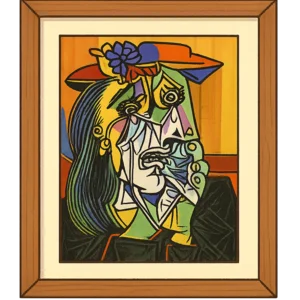
The Weeping Woman
A 1937 painting by Pablo Picasso…
Reads at Grades 3–5 Listens at Grades 1–5
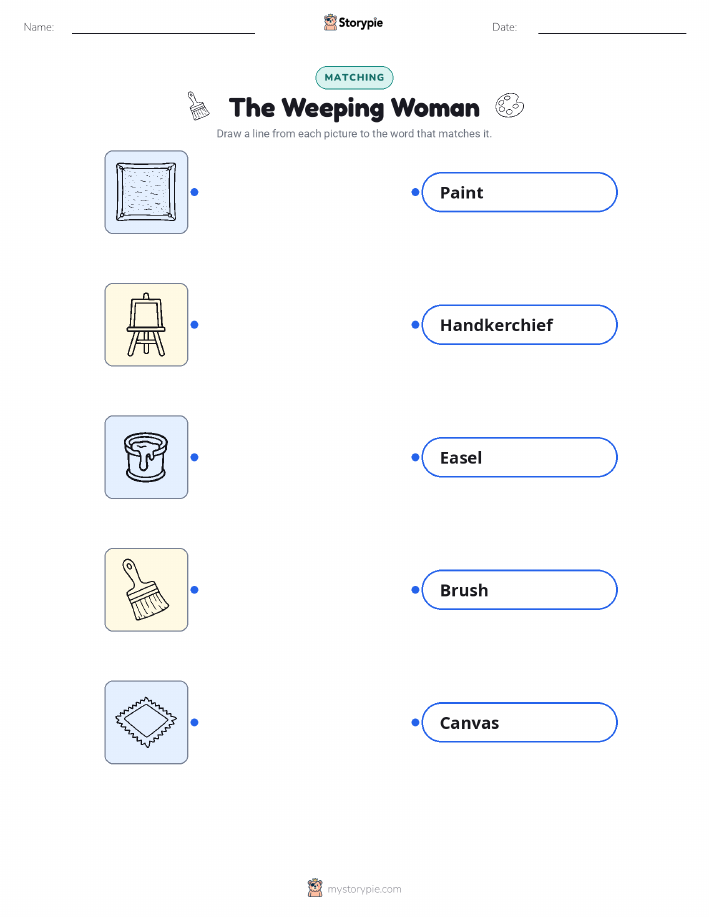
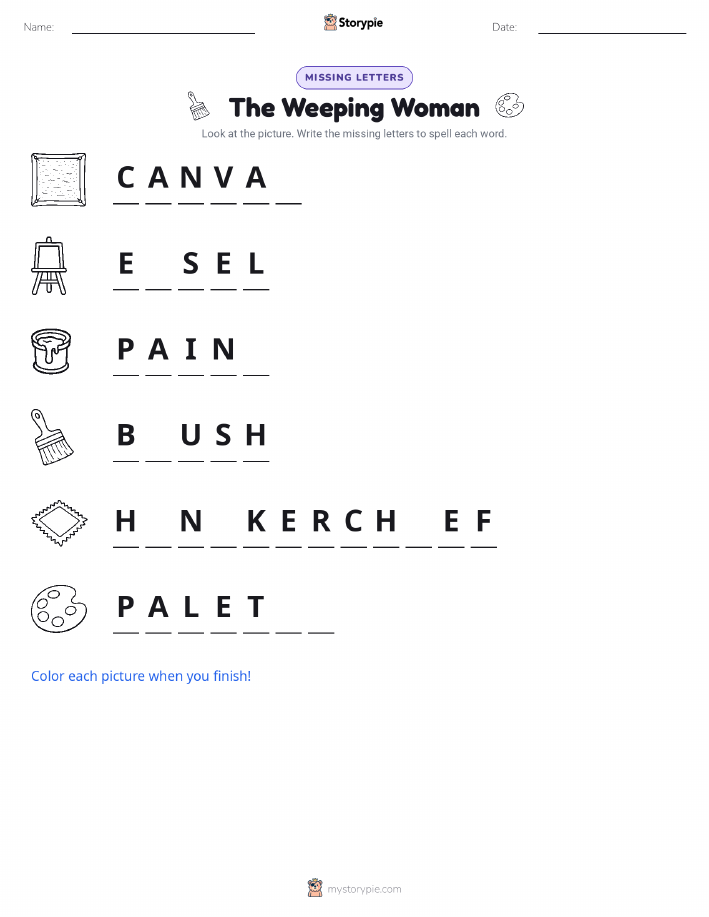
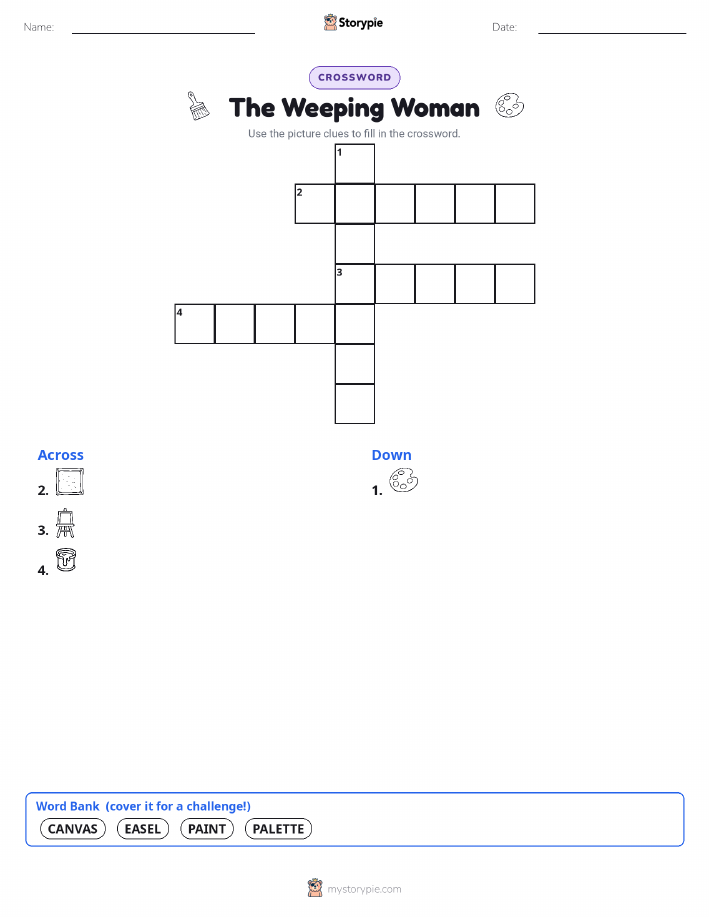
Print & create
Answer keys·No prep·Free with an account
28 worksheets · answer keys · full story · quiz · Ages 8-10 · CEFR B1
Plus adds 280,000+ more stories in 27 languages, audio for every one, and printables for all of them.
Just want The Weeping Woman?
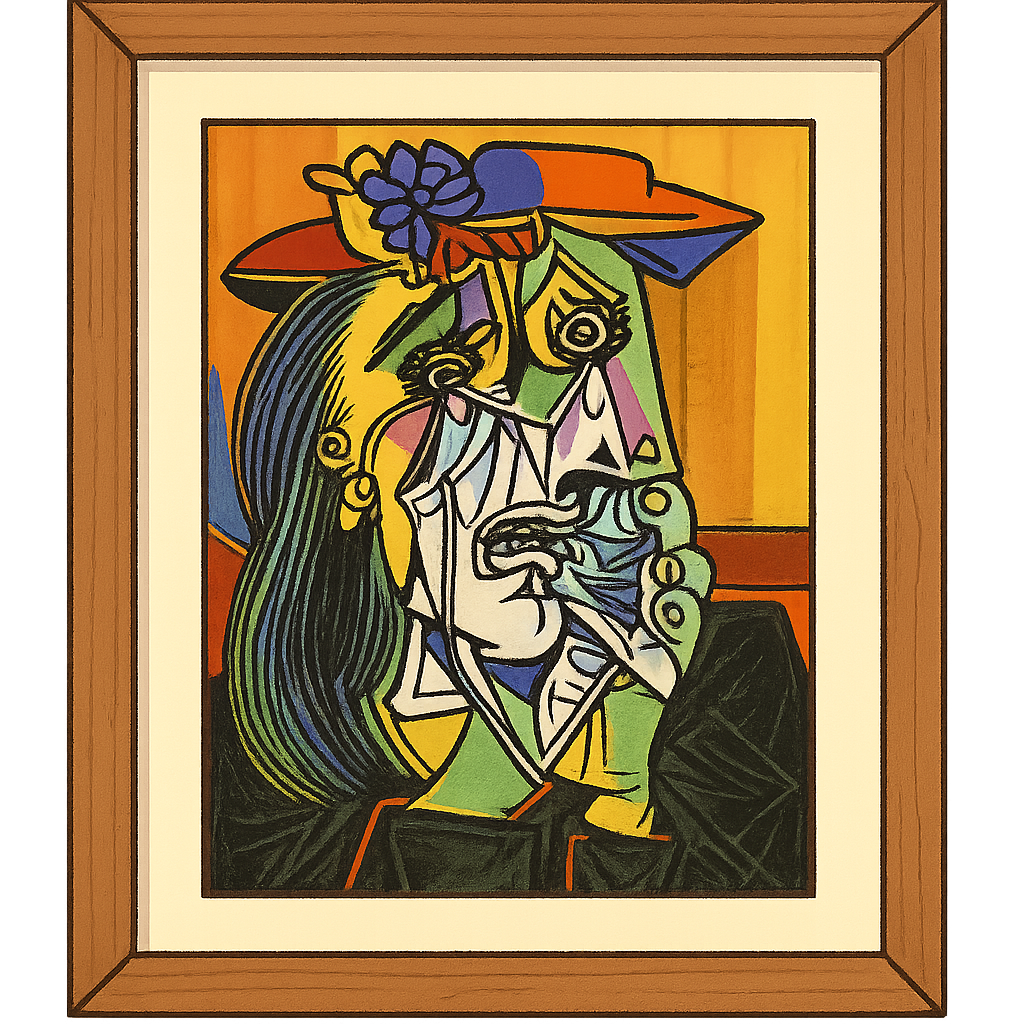
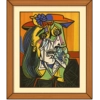
Before I had a name, I was a feeling. A sharp, loud, confusing feeling made of paint. Imagine a face put together like a puzzle, but none of the pieces fit quite right. My cheeks are streaks of green and purple, my forehead is a sharp yellow triangle, and my eyes are tilted and mismatched. One eye stares straight ahead, wide with shock, while the other looks down, heavy with a sadness too big to hold. A handkerchief, all sharp points and jagged edges, is clutched in my hands and pressed to my mouth. I am biting down on it so hard it looks like it could shatter into a million pieces, like glass. Even my tears are not soft. They aren't gentle raindrops sliding down my skin; they are shiny, pointed daggers of sorrow, carving paths down my fractured face. Everything about me is bent and broken, a storm of color and emotion trapped on a canvas. I am a painting, and my name is The Weeping Woman.
My creator was a man named Pablo Picasso, and he didn't paint what his eyes saw; he painted what his heart felt. He brought me to life in Paris in the year 1937. It was a very difficult time. His home country of Spain was in the middle of a terrible war, the Spanish Civil War, and his heart was broken for the people who were suffering. Just before he created me, he painted a giant, famous mural called ‘Guernica,’ which showed the horror of a whole town being bombed. You could see all the chaos and fear of many people at once. Picasso decided he also wanted to show how all that big, public sadness could feel inside just one person. That’s where I came in. I am not a real person, but my face was inspired by a very real one. Her name was Dora Maar, a talented photographer and artist herself. Picasso saw her as a strong and emotional person, and her face became a map for him to explore all the pain of the war. He didn't use soft, careful strokes. He painted me with bold, fast, angry lines, letting his feelings guide the brush. He wasn't trying to make a pretty picture; he was trying to paint an honest feeling.
The Weeping Woman
Before I had a name, I was a feeling. A sharp, loud, confusing feeling made of paint. Imagine a face put together like a puzzle, but none of the pieces fit quite right. My cheeks are streaks of green and purple, my forehead is a sharp yellow triangle, and my eyes are tilted and mismatched. One eye stares straight ahead, wide with shock, while the other looks down, heavy with a sadness too big to hold. A handkerchief, all sharp points and jagged edges, is clutched in my hands and pressed to my mouth. I am biting down on it so hard it looks like it could shatter into a million pieces, like glass. Even my tears are not soft. They aren't gentle raindrops sliding down my skin; they are shiny, pointed daggers of sorrow, carving paths down my fractured face. Everything about me is bent and broken, a storm of color and emotion trapped on a canvas. I am a painting, and my name is The Weeping Woman.
My creator was a man named Pablo Picasso, and he didn't paint what his eyes saw; he painted what his heart felt. He brought me to life in Paris in the year 1937. It was a very difficult time. His home country of Spain was in the middle of a terrible war, the Spanish Civil War, and his heart was broken for the people who were suffering. Just before he created me, he painted a giant, famous mural called ‘Guernica,’ which showed the horror of a whole town being bombed. You could see all the chaos and fear of many people at once. Picasso decided he also wanted to show how all that big, public sadness could feel inside just one person. That’s where I came in. I am not a real person, but my face was inspired by a very real one. Her name was Dora Maar, a talented photographer and artist herself. Picasso saw her as a strong and emotional person, and her face became a map for him to explore all the pain of the war. He didn't use soft, careful strokes. He painted me with bold, fast, angry lines, letting his feelings guide the brush. He wasn't trying to make a pretty picture; he was trying to paint an honest feeling.
From Picasso's busy studio, I eventually traveled to a quiet museum wall, where I live now. People from all over the world come to stand in front of me. They don’t usually smile. Some look at me and their own faces grow sad. Others look confused, their heads tilted as they try to piece my puzzle-like face together. Many are just silent, thinking about the powerful feeling I show them. My style is called Cubism. Can you imagine seeing someone’s face from the front and the side at the very same time? That’s what Picasso did with me. He wanted to show that feelings are complicated. You can be sad and angry and scared all at once, and he thought a face should show all those sides. I may look like I am crying forever, but I am not just a picture of sadness. I am a reminder that all feelings are important, even the painful ones. Art can help us understand them. I connect you to the feelings of people who lived long ago, showing that even in great sorrow, there is strength, honesty, and a strange, powerful kind of beauty.
Wow facts
About
A 1937 painting by Pablo Picasso, it is one of a series of works responding to the bombing of Guernica during the Spanish Civil War. The painting is a powerful depiction of universal suffering, personified by a grieving woman.
Take a Quiz
Question 1 of 5
In the first section, the story says the handkerchief is 'as hard and sharp as glass.' What does this comparison tell you about the woman's feelings?
Explore next




Want to do even more?
Go beyond exploring. Unlock tools that turn every story into real learning.

Storypie Plus for families
Full stories, quizzes, and printables. Nights and car rides, sorted.
- Unlimited audio stories
- Create Mode: your child stars in the story
- Offline downloads
- Printable worksheets & coloring pages

Why Storypie for Schools
Students engaged. Prep in seconds. Evenings back to you.
- Worksheets & Quizzes
- Classroom Management
- Formative Assessment
- Custom Curriculum & Lesson Plans
- 27 Languages

Why Storypie for Homeschool
Curriculum done. They'll ask for more. Hours back in your day.
- Worksheet Generator
- First-Person Audio Stories
- Built-in Comprehension Quizzes
- Custom Curriculum & Lesson Plans
- Print & Go Activities