English

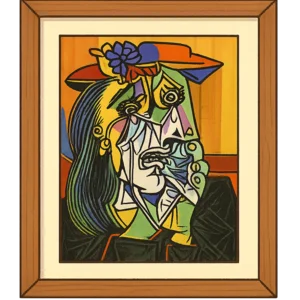
The Weeping Woman
A 1937 painting by Pablo Picasso…
Reads at Grades K-2 Listens at K–3
Print & create
Answer keys·No prep·Free with an account
28 worksheets · answer keys · full story · quiz · Ages 6-8 · CEFR A2
Plus adds 279,000+ more stories in 27 languages, audio for every one, and printables for all of them.
Just want The Weeping Woman?
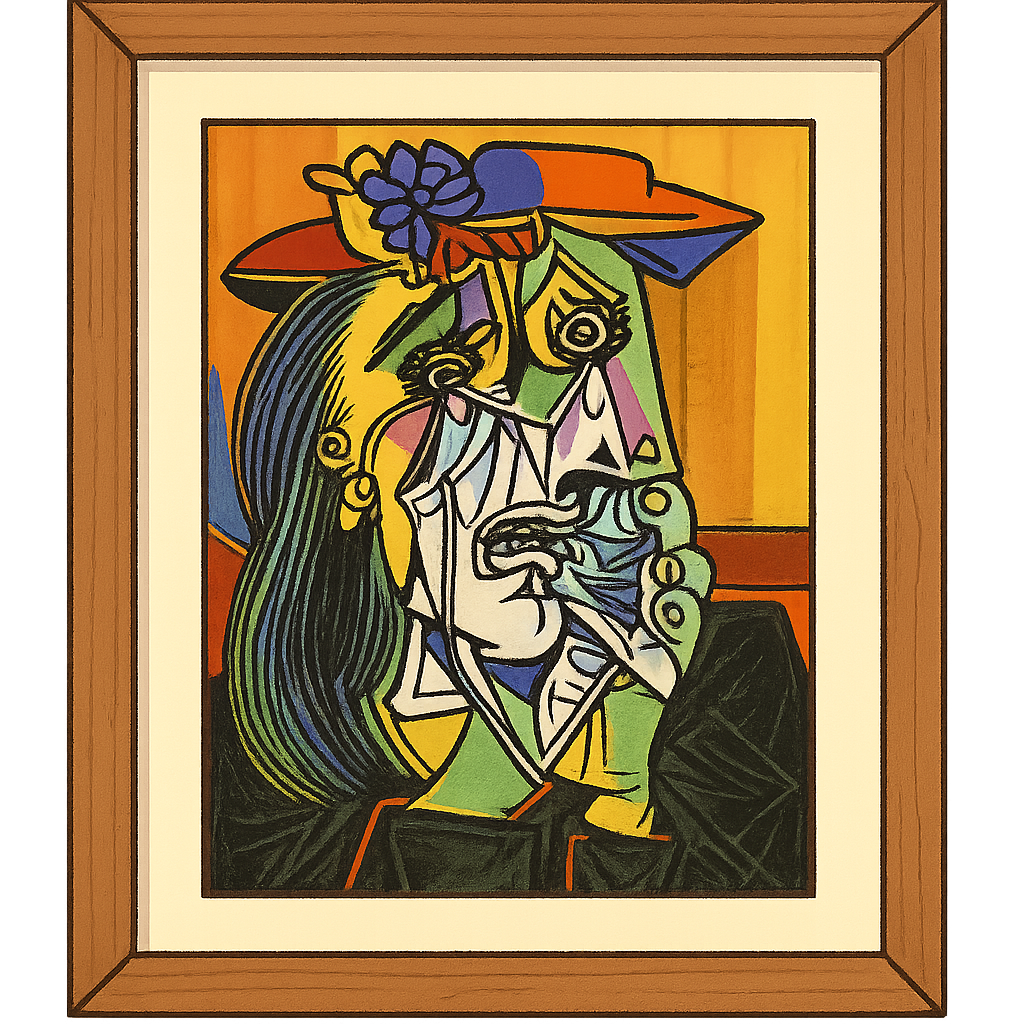
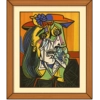
Have you ever seen a face full of feelings? That’s me. I am a jumble of colors all mixed together. I have sharp yellows, deep blues, and even surprising greens. My face is like a puzzle where the pieces don't quite fit just right. One of my eyes is looking one way, and the other is looking a different way. My nose is pointy, and my mouth is open, as if I am about to say something very sad. In my eyes, you can see tears that shine like little glass diamonds, and my hands are clutching a soft, crumpled handkerchief. I am not just a picture of a person. I am a picture of a very big, very strong feeling. My real name is The Weeping Woman, and I have a story to tell you about the power of a single tear.
My creator was an amazing artist named Pablo Picasso. He was from a country called Spain and had an imagination bigger than the sky. He painted me a long time ago, in the year 1937. At that time, Pablo’s heart was very heavy because there was a war happening in his home country, and many people were hurting. He felt a giant sadness inside him, and he wanted to show the whole world how that sadness felt. But how do you show a feeling? You can’t just draw a sad face. Pablo wanted to show what sadness looks like on the *inside*. One of his friends, a woman named Dora Maar, was also very sad about the war. When Pablo looked at her, he didn't just see her face; he saw her feelings. So he picked up his brushes and painted me. He used sharp, broken lines to make my face look like it was cracked into pieces, just like a broken heart. He used bright, clashing colors because sadness can feel loud and confusing inside your head. He painted a feeling so big it could break a person apart.
The Weeping Woman's Story
Have you ever seen a face full of feelings? That’s me. I am a jumble of colors all mixed together. I have sharp yellows, deep blues, and even surprising greens. My face is like a puzzle where the pieces don't quite fit just right. One of my eyes is looking one way, and the other is looking a different way. My nose is pointy, and my mouth is open, as if I am about to say something very sad. In my eyes, you can see tears that shine like little glass diamonds, and my hands are clutching a soft, crumpled handkerchief. I am not just a picture of a person. I am a picture of a very big, very strong feeling. My real name is The Weeping Woman, and I have a story to tell you about the power of a single tear.
My creator was an amazing artist named Pablo Picasso. He was from a country called Spain and had an imagination bigger than the sky. He painted me a long time ago, in the year 1937. At that time, Pablo’s heart was very heavy because there was a war happening in his home country, and many people were hurting. He felt a giant sadness inside him, and he wanted to show the whole world how that sadness felt. But how do you show a feeling? You can’t just draw a sad face. Pablo wanted to show what sadness looks like on the inside. One of his friends, a woman named Dora Maar, was also very sad about the war. When Pablo looked at her, he didn't just see her face; he saw her feelings. So he picked up his brushes and painted me. He used sharp, broken lines to make my face look like it was cracked into pieces, just like a broken heart. He used bright, clashing colors because sadness can feel loud and confusing inside your head. He painted a feeling so big it could break a person apart.
Pablo Picasso didn't paint me to make people feel bad. He painted me to show everyone that feelings, even sad ones like weeping, are powerful and important. He wanted people to look at me and understand the hurt that war can cause. Today, I live in a very big museum in London, England, called the Tate Modern. Children and grown-ups from all over the world come to visit me. They stand in front of my colorful, tear-stained face and grow very quiet. Some of them think about times they have felt sad, too. I am a reminder that it’s okay to cry and it's okay to feel sad sometimes. Art can help us share what’s in our hearts without even using words. By sharing our feelings, we can understand each other better, turning even a single tear into something that connects us all.
Wow facts
About
A 1937 painting by Pablo Picasso, it is one of a series of works responding to the bombing of Guernica during the Spanish Civil War. The painting is a powerful depiction of universal suffering, personified by a grieving woman.
Take a Quiz
Question 1 of 4
Why did the painter, Pablo Picasso, make the painting's face look like a broken puzzle?
Explore next




Want to do even more?
Go beyond exploring. Unlock tools that turn every story into real learning.

Storypie Plus for families
Full stories, quizzes, and printables. Nights and car rides, sorted.
- Unlimited audio stories
- Create Mode: your child stars in the story
- Offline downloads
- Printable worksheets & coloring pages

Why Storypie for Schools
Students engaged. Prep in seconds. Evenings back to you.
- Worksheets & Quizzes
- Classroom Management
- Formative Assessment
- Custom Curriculum & Lesson Plans
- 27 Languages

Why Storypie for Homeschool
Curriculum done. They'll ask for more. Hours back in your day.
- Worksheet Generator
- First-Person Audio Stories
- Built-in Comprehension Quizzes
- Custom Curriculum & Lesson Plans
- Print & Go Activities