
 English

The Story of the Little Dot
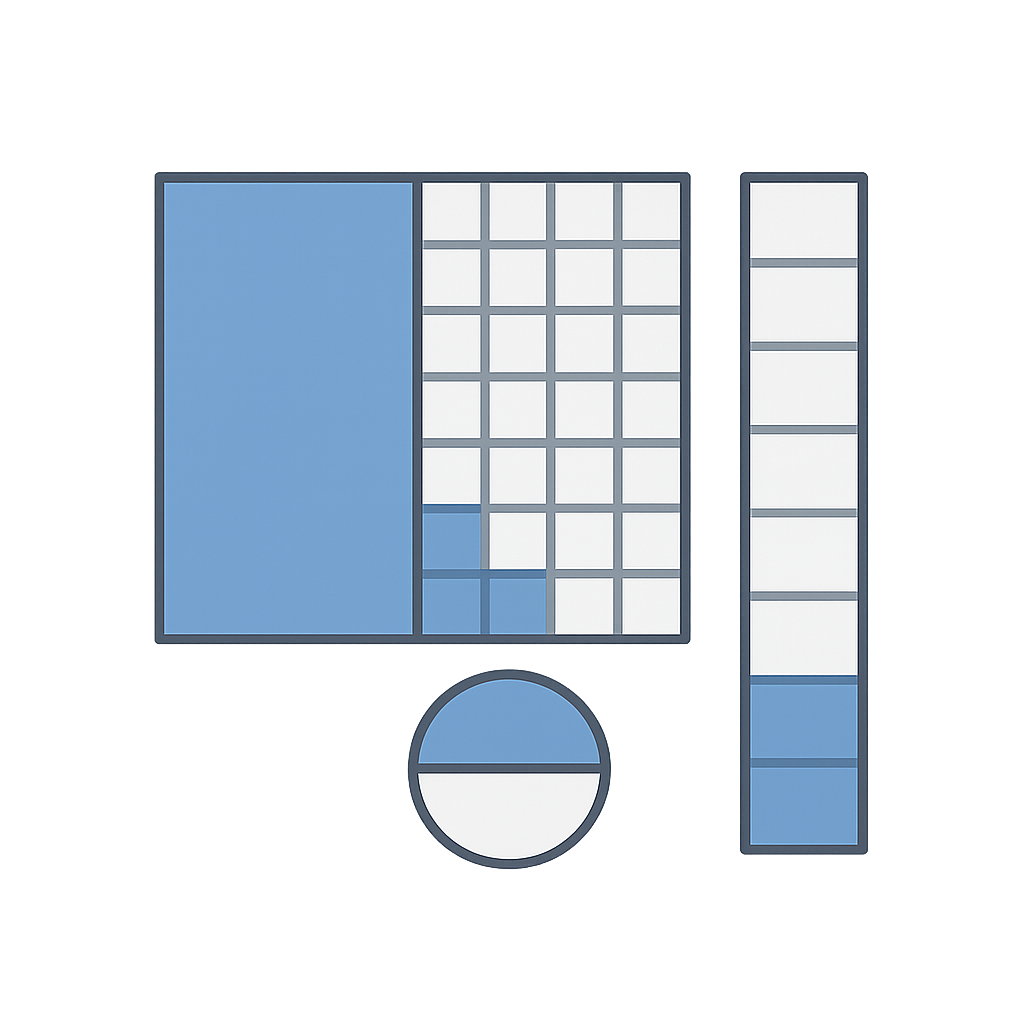
Have you ever tried to share a cookie with a friend, but you wanted to be perfectly fair? Or measured how tall you are, and you weren't exactly three feet, but a little bit more? That's where I live, in those little bits and in-between spaces. Before you knew my name, you saw me helping you. I'm the reason a price tag can say $1.99 instead of just one or two dollars. I'm the part of the race time that comes after the main seconds, showing who was just a tiny bit faster. I help you see the world not just in whole steps, but in all the tiny, important measurements in between. Can you imagine a world where you could only talk about whole things? No half-pizzas, no quarter-miles, no tiny sips of juice. It would be so clumsy! I am the Decimal, and that little dot you see—the decimal point—is my special mark. It’s a tiny doorway into a world of numbers that are more than one number but not quite the next. I am the secret that lets you talk about a part of something with simple, easy-to-read numbers. I am the hero of the half-eaten sandwich and the almost-full glass of water. I bring precision and fairness to a world that isn't always made of neat, whole pieces. When you see me, you know that someone cared about the details, about getting things just right. I am the difference between 'almost' and 'exactly.'
A long, long time ago, people didn't have an easy way to talk about the 'in-between' parts. They used clunky fractions with numbers on top of other numbers, and it could get very confusing, especially when they had to add or subtract them. My story really begins in ancient India, where some of the smartest thinkers in the world created my family: the ten amazing digits from 0 to 9. They figured out that where you put a digit changes its value, which was a huge idea called the place-value system! This was the soil where I would eventually grow. My journey continued when Arab scholars and traders fell in love with this number system. They used it to trade goods, to study the stars, and to build beautiful buildings. A brilliant Persian astronomer and mathematician named Al-Kashi, way back in the 15th century, saw my true potential. He was trying to make incredibly precise calculations about the planets and their orbits. He knew that to understand the tiny details of the universe, he needed a better way than fractions. He used me to get his answers more accurate than anyone before him! But for a long time, not everyone knew about me. I was mostly a tool for astronomers and mathematicians. That all changed in the year 1585. A clever man in Flanders, which is near Belgium today, named Simon Stevin wrote a small but powerful book called 'De Thiende,' which means 'The Tenth.' He wasn't a fancy astronomer; he wanted to help everyone. He showed sailors, shopkeepers, and even land surveyors that I could make their jobs so much easier. No more wrestling with difficult fractions! He gave people a simple, organized way to work with parts of a whole. My look wasn't always the same, though. Simon Stevin wrote me in a funny way, with little circles over the numbers. Others used a vertical bar. It was a bit messy! Finally, a Scottish mathematician named John Napier, who also invented something called logarithms, helped make the simple, elegant dot we use today popular in the early 17th century. That little dot, the decimal point, became my signature, a clear and simple sign that you were entering the world of parts and pieces.
Today, I'm everywhere you look! When you check the temperature on a sunny afternoon, I'm there showing you it's 72.5 degrees. When an Olympic swimmer touches the wall to win a race by just a fraction of a second, that's me helping the stopwatch be super accurate, showing a time like 21.07 seconds. I'm on the car's dashboard telling your family you've driven 54.6 miles, and I'm in the scientist's lab measuring tiny, important things that are too small to see. I make it possible for engineers to build strong bridges and towering skyscrapers, calculating the exact amount of steel needed. I help send rockets into space by making sure every calculation is perfect down to the smallest part. I'm even in your kitchen, helping you bake the perfect cake with 2.5 cups of flour. My point is to show you that everything counts, even the smallest parts. I am a reminder that in between the big, whole numbers, there are endless possibilities to explore, measure, and create. So next time you see my little dot, give me a wave, and remember the amazing world of detail I help you see!