

 English

The Great Sharer
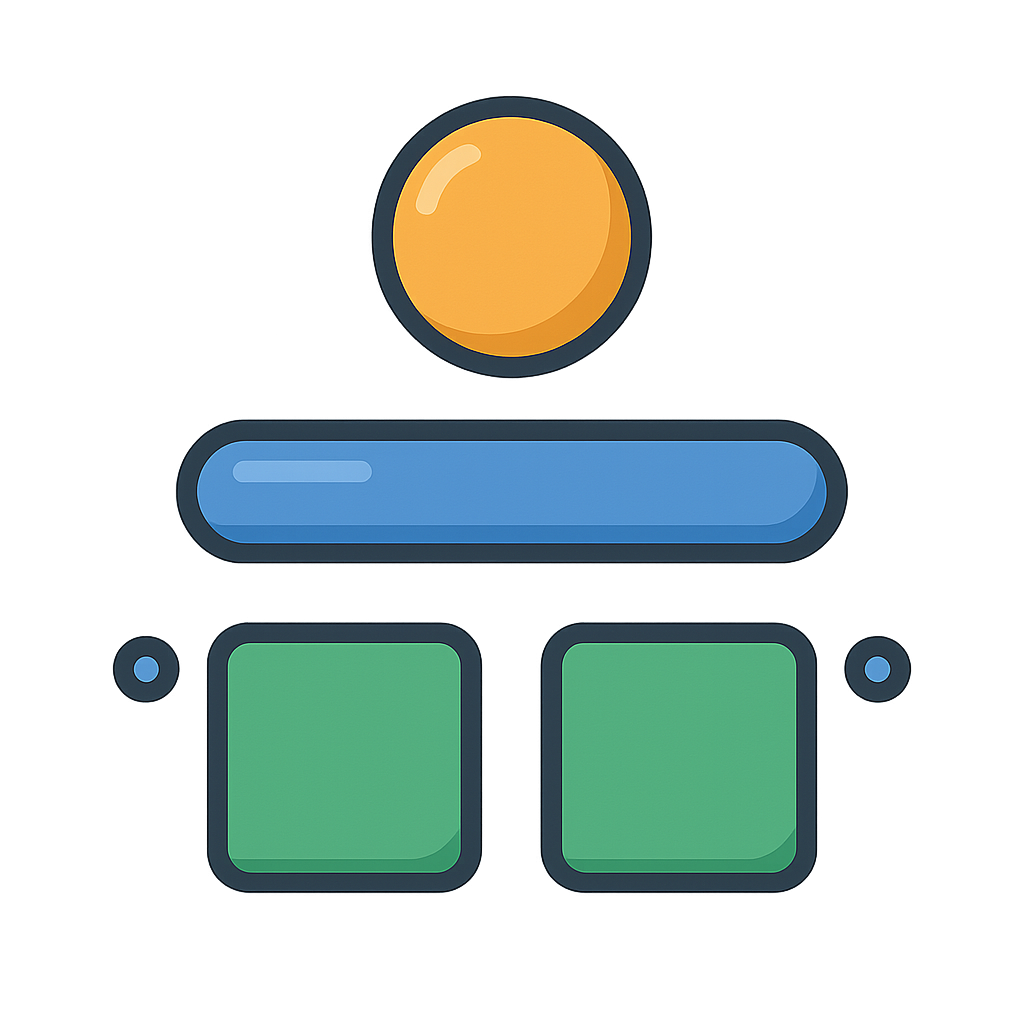
Have you ever stared at a big, delicious pizza with your friends, wondering how to make sure everyone gets an equal share. Or maybe you've been on a playground when the teacher needs to split a whole class of kids into two perfect teams for a soccer game. There's a secret, invisible helper making sure it all works out. It's the feeling you get when you carefully deal out cards for a game, one for you, one for your friend, until the pile is gone and your hands are even. It’s the magic that turns one giant bag of popcorn into smaller, snack-sized bowls for movie night, with no one feeling left out. I am the quiet force that brings fairness to the world, breaking big things into smaller, equal parts so that everyone can have a piece. Hello. I am Division.
I am older than you can possibly imagine, and I’ve been helping people solve puzzles for thousands of years. Long ago, in ancient Egypt, farmers depended on the great Nile River. But every year, the river would flood, washing away the little stone walls that marked the edges of their fields. When the water finally went down, everything was a muddy mess. How could they get their land back fairly. They called on me. Using long ropes with knots tied at equal spaces, they would carefully measure and split the land, making sure each farmer got their proper share back. A little farther away, in the bustling markets of Babylon, merchants would arrive with carts piled high with spices, fabrics, and pottery. They needed me to split their large shipments into smaller amounts to sell to different shopkeepers. It was a tricky puzzle, but I was there to help.
For a long time, using me was a real brain-teaser. Some of the first written records of me are on an ancient scroll called the Rhind Mathematical Papyrus. The Egyptians who wrote it had very clever ways of figuring out problems, but it was complicated and often involved working multiplication problems backward. It took a lot of brainpower. But over centuries, people kept looking for better and easier ways to work with me, which eventually led to the method you might learn in school called long division. Then, on a very important day for me, February 1st, 1659, a mathematician from Switzerland named Johann Rahn was writing a book about algebra. In his book, he gave me a wonderful gift: my very own symbol, the obelus. It’s a little line with a dot above and a dot below, just like this: ÷. Finally, I had my own special sign. It was like getting a name badge that everyone in the world could recognize.
But I don't just split pizzas or measure ancient fields. I am your partner in problem-solving every single day, in ways you might not even notice. When your family is driving on a long trip, I am the one who helps figure out how many miles the car can travel on a single gallon of gas. When your teacher wants to find the average grade for a test, they call on me to help. I help scientists split their samples for important experiments, and I help bakers figure out how to make half of a cookie recipe. Even the amazing video games you play and the apps on your phone need my help. Computer programmers use me to take huge, complicated tasks and break them down into thousands of tiny, simple steps that a computer can solve in the blink of an eye. I am more than just a math lesson; I am a tool for curiosity and fairness. I show you that any big challenge in the world can be understood by breaking it into smaller, manageable pieces that you can solve, one step at a time.
Activities
Take a Quiz
Test what you learned with a fun quiz!
Get creative with colors!
Print a coloring book page of this topic.




 Free for Educators