

 English

The Great Sharer
Imagine a perfect, cheesy pizza, hot from the oven, with eight of your friends gathered around. How do you make sure everyone gets a fair share. That’s where I come in, guiding the knife to create eight equal slices. Think of a treasure chest filled with sparkling marbles. I am the voice that whispers how to split them up so no one feels left out. When you’re picking teams for a soccer game, I am the one who helps you balance the players, creating two groups ready for a fair match. I live in the rustle of a cookie jar lid as you calculate how many treats each person can have. Before I had a name or a symbol, I was simply an idea of fairness, a feeling of balance and order. I am the quiet logic that untangles big messes, breaking them down into small, manageable, and equal pieces. I bring harmony to a world of sharing and help make sense of how a large whole can be understood through its smaller parts. I am the reason you can budget your allowance, figure out your speed on a bike trip, or calculate your score on a test. I am the great equalizer, the ultimate sharer. I am Division.
For thousands of years, I existed as a fundamental need, long before people gave me a formal name. In ancient Egypt, the great Nile River would flood its banks each year, washing away the markers that separated the farmers' fields. When the waters receded, I was the one they called upon to carefully measure and redistribute the fertile land, ensuring each family received their rightful plot. I was there in the shadows of the great pyramids, helping the overseers portion out the exact amount of grain and supplies for the thousands of workers who labored under the hot sun. They didn’t have fancy calculators; they often used a simple but powerful method called repeated subtraction. To find out how many groups of five were in twenty, they would just subtract five over and over until nothing was left, counting the steps. A world away in Mesopotamia, the clever Babylonians, with their advanced understanding of mathematics and astronomy, used me to create detailed charts of the stars. They incorporated me into their complex number system to track time and predict celestial events. Across the ancient world, from Rome to China, merchants and scholars used a wonderful tool called the abacus. By sliding beads along rods, they could perform calculations with me much faster than they could on paper, dividing goods, money, and measurements with newfound speed and accuracy. I was a silent partner in the building of empires and the growth of trade.
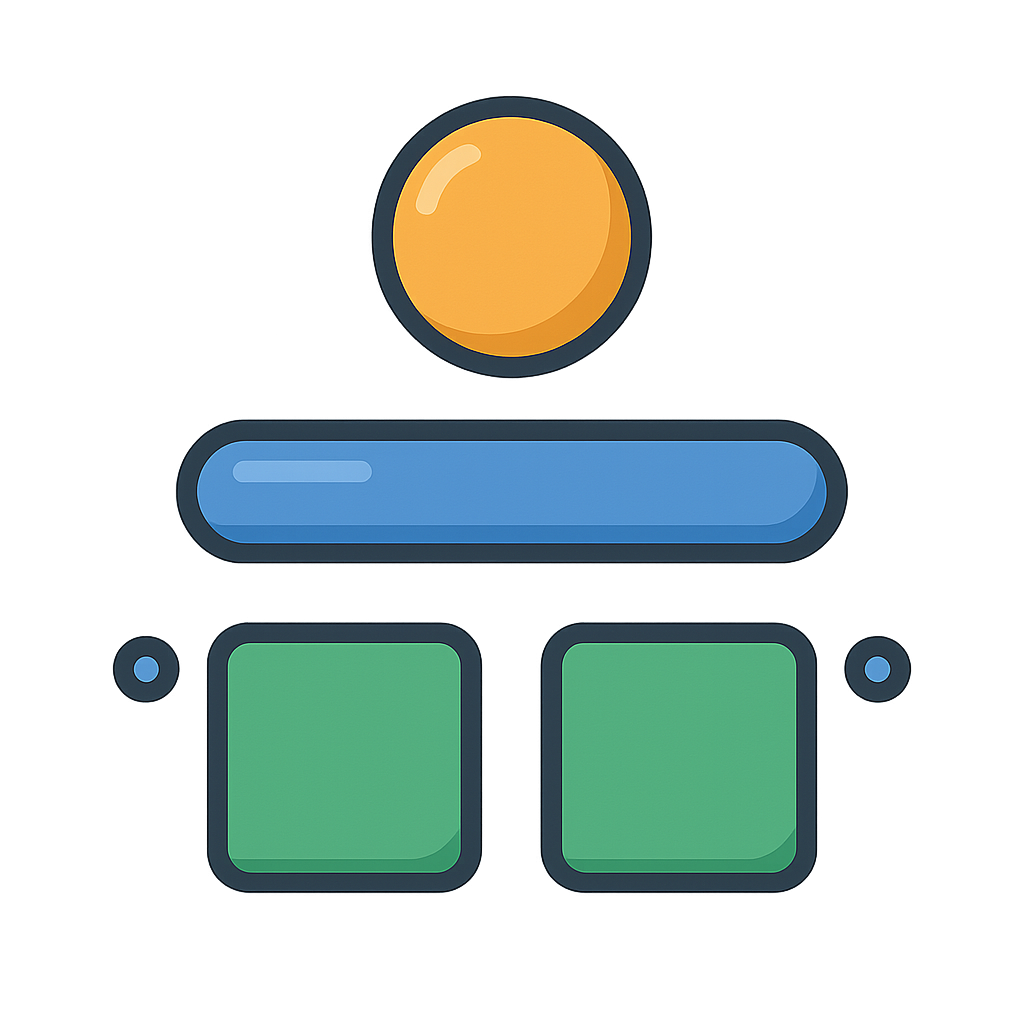
Even though I was essential, for centuries I was a ghost in the world of mathematics. People had to write me out in long, clumsy sentences like 'the result of twenty divided by four.' It was frustrating. I longed for a simple, elegant way to be seen. Finally, my moment arrived. On February 22nd, 1659, a Swiss mathematician named Johann Rahn was writing an algebra book. He decided I needed a symbol of my own, and he introduced the world to the obelus, the little line with a dot above and below it (÷). He designed it to represent a fraction, with the dots standing in for the numbers on the top and bottom. Suddenly, I had a face. Of course, I have other forms you might recognize, like the forward slash (/) used in typing or the horizontal line that separates the numerator and denominator in a fraction. My transformation wasn't just about getting a symbol. Around the 13th century, a brilliant Italian mathematician named Fibonacci traveled the world and brought the Hindu-Arabic numeral system—the numbers 0 through 9 that we use today—to Europe. This system was revolutionary. Its use of place value made everything simpler, paving the way for the step-by-step process of long division that students still learn in school. Finally, people had both the symbol and the system to work with me easily.
In the grand family of mathematics, I have many relatives, but my closest partner is Multiplication. You could say we are opposites, but we complete each other. Multiplication is about joining equal groups together to see how big they become, while I am about taking a big amount and separating it into equal groups to see how many you can make. We are two sides of the same coin, always checking each other’s work. My influence doesn’t stop there. Concepts like fractions and decimals are my direct descendants; they are, at their very heart, an expression of me—a part of a whole. Today, my adventures are more exciting than ever. I am in every scientist's laboratory, helping them calculate the average results from countless experiments to make new discoveries. I am inside every computer, tablet, and phone, working silently to break down enormous tasks into tiny, manageable pieces so the processor can handle them at lightning speed. I make sure your video games run smoothly and your search results appear in an instant. So, the next time you share something with a friend, remember me. I am more than just a tool for splitting things apart. I am a way of understanding how all the pieces of our world fit together, helping you to solve the biggest challenges one small, fair, and logical step at a time.
Activities
Take a Quiz
Test what you learned with a fun quiz!
Get creative with colors!
Print a coloring book page of this topic.



 Free for Educators