
 English

I Am the World in Your Hands
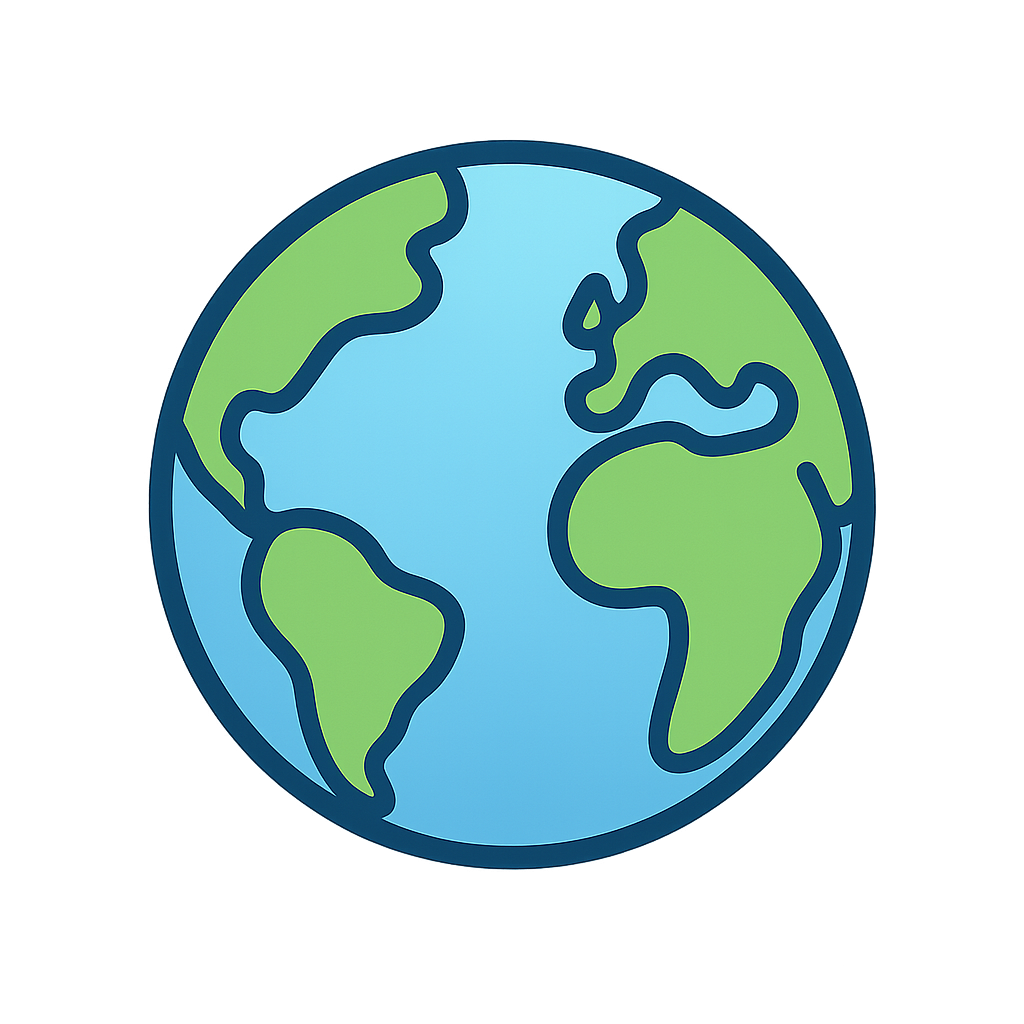
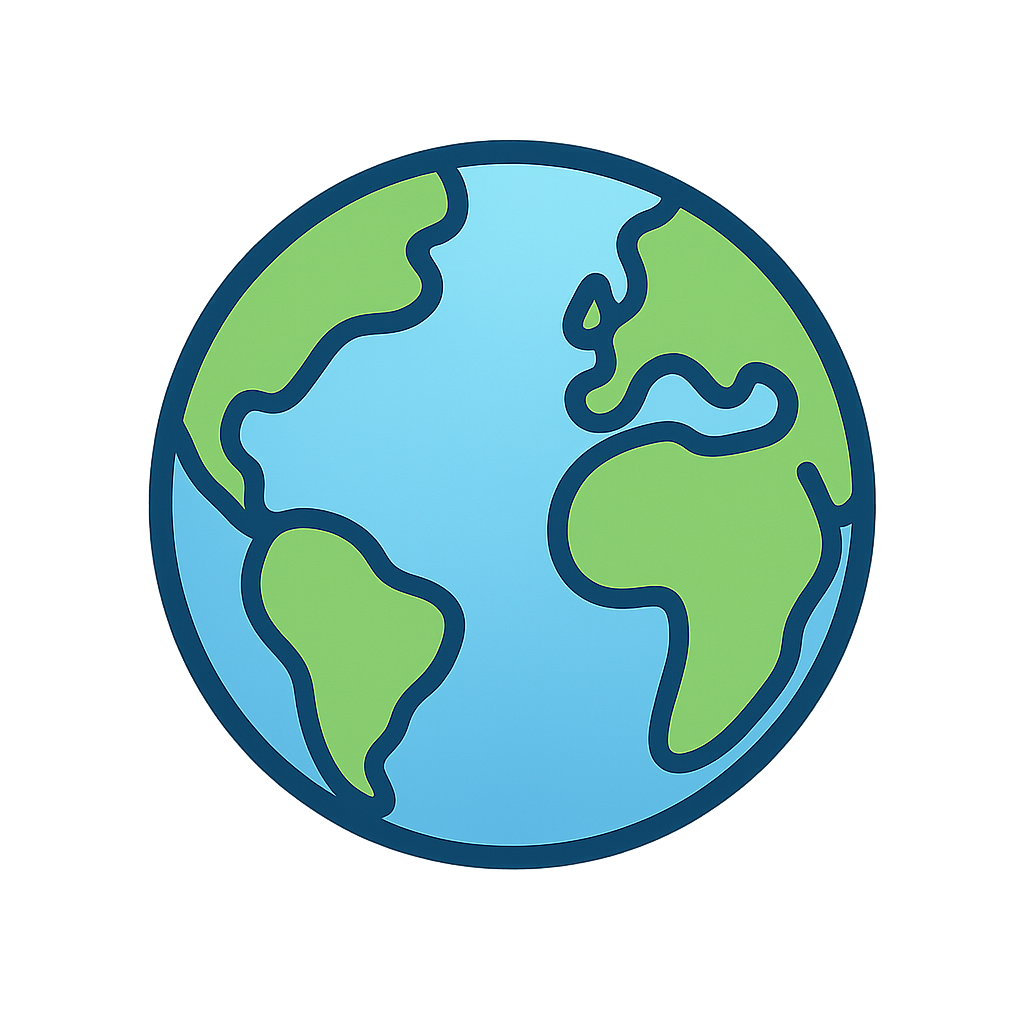
Imagine holding the entire world in your hands. With a gentle push of your finger, you can send oceans swirling, mountains spinning, and deserts racing past. You can trace the long, winding path of a river from its source to the sea or hop from one tiny island to another across a vast blue ocean. It feels so simple, so real. But long, long ago, people pictured something very different. They imagined a flat world, like a giant plate, and they worried that if you sailed too far, your ship might fall right off the edge into the mouths of hungry sea monsters. Can you imagine being an explorer back then, feeling so scared of the unknown? People had so many questions about what our world truly looked like, but they didn't have a way to see it all at once. They needed a guide, something that could show them the whole picture without any scary, made-up monsters. That’s where I come in. Hello. I’m a Globe, and I’m a perfect, round model of your amazing home, the planet Earth.
My story didn’t begin with a spin, but with a question that sparked in the minds of very clever people a long, long time ago. These thinkers, in a place called ancient Greece, looked up at the stars and noticed how ships seemed to sink below the horizon as they sailed away. They started to think, “What if the world isn't flat? What if it’s a giant ball?” This idea was exciting, but it was hard for people to picture. That’s when a very smart man named Crates of Mallus had a brilliant idea. Around the year 150 BCE, he decided to build the very first version of me. He wanted to show everyone that the Earth was a sphere. His globe was a revolutionary invention. For the first time, people could look at a model and understand how someone could travel in one direction and end up back where they started. Sadly, his globe was made so long ago that it has been lost to time, and no one today knows exactly what it looked like. But an idea that good never truly disappears. It just waits patiently for the right person to bring it back into the light.
For hundreds and hundreds of years, the idea of me slept, waiting for the right moment to spin back into the world. That moment came during a time of great adventure called the Age of Exploration, when brave sailors were crossing oceans to discover new lands. In the year 1492, a German mapmaker and explorer named Martin Behaim decided it was time to bring me back to life. He created the oldest surviving globe in the entire world, and he gave it a funny name: the “Erdapfel,” which is German for “Earth Apple.” His Earth Apple wasn’t made of plastic like many of my relatives today. It was carefully crafted from layers of linen stretched over a ball, covered in paste, and then painted with a detailed map of the world as people knew it. It showed Europe, Africa, and Asia surrounded by a massive ocean. But if you were to look closely at the Erdapfel, you’d notice something huge was missing. Can you guess what it was? The continents of North and South America weren't on it at all. That’s because, in 1492, explorers from Europe hadn’t mapped them yet. My oldest relative is like a snapshot from the past, showing us exactly what people knew at that moment in history. I am not just a model of the Earth; I am a time capsule.
From that little “Earth Apple” grew a whole family of globes—and that includes me. Today, you can find me in classrooms, cozy libraries, and on desks in homes all over the world. I’ve changed over the years, of course. As explorers mapped new coastlines and discovered new islands, my own map was updated to show a more complete picture of our planet. My job is to be your guide. I help you with your geography homework, showing you where the Amazon Rainforest grows or where the mighty Himalayas stand. I help you plan imaginary adventures to faraway places and help you understand the news by showing you where different countries are located. When you give me a spin, you’re not just looking at a map. You’re seeing that we all share one beautiful home, connected by oceans and continents. I’m here to remind you that you are part of a big, wonderful world, full of amazing places to explore and protect.