English

Age of Exploration
A period in history, from the 15th to the 17th century, when European explorers sailed the world's oceans…
Reads at Grades 3–5 Listens at Grades 1–5
 Screen-free speaker. Built for your kids.
No card, no commitment. One email when there is real news, and one click to stop.
Print & create
Answer keys·No prep·Free with an account
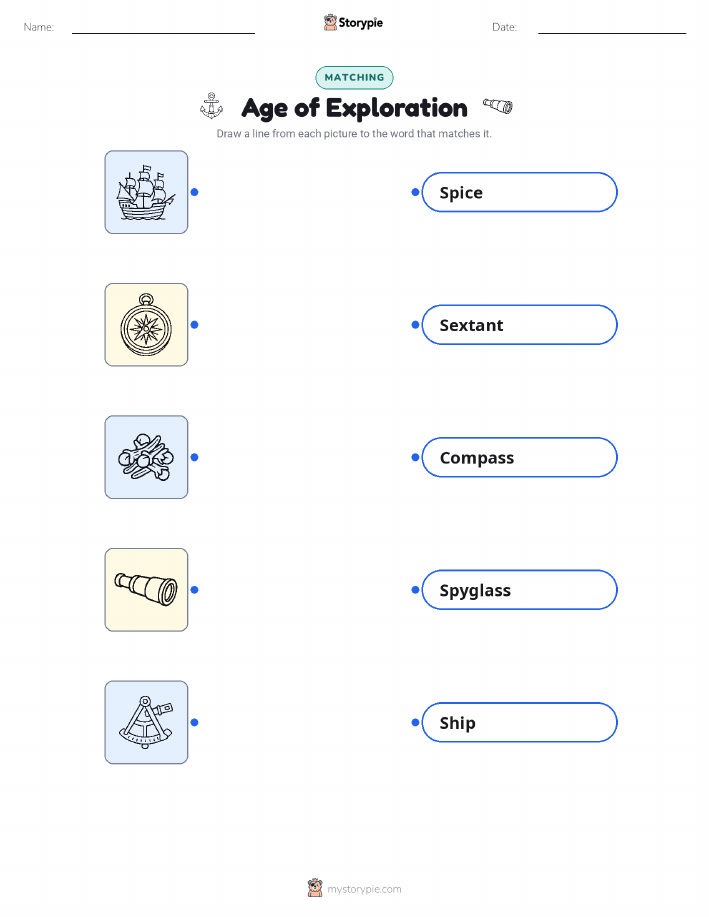
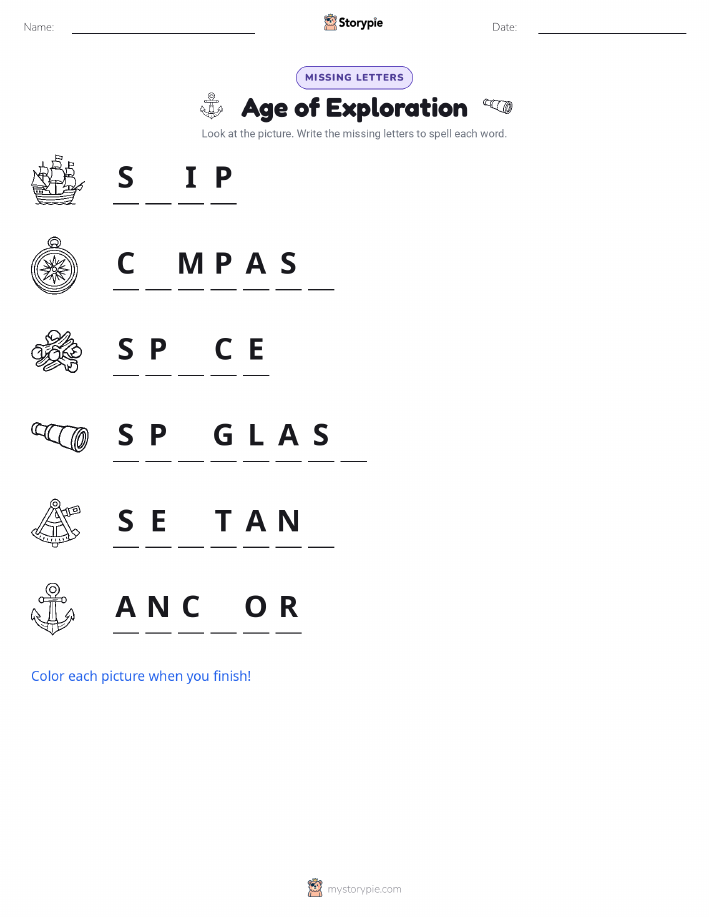
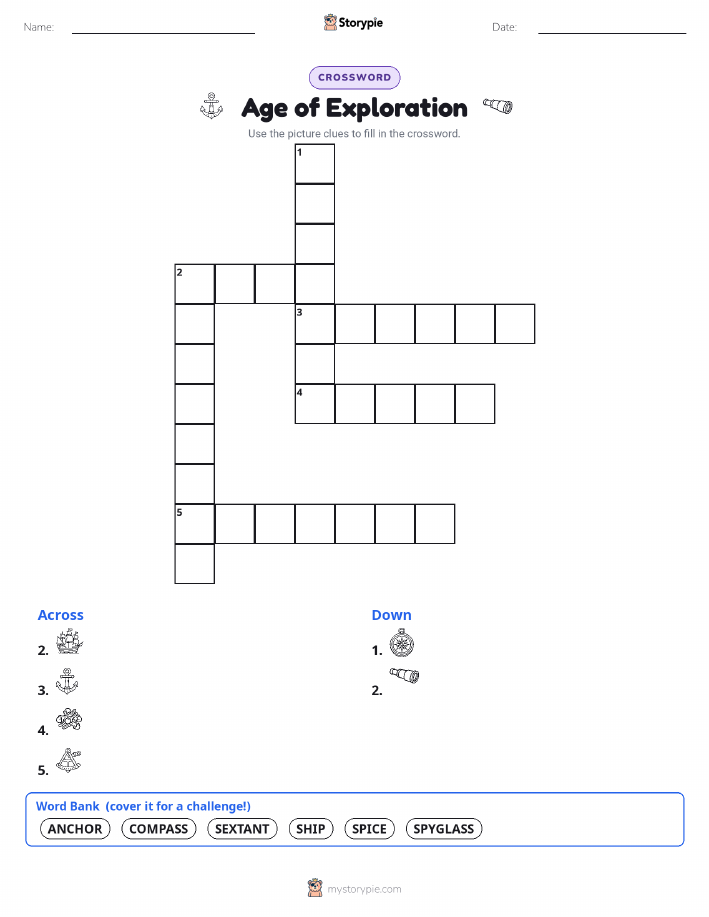
28 worksheets · answer keys · full story · quiz · Ages 8-10 · CEFR B1
Plus adds 102,000+ more stories in 27 languages, audio for every one, and printables for all of them.
Just want Age of Exploration?
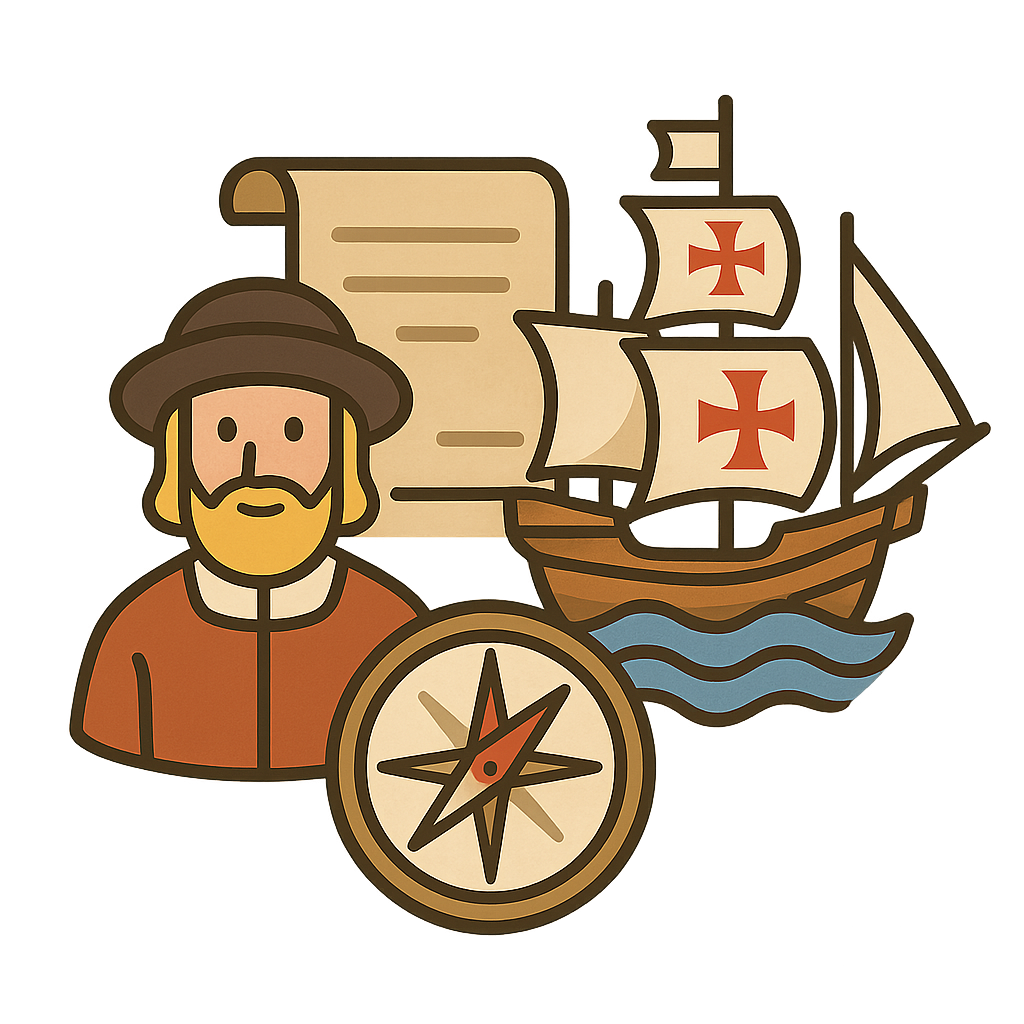
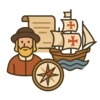
My name is Christopher Columbus, and ever since I was a boy in Genoa, Italy, the sea has called to me. I spent my life as a sailor and a mapmaker, charting the known coasts and dreaming of the lands that lay beyond the horizon. I studied maps and listened to sailors' tales, and a grand idea began to form in my mind. Everyone knew the riches of the East Indies—the lands of spices and silks—but the journey there by land was long and dangerous. What if, I thought, the world was round, as some ancient scholars believed? If it was, then I could reach the East by sailing west. I was filled with a burning certainty that it could be done. For years, I traveled across Europe, trying to find a king or queen who would believe in my dream and provide the ships and crew I needed. Many called me a fool. But I never gave up. Finally, I presented my plan to King Ferdinand and Queen Isabella of Spain. They listened carefully as I spoke of the glory and riches a new sea route would bring. After much waiting, their answer came: yes. I felt as if my heart would burst with joy. My lifelong dream was finally about to set sail.
On August 3, 1492, we left the port of Palos, Spain. I stood on the deck of my flagship, the Santa María, and watched the shores of Europe fade away. With me were two smaller, faster ships, the Niña and the Pinta, and a crew of about ninety men. A mix of excitement and fear crackled in the air. We were sailing into the unknown, a vast, empty stretch of ocean that no European had ever dared to cross. The first few weeks were guided by good winds, and our spirits were high. But as the days turned into weeks with no sight of land, that hope began to dwindle. The sea stretched on, an endless blue plain under a hot sun. The crew grew restless and frightened. They whispered that we were sailing off the edge of the world, or that we were lost forever. I had to be strong for them. I showed them my maps and charts, even though I was also anxious, and I promised them we were close. We began to see signs: a carved stick floating in the water, flocks of birds flying overhead, and green branches with flowers. Hope returned. Then, in the early morning hours of October 12, 1492, a lookout on the Pinta let out a triumphant shout that echoed across the water: '¡Tierra! ¡Tierra!' Land. We had done it. When the sun rose, we saw a beautiful green island before us. I went ashore, knelt, and gave thanks. The air was warm and smelled of strange, sweet flowers. Soon, people emerged from the trees. They were the Taíno people, and they greeted us with gentle curiosity. We couldn't understand each other's words, but we exchanged small gifts—glass beads and little bells from us, and colorful parrots and cotton from them. I believed I had reached the outer islands of the Indies.
Christopher Columbus's Voyage of Discovery
My name is Christopher Columbus, and ever since I was a boy in Genoa, Italy, the sea has called to me. I spent my life as a sailor and a mapmaker, charting the known coasts and dreaming of the lands that lay beyond the horizon. I studied maps and listened to sailors' tales, and a grand idea began to form in my mind. Everyone knew the riches of the East Indies—the lands of spices and silks—but the journey there by land was long and dangerous. What if, I thought, the world was round, as some ancient scholars believed? If it was, then I could reach the East by sailing west. I was filled with a burning certainty that it could be done. For years, I traveled across Europe, trying to find a king or queen who would believe in my dream and provide the ships and crew I needed. Many called me a fool. But I never gave up. Finally, I presented my plan to King Ferdinand and Queen Isabella of Spain. They listened carefully as I spoke of the glory and riches a new sea route would bring. After much waiting, their answer came: yes. I felt as if my heart would burst with joy. My lifelong dream was finally about to set sail.
On August 3, 1492, we left the port of Palos, Spain. I stood on the deck of my flagship, the Santa María, and watched the shores of Europe fade away. With me were two smaller, faster ships, the Niña and the Pinta, and a crew of about ninety men. A mix of excitement and fear crackled in the air. We were sailing into the unknown, a vast, empty stretch of ocean that no European had ever dared to cross. The first few weeks were guided by good winds, and our spirits were high. But as the days turned into weeks with no sight of land, that hope began to dwindle. The sea stretched on, an endless blue plain under a hot sun. The crew grew restless and frightened. They whispered that we were sailing off the edge of the world, or that we were lost forever. I had to be strong for them. I showed them my maps and charts, even though I was also anxious, and I promised them we were close. We began to see signs: a carved stick floating in the water, flocks of birds flying overhead, and green branches with flowers. Hope returned. Then, in the early morning hours of October 12, 1492, a lookout on the Pinta let out a triumphant shout that echoed across the water: '¡Tierra! ¡Tierra!' Land. We had done it. When the sun rose, we saw a beautiful green island before us. I went ashore, knelt, and gave thanks. The air was warm and smelled of strange, sweet flowers. Soon, people emerged from the trees. They were the Taíno people, and they greeted us with gentle curiosity. We couldn't understand each other's words, but we exchanged small gifts—glass beads and little bells from us, and colorful parrots and cotton from them. I believed I had reached the outer islands of the Indies.
After exploring several islands, we prepared for the long journey home. The voyage back was difficult, and a terrible storm separated our ships, but we finally made it back to Spain. The welcome we received was fit for a hero. The King and Queen were overjoyed, and the entire court listened in amazement as I told them about the new lands and people I had met. I presented them with the colorful parrots, strange plants, and gold I had brought back. At the time, I truly believed I had found a new, faster route to Asia. Looking back now, I see that I had found something much bigger. I had not landed in the East Indies, but on the shores of two vast continents that Europe never knew existed—the Americas. My journey had accidentally connected two halves of the world that had been separated for thousands of years. It was the beginning of a new age of exploration, inspiring countless others to sail into the unknown. I learned that having the courage to chase a dream, even one that seems impossible, can change the world in ways you never expected. It can build bridges across the widest oceans and bring people together, creating a bigger, more connected world for everyone.
Wow facts
About
A period in history, from the 15th to the 17th century, when European explorers sailed the world's oceans, discovering new routes, lands, and cultures, and connecting the globe like never before.
Take a Quiz
Question 1 of 5
In the story, Columbus says the crew's hope began to 'dwindle'. What does the word 'dwindle' mean?
Explore next



Want to do even more?
Go beyond exploring. Unlock tools that turn every story into real learning.

Storypie Plus for families
Full stories, quizzes, and printables. Nights and car rides, sorted.
- Unlimited audio stories
- Create Mode: your child stars in the story
- Offline downloads
- Printable worksheets & coloring pages

Why Storypie for Schools
Students engaged. Prep in seconds. Evenings back to you.
- Worksheets & Quizzes
- Classroom Management
- Formative Assessment
- Custom Curriculum & Lesson Plans
- 27 Languages

Why Storypie for Homeschool
Curriculum done. They'll ask for more. Hours back in your day.
- Worksheet Generator
- First-Person Audio Stories
- Built-in Comprehension Quizzes
- Custom Curriculum & Lesson Plans
- Print & Go Activities