

 English

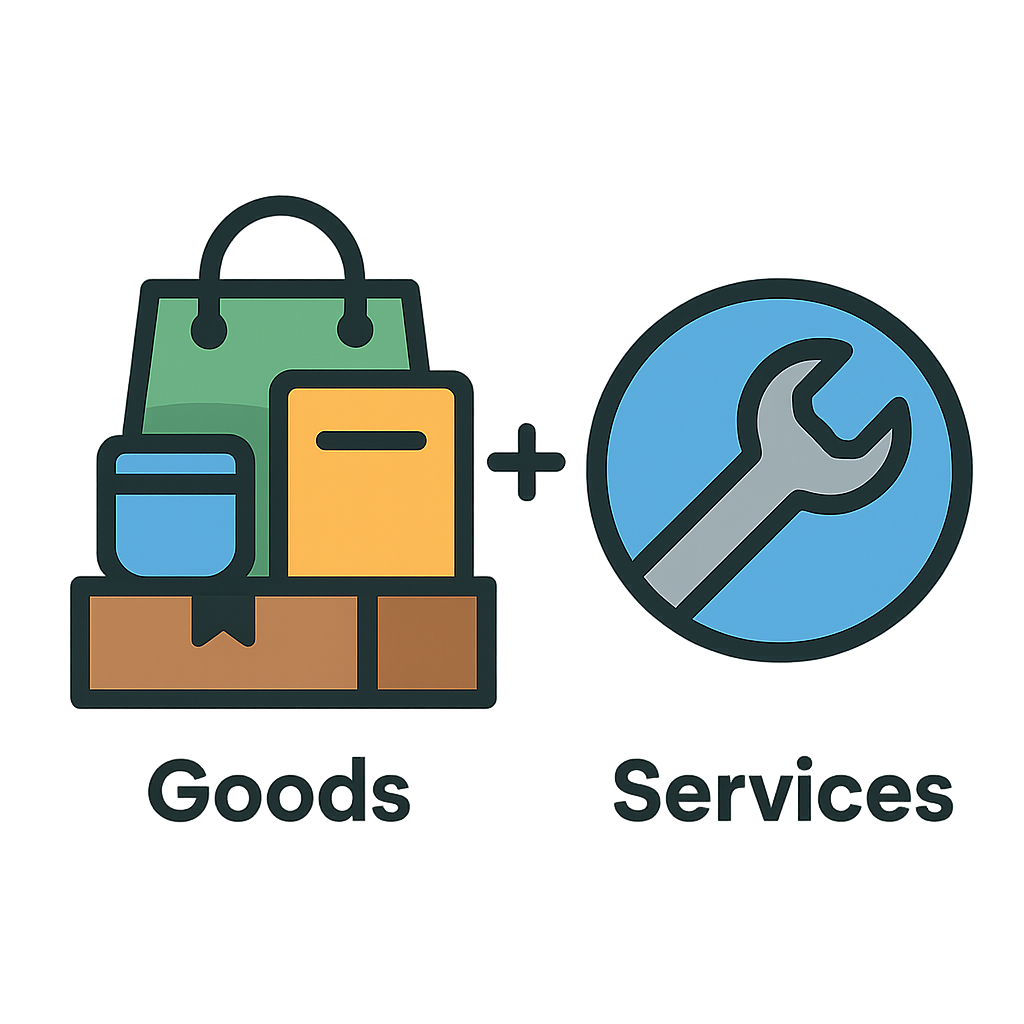
The Story of Goods and Services
Feel the cool, smooth skin of a juicy red apple in your hand. Hear the thump-thump-thump of a colorful bouncy ball on the sidewalk. Wiggle your toes inside a brand-new pair of sneakers, feeling how they hug your feet. These are all things you can hold and call your own. Now, think about the friendly bus driver who greets you every morning, steering the big yellow bus safely to school. Imagine the doctor with a gentle voice who listens to your chest to help you feel better, or a musician strumming a guitar, playing a happy song that makes you want to dance. What do your amazing sneakers and that happy song have in common. How is a delicious apple related to the bus driver's important job. They are all parts of me. I am the sneakers you wear and the fun you have at the concert. I am all the things you can have and all the help you can get. Hello. I am Goods and Services.
I have two very important parts. 'Goods' are my 'thing' part—the stuff you can touch and hold, like a book, a bicycle, or a yummy slice of pizza. 'Services' are my 'action' part—the jobs people do to help each other, like giving a haircut, teaching a piano lesson, or fixing a leaky pipe. For a very long time, people traded me directly. Can you imagine a world without money. It was called bartering. A farmer who grew crunchy carrots might trade a big bunch of them with a potter for a sturdy clay pot. A weaver might swap a warm wool blanket for a basket of fresh fish. It was a simple way for people to get what they needed. But it could also be very tricky. What if the potter already had a huge garden full of carrots. She wouldn't want to trade her beautiful pot for more vegetables. It was a real puzzle. That’s when a brilliant idea came along: money. Instead of swapping things directly, people could use coins or bills. The carrot farmer could sell her carrots for money, and then use that money to buy the exact pot she wanted from the potter. It made everything so much easier. For centuries, people used me without thinking too much about how I worked. Then, a very clever man in Scotland named Adam Smith decided to study me very closely. He was like a detective for ideas. On March 9th, 1776, he shared his discoveries in a huge, important book called 'The Wealth of Nations.' He explained that when people are free to create goods and offer services, and other people are free to buy them, it helps the whole community become better off. He showed everyone that I was the engine that helped towns and countries grow.
Today, I connect people all over the planet in the most amazing ways. Think about your favorite video game. That is a 'good,' but it was created by many 'services' working together. Artists provided the service of drawing the cool characters and magical worlds. Programmers provided the service of writing the secret code that makes the game work. And writers provided the service of creating the exciting story you follow. Or just look at the simple t-shirt you might be wearing. That shirt has been on a worldwide adventure with me. The cotton, a good, might have been grown by a farmer in the United States. A factory worker in Vietnam might have provided the service of weaving it into fabric. Then, another person in a different country might have printed the cool design on it. Finally, a truck driver provided the service of bringing it to a store right in your town. Every single person has a special talent they can share with the world. Maybe you are great at building with blocks, telling funny jokes, or helping a friend learn something new. Those are all skills that could one day become a good you create or a service you provide. I am the wonderful way we all share our creativity, our hard work, and our talents with each other, building a bigger, better, and more interesting world together.
Activities
Take a Quiz
Test what you learned with a fun quiz!
Get creative with colors!
Print a coloring book page of this topic.














 Free for Educators