

 English

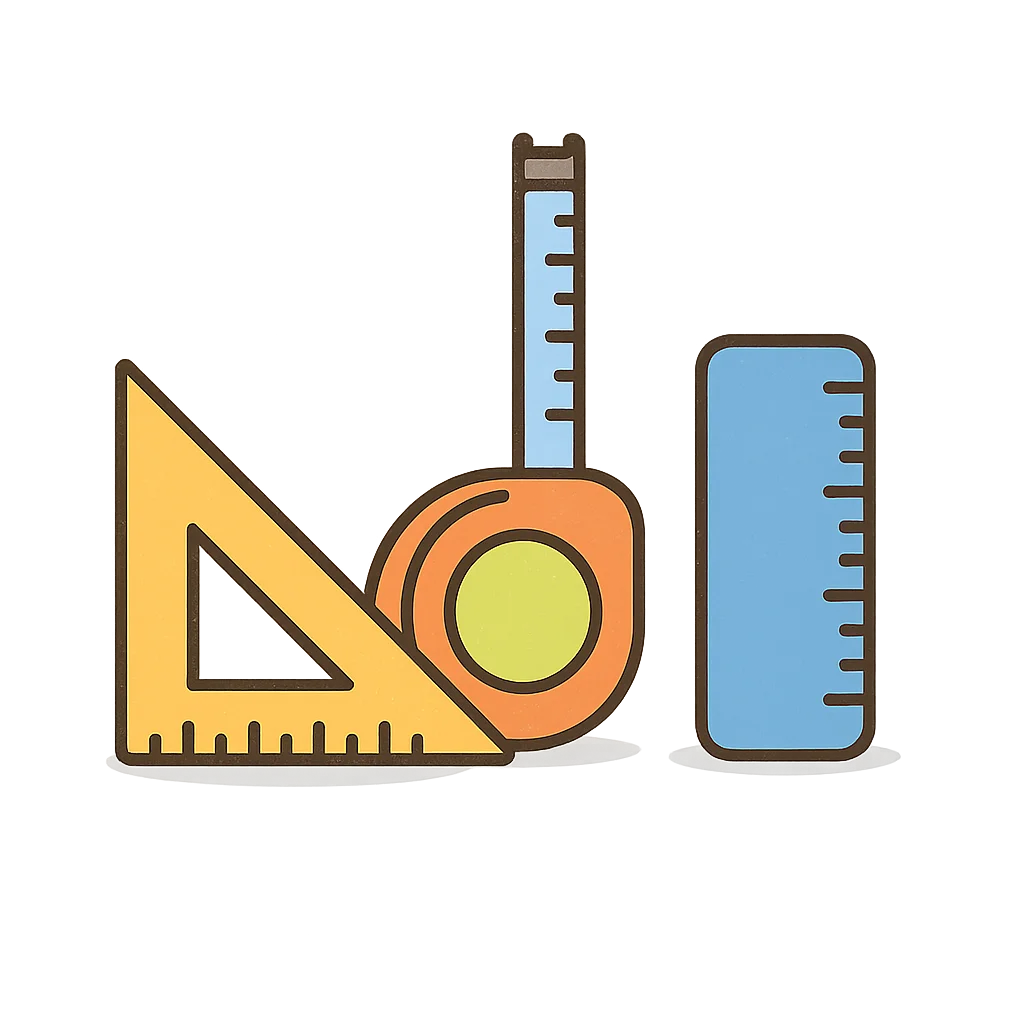
The Story of Measurement
Have you ever wondered who is taller, you or your friend? Or which toy car is faster? That's me, at work! I am the secret helper you use when you compare things. I can tell you if something is long or short, heavy or light, hot or cold. Before you even knew my name, you used me to see how high you could jump or how many cookies you could fit in your hand. I help you figure out if your backpack is too heavy or if you have enough juice to share with everyone. I am your guide to understanding the size, shape, and amount of everything. I am Measurement!.
A long, long time ago, people needed me to build their homes and farm their land. Around 3000 BCE, in places with warm sand and big rivers called ancient Egypt and Mesopotamia, people didn't have rulers or measuring tapes. So, they used the most convenient tools they could find—their own bodies!. They used something called the 'cubit,' which was the length from a person's elbow all the way to the tip of their middle finger. They used cubits to measure giant stone blocks for the amazing pyramids you see in pictures. They also used the width of their hand, which they called a 'handspan,' and the length of their foot to measure smaller things like cloth or wood. But there was a funny problem. Not everyone’s arm or foot was the same size!. A builder with very long arms would have a different cubit than a builder with shorter arms. Imagine trying to build a straight wall when everyone's ruler is a different size. It was getting a little confusing and very wobbly.
To fix all the wobbly confusion, people knew they needed rules that were the same for everyone. This is called standardization, which is a big word that just means making sure everyone's measurements match. Sometimes, kings and queens would declare that a 'foot' was the exact length of their own royal foot!. A famous story says that King Henry I of England, who lived a very long time ago around the year 1100, said a 'yard' was the distance from the tip of his nose to the tip of his thumb when he stretched his arm out. But the biggest change happened in a country called France in the 1790s. A group of clever people there invented a whole new system for me called the Metric System. It was based on the number 10, which made everything super simple to count and understand. They created the meter for length, the gram for weight, and the liter for liquid. Now, scientists and friends all over the world could share their ideas and be sure they were talking about the exact same size. No more confusion.
Today, I am everywhere!. I am in the kitchen when you follow a recipe, using cups and spoons. I am at the doctor's office, telling you how much you've grown. I help people build bridges that are safe and strong, and even send rockets into space!. I help you know how far it is to your grandma's house and how long you have to wait until your birthday. By helping you understand the world in pieces, big and small, I give you the power to build, create, and explore. What will you measure next?.
Activities
Take a Quiz
Test what you learned with a fun quiz!
Get creative with colors!
Print a coloring book page of this topic.











 Free for Educators