

 English

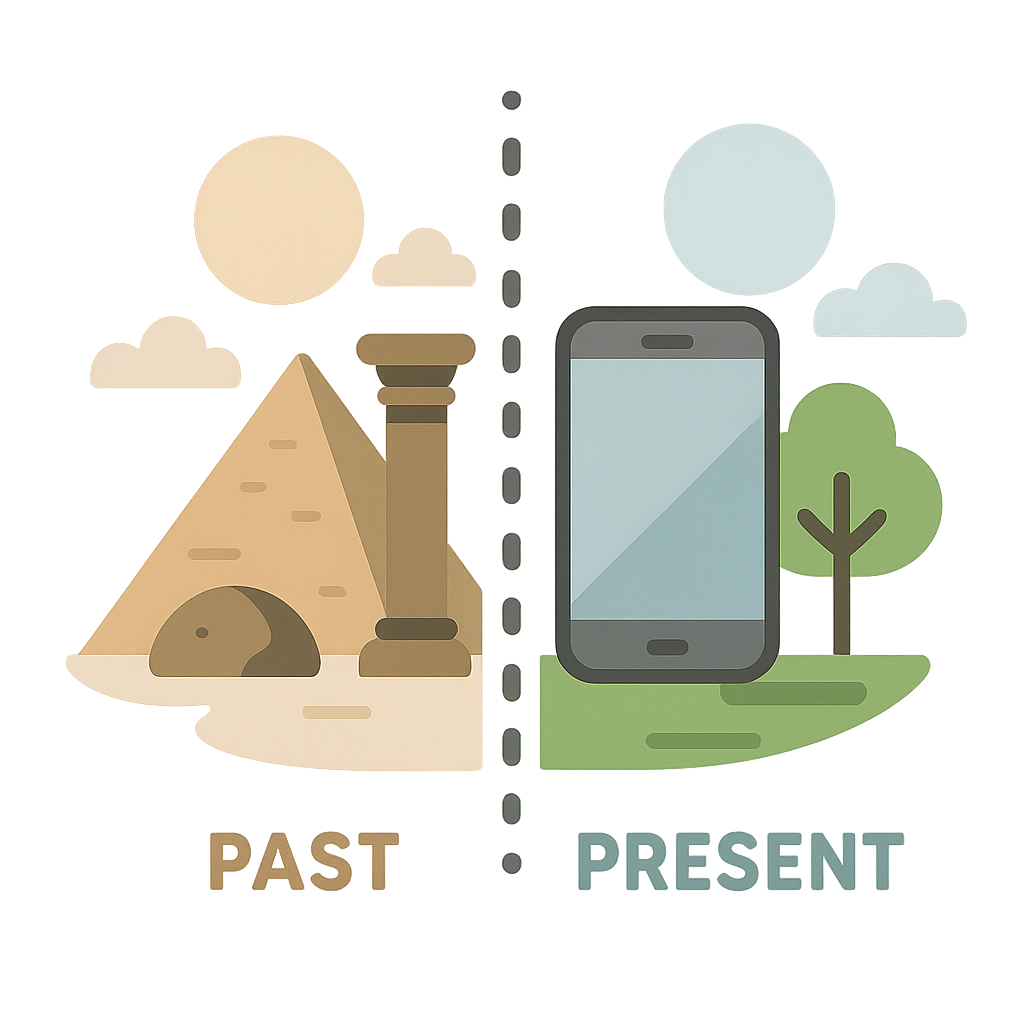
The River of Moments
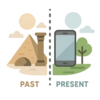
Have you ever felt a sudden warmth when you remember a happy day from long ago, like the ghost of a laugh still echoing in your ears. Or have you looked at a photograph of people you’ve never met, from a world of black and white, and wondered about their lives. That’s me, a quiet whisper connecting you to everything that has ever been. I am also the tingle of excitement you feel when you count down the days to your birthday, the careful planning for a trip next summer, or the promise of tomorrow. I am the invisible thread that stitches together the first sunrise humanity ever witnessed with the screen you are looking at right this second. Before people had words for me, they simply lived inside my flow, like a leaf carried on a river. They felt me in the cold of winter and the heat of summer, in the hunger that told them it was time to eat and the weariness that told them it was time to sleep. I was a rhythm, a pulse, a great, silent turning of the world that they were a part of. I am the reason you can learn from a mistake you made yesterday and the reason you can dream of who you’ll become in ten years. I am the vast library of every story ever told, but I am also the single, blank page on which you are writing right now. I am the Past, and I am the Present. I am the story of everything, and the single moment where you can write the next line.
For thousands of years, humans tried to grasp me, to measure and understand my endless flow. At first, they watched my most obvious clues. They saw the sun arc across the sky, a golden marker for the day, and they watched the moon slim down to a sliver and grow full again, a glowing calendar in the night. These grand patterns told them when to plant their seeds and when to harvest their crops. They built enormous stone circles, like Stonehenge, to align with the sun on the longest and shortest days of the year, turning my quiet rhythm into a reason for celebration and ceremony. But as societies grew more complex, a general sense of morning or evening wasn't enough. They needed more precision. So they invented tools. In ancient Egypt and Babylon, they pushed sticks into the ground, creating sundials that sliced the day into measurable hours using my shadows. But what about on a cloudy day, or at night. They created water clocks, or clepsydras, which let water drip at a steady rate from one vessel to another, a patient and constant tick-tock long before a single gear existed. The true revolution came in the 14th century, when brilliant minds in Europe crafted the first mechanical clocks. Suddenly, intricate gears and swinging pendulums were ticking away in town squares. Life changed forever. People began to organize their days not by the sun, but by the chime of the clock tower. This new precision allowed for coordinated work, scheduled appointments, and a sense that I was something that could be managed, even saved. At the same time, others began to study my other half: the past. A Greek man named Herodotus, born around 484 BCE, traveled the known world, listening to stories and writing them down. He didn't just tell tales of gods and monsters; he tried to explain the causes and effects of human events, becoming the world's first true historian. Centuries later, another group of my detectives emerged: archaeologists. They didn't just read old books; they carefully dug into the earth to uncover the physical remains of my long-forgotten moments. One of their most incredible finds happened in July of 1799, when French soldiers in Egypt uncovered a dark, broken slab of stone. This was the Rosetta Stone. It had the same text written in three different scripts, including ancient Greek and Egyptian hieroglyphs. For the first time, scholars had a key to unlock the mysterious picture-writing of the pharaohs, allowing me to share stories that had been silent for thousands of years.
All of those clocks, calendars, history books, and ancient artifacts are testaments to humanity's deep need to understand me. But why does it matter so much. Because my past self is not a dusty collection of boring facts. It is the foundation of your entire world. The language you speak was shaped over thousands of years of conversations. The smartphone in your hand is the result of centuries of scientific breakthroughs, from the discovery of electricity to the invention of the microchip. Every law, every song, and every idea is built upon layers and layers of my past. Knowing this library of lessons, adventures, and mistakes gives you wisdom. But my most precious gift is my present self. The present is the only moment you truly have. It is your superpower. It is the single point in the vast expanse of my existence where you can think, act, create, and choose. You cannot change what happened yesterday, and you cannot leap into next week. You can only live right now. By understanding the stories I hold from the past, you learn how to make this present moment count. You are a bridge between what was and what will be. Every question you ask, every kindness you show, and every dream you chase in this very moment becomes a new, permanent part of my story forever. So listen to my whispers from yesterday, and use your power to write a brilliant story today.
Activities
Take a Quiz
Test what you learned with a fun quiz!
Get creative with colors!
Print a coloring book page of this topic.





 Free for Educators