

 English

The Invisible Seesaw
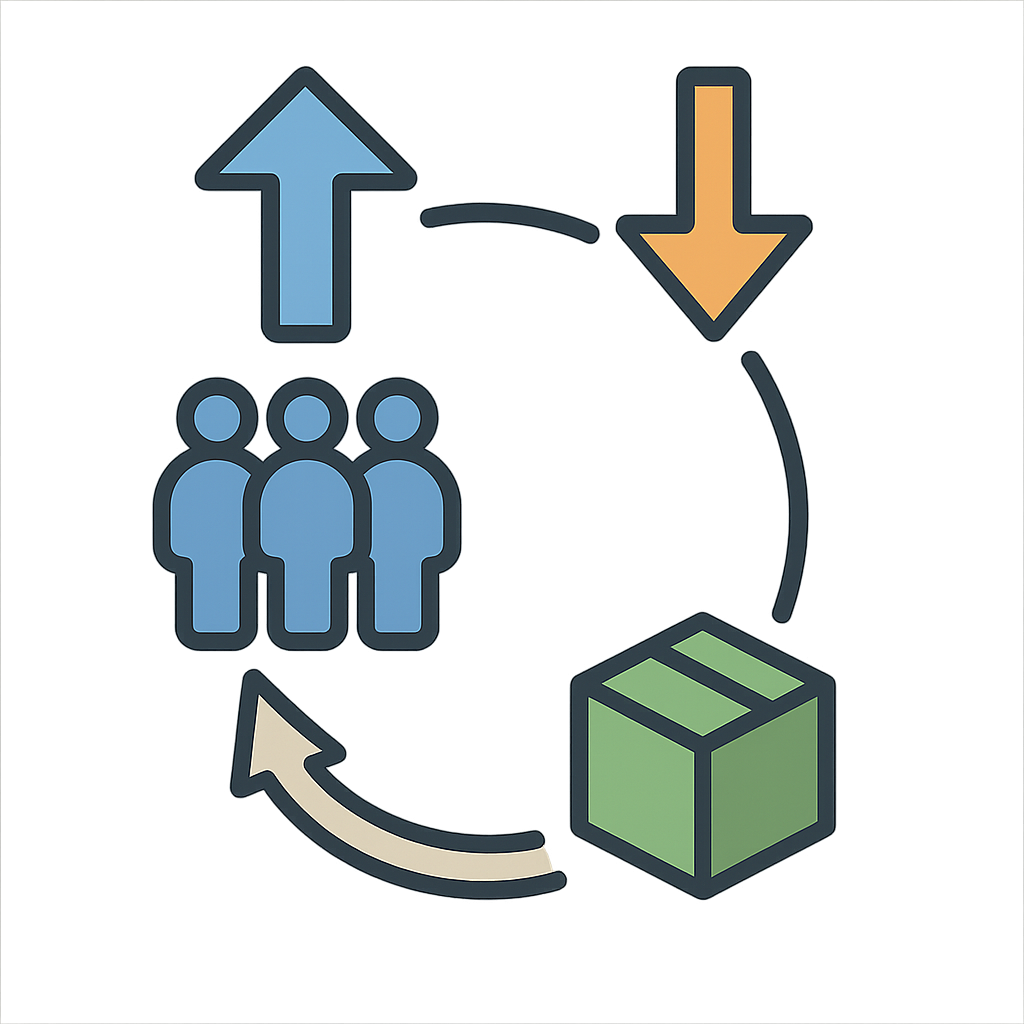
Have you ever walked past a toy store and wondered why that amazing new video game console has a price tag that seems to reach the moon when it first comes out, only to become more affordable months later? Or have you noticed how a big, juicy watermelon costs just a few dollars in the heat of August, but that same-sized melon might cost a fortune in the cold of January? It’s a puzzle, isn't it? You can’t see me, but I am the silent puzzle-solver behind it all. Think of me as an invisible seesaw, perfectly balanced in the center of every bustling market, quiet corner store, and busy online shop across the globe. On one side of this seesaw sits a heaping pile of everything people want to sell—from shiny new sneakers to freshly baked bread. On the other side, a crowd of people gathers, all wanting to buy those very things. I am the secret force, the unseen energy, that brings these two sides into balance. When everyone rushes to get something rare or new, I feel the weight of their desire and push the price up, up, up. But when shelves are overflowing with something and shoppers just stroll on by, I feel the weight of the unsold items and gently pull the price down. I work quietly, a constant, gentle pressure guiding every item to a price that feels fair to both the person selling and the person buying. I don't have a voice to speak or a face you could recognize, but I am one of the most powerful and influential ideas in the world. I am Supply and Demand.
For thousands of years, humanity felt my push and my pull without ever knowing my name. People experienced my effects as a mystery. A farmer might have a fantastic harvest one year, filling his barns with wheat, yet find he earned less money than the year before when his harvest was small. A baker would see the price of flour skyrocket for no reason he could understand. To most, the world of prices felt as unpredictable and random as the weather, a force of nature that simply had to be endured. Kings and rulers tried to control me, setting official prices for bread and cloth, but their rules were often clumsy and caused more problems than they solved. It was a confusing time. But then, a few curious people began to look closer. They became detectives of the marketplace, searching for clues to solve the great mystery of value. The most famous of these thinkers was a quiet, thoughtful man from Scotland named Adam Smith. Living in the 1700s, he was fascinated by the hustle and bustle of commerce. He would spend hours walking through busy marketplaces, observing merchants haggling, shoppers comparing goods, and artisans deciding what to make. He didn't just see chaos; he saw an intricate, hidden pattern. He realized I wasn't random at all—I was a logical, predictable, and incredibly elegant system. It took him over a decade of careful thought and study, but on March 9th, 1776, he published his enormous and groundbreaking book, 'The Wealth of Nations.' In its pages, he finally gave me a proper introduction to the world. He described my work with a beautiful metaphor: an 'invisible hand.' He explained that even though no single person, no king or government committee, is in charge of setting all the prices, my two components—Supply, which is the amount of something available, and Demand, which is how much people want that thing—work together to guide the entire economy. It was a revolutionary idea. Imagine you open a lemonade stand on a scorching summer day. Everyone is parched, so demand is sky-high. If you're the only stand for miles, your supply is very low compared to the demand. You can probably sell your lemonade for a pretty good price. But what happens if ten other kids see your success and open their own lemonade stands on the very same street? Suddenly, the supply is huge. To convince thirsty customers to choose your lemonade over the others, you'll all have to lower your prices. This simple example shows the invisible hand at work. Adam Smith's breakthrough was showing that millions of individual, self-interested decisions—what to buy, what to sell, what to make—combine to create an orderly system that benefits everyone. He pulled back the curtain and revealed the beautiful logic behind my daily magic.
The best way to understand my work is to picture a constant, flowing dance. Supply and Demand are my two partners, and they are always in motion, spinning and stepping across the floor of the marketplace. My entire purpose is to find the perfect spot on that floor where they can meet and hold hands, a point of perfect harmony. Economists have a fancy name for this magical spot: 'equilibrium.' It’s a state of balance, the price point where the quantity of a product that companies want to sell is exactly equal to the quantity that customers want to buy. At equilibrium, everyone is happy. Sellers sell all their goods, and buyers get what they want at a price they find reasonable. But my dance partners aren't always graceful. Sometimes, one of them stumbles or gets carried away. For instance, Supply can get way ahead in the dance. Imagine a farmer has a surprisingly good year and grows a mountain of zucchini. He brings tons of it to the market, and so does every other farmer. Suddenly, there’s a massive 'surplus.' Zucchini are piled high in every grocery store, but people's appetite for zucchini hasn't changed. To avoid letting all that good food go to waste, sellers must do something to entice buyers. They start by lowering the price. A little at first, then maybe a 'buy one, get one free' offer. The price keeps dropping until it becomes so attractive that people start buying up all the extra zucchini, and balance is restored. Then there are times when Demand leads the dance with a powerful surge. Remember that brand-new video game console that every kid wanted for the holidays? The company couldn't manufacture them fast enough to keep up with the incredible demand. This creates a 'shortage.' There are far more buyers than available consoles. When a shortage happens, the price naturally shoots upward. Stores might sell out instantly, and some people who got one early might even resell it online for double or triple the original price because they know desperate buyers are willing to pay. My job is to be the conductor of this dance, constantly nudging prices up or down to correct these imbalances. I work to smooth out the clumsy steps of surplus and shortage, always striving to bring my partners back to that sweet spot of equilibrium for everything from sneakers to smartphones to slices of pizza.
Once Adam Smith introduced me to the world, people began to see my influence everywhere, and you can too. I am hidden in plain sight, shaping the world around you every single day. Pay attention, and you’ll see me in the price of gasoline for your family’s car, which goes up when global supply is tight and down when there's plenty to go around. You'll find me in the cost of tickets to see the year's biggest blockbuster movie on opening weekend versus a quiet Tuesday afternoon. I'm even present in the careers people choose. Fields with a high demand for workers, like computer programming or nursing, but a low supply of qualified people, tend to offer higher salaries to attract talent. I am the silent partner in every business decision. When a company considers inventing a self-tying shoelace or a new flavor of potato chip, they are really asking questions about me. They must predict the demand: how many people will actually want this? Then they must analyze the supply: how much will it cost to produce, and can we make enough? Understanding how I work is like gaining a superpower. It allows you to see the hidden logic behind the headlines and the prices in the store. It helps you make smarter decisions in your own life. You’ll know the best time to buy a new bike might be at the end of the season when stores have a surplus. If you ever want to start your own business, from a simple dog-walking service to a global tech company, I will be your most important guide. But I am more than just numbers and money. At my heart, I am about people, our choices, and our values. I am a powerful tool that helps society figure out how to use our limited resources—our time, our planet's materials, our creativity—in the most efficient way possible. By constantly balancing what we have with what we need, I help create a dynamic world that responds to our desires, a world full of amazing innovations, exciting opportunities, and endless possibilities.
Activities
Take a Quiz
Test what you learned with a fun quiz!
Get creative with colors!
Print a coloring book page of this topic.












 Free for Educators