

 English

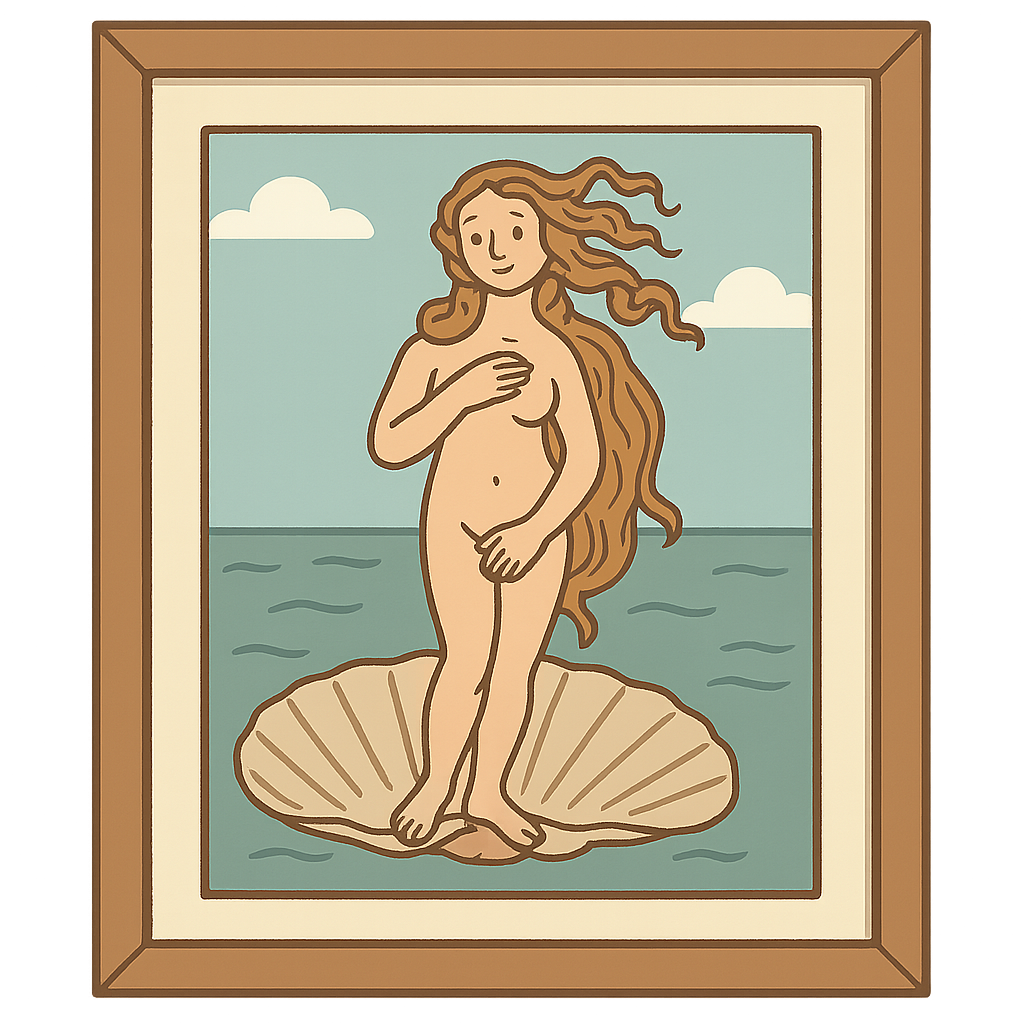
I Am The Birth of Venus
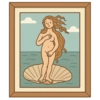
Before I had a name, I was a feeling. I was the cool, damp breath of the sea mist and the impossible softness of a rose petal against skin. Imagine being born into a world of pearlescent light, where the sky and the sea blend into a gentle, quiet dawn. That was my first sensation. I felt myself taking shape under a master’s touch, a landscape of color on a vast, stretched canvas. A breeze, not of this world but a painted one, seemed to lift the long, golden strands of my hair. I could feel the gentle rocking of a giant seashell, my first cradle, as it glided over serene, blue-green waves tipped with the lightest foam. The air around me was filled with the scent of countless roses, tumbling from the sky like a fragrant, pink rain. It was a moment of pure, silent magic, captured forever. I am not just a picture; I am the telling of a myth, a dream of beauty brought to life with pigment and passion. I am a story told in light and color. I am The Birth of Venus.
My creator was a thoughtful and brilliant man named Sandro Botticelli. He worked in a bustling studio in Florence, Italy, during a remarkable period of history known as the Renaissance, a time of incredible artistic and intellectual awakening. Around the year 1485, he was given a special task by one of the most powerful and art-loving families in Florence, the Medici. They wanted a painting for their private country villa, something beautiful and inspired by the classical stories of ancient Greece and Rome that were being rediscovered all over Italy. Sandro’s studio was filled with the earthy smells of minerals and oils. To create my soft, glowing appearance, he used a special technique called tempera. He would grind precious pigments—lapis lazuli for my blues, malachite for my greens—into a fine powder and mix them with egg yolk. This method gave me a unique, matte finish that seems to radiate a gentle light from within. I watched through my painted eyes as he worked with meticulous patience. With the finest of brushes, he spun each strand of my golden hair, letting it flow and curl in the wind. He carefully layered his colors to create the delicate shadows on my skin and the transparent ripples of the water. He was not just painting a picture; he was breathing life into an ancient legend, reviving a world of gods and goddesses for his own time.
I am the embodiment of a famous Roman myth. On my canvas, you can see the story of my miraculous arrival. I am Venus, the goddess of love and beauty, and I have just been born from the foam of the sea. I am not alone in this moment. To my left is Zephyr, the god of the west wind. He puffs his cheeks to blow me gently toward the shore, and wrapped in his arms is the nymph Chloris, who helps him guide my seashell vessel. As they blow, they scatter a shower of pink roses across the sky and sea. In ancient times, the rose was a symbol of love and beauty, created at the same moment I was. So, wherever I go, flowers bloom. On the right side of the canvas, a graceful figure hurries to greet me as I reach the land. She is one of the Horae, the goddesses of the seasons. She holds out a magnificent cloak, embroidered with colorful spring flowers, ready to cover me and welcome me into the world. Every figure, every flower, and every ripple of water is part of the story, a celebration of the arrival of beauty and love.
For nearly three hundred years after my creation in the 1480s, I lived a quiet life. I hung in the private country villa of the Medici family, seen only by them and their esteemed guests. I was a private treasure, a whisper of a forgotten myth. But by the year 1815, my journey took a new turn. I was moved to the world-famous Uffizi Gallery in Florence, where I was finally displayed for everyone to see. People from all over the globe could now stand before me and gaze into my world. My arrival in a public museum was significant. In my time, it was revolutionary to paint a non-religious, mythological figure on such a grand scale, celebrating the beauty of the human form so openly. I represented the Renaissance spirit of looking back to classical antiquity for inspiration. Today, my image is known everywhere. I have inspired countless artists, poets, fashion designers, and dreamers. I am a reminder that a single moment of creative vision can travel across centuries, connecting us to the past and proving that the power of a beautiful story never fades. It continues to spark wonder and imagination in all who meet my gaze.
Activities
Take a Quiz
Test what you learned with a fun quiz!












 Free for Educators