

 English

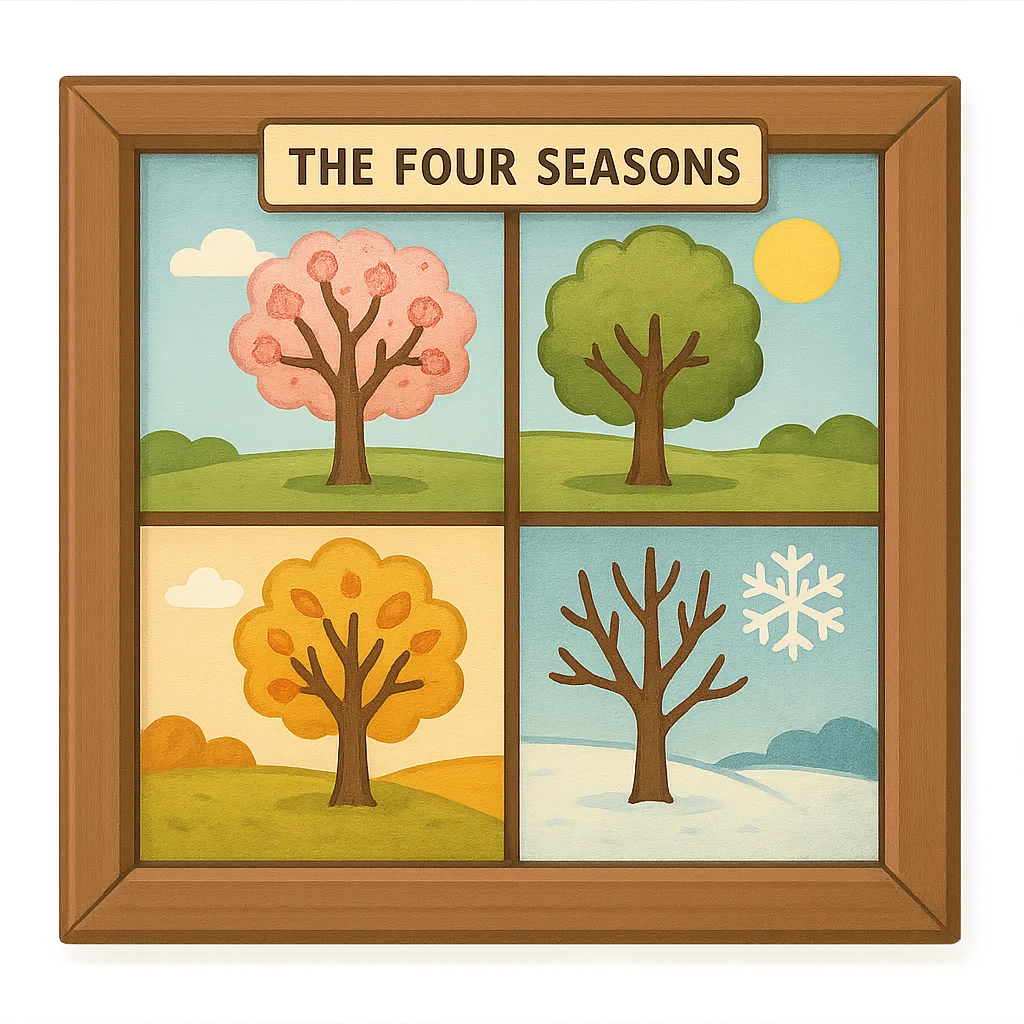
My Story: The Four Seasons
Can you hear that? It’s the happy chirping of birds building their nests. Now, listen closer. Can you feel the lazy buzz of a bumblebee on a hot afternoon? And what about that sound, the crisp, dancing rustle of leaves skittering across the ground? Finally, feel the warmth from the quiet crackle of a winter fire. All of these pictures, these feelings, are tucked inside me, held within my musical notes, waiting to be heard. I am a story told not with words, but with music. I am The Four Seasons.
My maker was a wonderful man from the magical, watery city of Venice, Italy. His name was Antonio Vivaldi, and he had such fiery red hair that people called him “the Red Priest.” Around the year 1723, Antonio had a brilliant and brand-new idea. He wanted to paint pictures of the entire year, not with a brush, but with his violin and an orchestra. Can you imagine trying to draw a picture using only sounds? To help everyone see what he heard in his head, he did something special. He wrote little poems, called sonnets, for each of my parts. These poems were like a map for your imagination, pointing out the sleepy shepherd, the buzzing flies, and the shivering children he had hidden in my melodies. It was his secret code to unlock the stories within my notes.
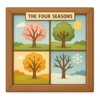
My first story begins with “Spring.” Antonio made the violins flutter and trill just like joyful birds returning after a long winter. He even wrote in the sound of a little babbling brook. If you listen very carefully, you can hear a viola making a gentle “woof-woof” sound, just like a loyal sheepdog taking a nap in the meadow. But the weather doesn't stay sunny forever. My next part is “Summer,” and it starts slowly, with notes that feel heavy and thick like the air on a scorching hot day. But then, you can feel a change. The music gets faster and louder, building and swirling like dark clouds gathering in the sky. Suddenly, CRASH. BOOM. I become a powerful thunderstorm, with violins flashing like lightning and cellos rumbling like thunder. It’s exciting and a little bit scary, just like a real summer storm.
After the storm passes, the celebration of “Autumn” begins. This part of my story is a joyful harvest festival. Antonio’s music sounds like people dancing and stomping their feet, celebrating all the delicious food they’ve gathered from the fields. The melodies are cheerful and full of energy, making you want to get up and join the party. But the year keeps turning, and soon the air grows cold. My final chapter is “Winter.” Antonio was a genius at creating a chill. He made the violins play shivering, trembling notes that sound exactly like chattering teeth. He used a special trick called pizzicato, where the players pluck the strings to sound like sharp, icy rain tapping against a windowpane. But even in the cold, there is warmth. He wrote a beautiful, cozy melody that feels just like sitting by a crackling fireplace, safe and snug while the winter wind howls outside.
When I was finally published for everyone to hear in 1725, people were amazed. They had never heard music that told such a clear story before. I was like a book made of sounds. My music traveled from the canals of Venice across oceans and mountains, played for kings and queens and ordinary people in towns all over the world. Hundreds of years have passed, but I am still here. You might hear me in a movie, on the radio, or in a grand concert hall. My notes still connect people to the beauty of the world around them. I remind everyone, no matter where they live or when they were born, that the feeling of spring’s sunshine or winter’s chill is a magical experience we all share.
Activities
Take a Quiz
Test what you learned with a fun quiz!
Get creative with colors!
Print a coloring book page of this topic.










 Free for Educators