
 English

The Four Seasons (Vivaldi)
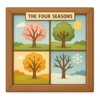
A set of four violin concertos by Antonio Vivaldi, each giving a musical expression to a season of the year.
Reads at Grades 6–8 Listens at Grades 4–8
 Screen-free speaker. Built for your kids.
No card, no commitment. One email when there is real news, and one click to stop.
Print & create
Answer keys·No prep·Free with an account
28 worksheets · answer keys · full story · quiz · Ages 10-12 · CEFR B2
Plus adds 102,000+ more stories in 27 languages, audio for every one, and printables for all of them.
Just want The Four Seasons (Vivaldi)?
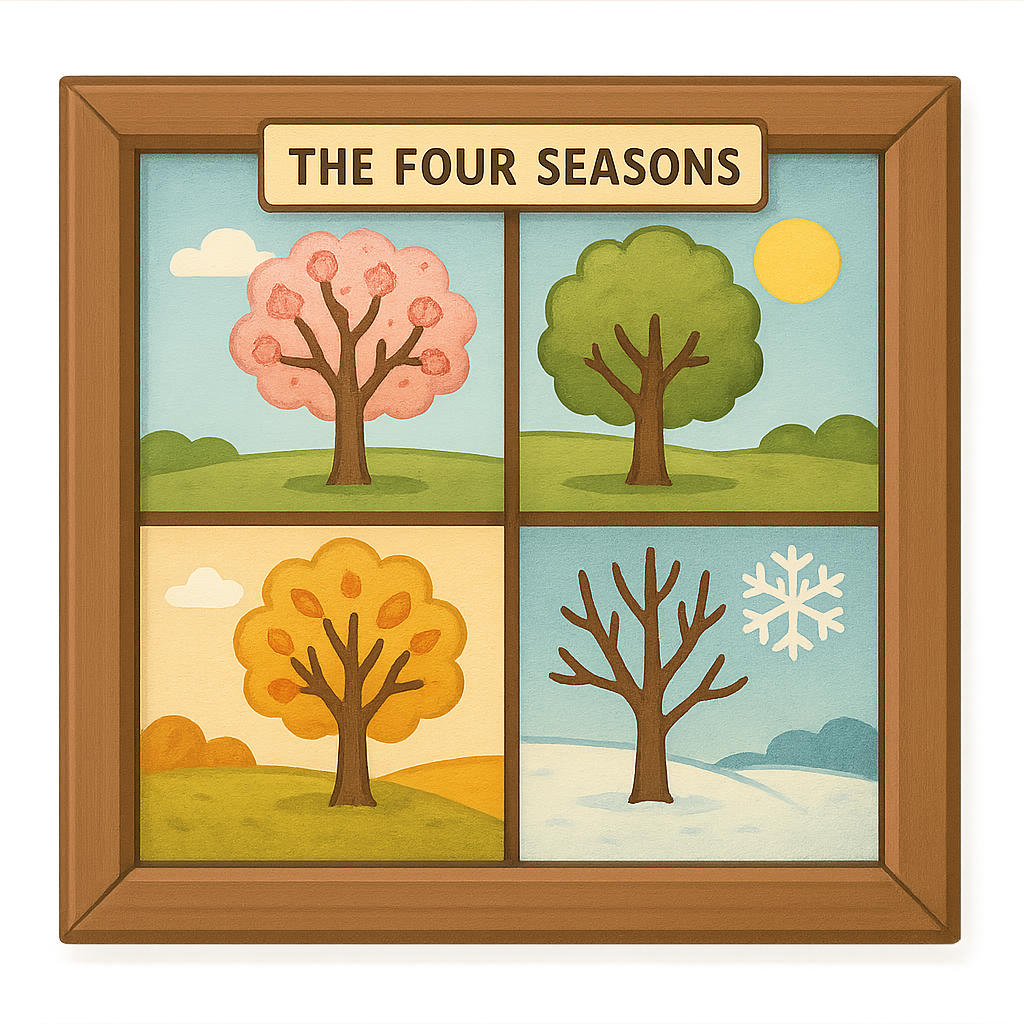
Before I had a name, I was just a feeling in the air, a song sung by the earth itself. I was the hopeful trill of a goldfinch on the morning of March 21st, celebrating the return of the sun. I was the gentle murmur of a stream, finally free from winter's ice, and the joyful bark of a shepherd's dog watching over his flock. I was the lazy drone of a cicada on a sweltering August afternoon, the air thick and heavy before a sudden, violent thunderstorm that cracked the sky open with flashes of lightning and sheets of rain. My voice was in the rustle and whirl of golden leaves during an autumn harvest festival, the cheerful sounds of dancing and celebration that slowly faded into a contented, sleepy haze. And I was the biting wind of a cold December day, the sharp sting of ice underfoot and the chattering of teeth as people huddled by a crackling fire, safe and warm inside. I am not one song, but four. I am a story told in the universal language of music, a portrait of the passing year. I am The Four Seasons.
My creator was a man as vibrant and fiery as his music, a composer named Antonio Vivaldi. In his home city of Venice, a magical place of winding canals and grand palaces, he was known as 'Il Prete Rosso'—The Red Priest—because of his brilliant red hair. Vivaldi was more than a musician; he was a painter who used sound instead of brushes and pigment. He was a master of what people call 'program music,' which means every note is meant to paint a specific picture or tell a clear story. Published on a bright day in 1725, I was born from a set of four poems, sonnets that described the changing year in vivid detail. Vivaldi took those words and transformed them into a language everyone could understand. He wanted you to hear exactly what the poet saw. In my 'Spring' concerto, a solo viola mimics the faithful barking of a sheepdog. My 'Summer' movement explodes with the fury of a sudden tempest, with violins racing up and down their scales like flashes of lightning. In 'Autumn,' you can hear the joyful dance of peasants celebrating the harvest, their steps growing heavier and slower as they become sleepy from their festivities. And in 'Winter,' the violins pluck their strings sharply, creating the sound of teeth chattering in the freezing cold, while a solo violin sings a beautiful, lonely melody like someone watching the silent fall of snow from a warm window. He didn't just write music; he captured life itself.
The Four Seasons
Before I had a name, I was just a feeling in the air, a song sung by the earth itself. I was the hopeful trill of a goldfinch on the morning of March 21st, celebrating the return of the sun. I was the gentle murmur of a stream, finally free from winter's ice, and the joyful bark of a shepherd's dog watching over his flock. I was the lazy drone of a cicada on a sweltering August afternoon, the air thick and heavy before a sudden, violent thunderstorm that cracked the sky open with flashes of lightning and sheets of rain. My voice was in the rustle and whirl of golden leaves during an autumn harvest festival, the cheerful sounds of dancing and celebration that slowly faded into a contented, sleepy haze. And I was the biting wind of a cold December day, the sharp sting of ice underfoot and the chattering of teeth as people huddled by a crackling fire, safe and warm inside. I am not one song, but four. I am a story told in the universal language of music, a portrait of the passing year. I am The Four Seasons.
My creator was a man as vibrant and fiery as his music, a composer named Antonio Vivaldi. In his home city of Venice, a magical place of winding canals and grand palaces, he was known as 'Il Prete Rosso'—The Red Priest—because of his brilliant red hair. Vivaldi was more than a musician; he was a painter who used sound instead of brushes and pigment. He was a master of what people call 'program music,' which means every note is meant to paint a specific picture or tell a clear story. Published on a bright day in 1725, I was born from a set of four poems, sonnets that described the changing year in vivid detail. Vivaldi took those words and transformed them into a language everyone could understand. He wanted you to hear exactly what the poet saw. In my 'Spring' concerto, a solo viola mimics the faithful barking of a sheepdog. My 'Summer' movement explodes with the fury of a sudden tempest, with violins racing up and down their scales like flashes of lightning. In 'Autumn,' you can hear the joyful dance of peasants celebrating the harvest, their steps growing heavier and slower as they become sleepy from their festivities. And in 'Winter,' the violins pluck their strings sharply, creating the sound of teeth chattering in the freezing cold, while a solo violin sings a beautiful, lonely melody like someone watching the silent fall of snow from a warm window. He didn't just write music; he captured life itself.
When I was first performed in the grand halls of Europe in the 1720s, audiences were astonished. They had never heard anything quite like me. Music that could so clearly tell a story without a single word was a revelation. For a time, I danced through the courts and theaters, celebrated for my novelty and beauty. But as time passed, tastes changed. After my brilliant creator, Antonio Vivaldi, passed away in Vienna on July 28th, 1741, the world began to forget us both. I fell into a long, deep sleep. For nearly two hundred years, my pages lay silent in dusty libraries and forgotten collections across Europe. My vibrant seasons faded into a quiet memory. Then, in the early 20th century, a new generation of scholars and musicians began searching for the lost treasures of the past. They found Vivaldi's manuscripts, and they found me. It was like waking up to a world transformed. On a day in 1928, I was performed for a new audience in a city called Siena, and it was as if 'Spring' had truly returned after a long winter. My melodies, once confined to handwritten pages, were soon captured by new inventions like the phonograph record, allowing me to fly across oceans and into homes all over the planet.
Today, my life is more vibrant than Vivaldi could have ever imagined. My notes are woven into the fabric of modern life. You can hear my 'Spring' in television commercials celebrating new beginnings, my 'Summer' storm adding drama to a movie chase scene, and my 'Winter' creating a feeling of quiet reflection in a documentary. I am played in concert halls from Tokyo to Toronto, by orchestras that carry on the tradition started in Venice so long ago. I have inspired ballet dancers, ice skaters, and digital artists who find new stories within my old melodies. I am a bridge built of sound, connecting you today to the world of the 18th century. When you listen to me, you hear the same birds, feel the same summer heat, and shiver from the same winter chill that Vivaldi knew. I am proof that even though times change, the fundamental beauty of the natural world and the power of human creativity are a cycle that, like the seasons, never truly ends.
Wow facts
About
A set of four violin concertos by Antonio Vivaldi, each giving a musical expression to a season of the year. They are one of the most famous examples of 'program music,' where music is composed to depict a specific narrative or scene.
Take a Quiz
Question 1 of 5
In your own words, describe the four 'pictures' Antonio Vivaldi painted with his music in The Four Seasons, using one example for each season.
Explore next






Want to do even more?
Go beyond exploring. Unlock tools that turn every story into real learning.

Storypie Plus for families
Full stories, quizzes, and printables. Nights and car rides, sorted.
- Unlimited audio stories
- Create Mode: your child stars in the story
- Offline downloads
- Printable worksheets & coloring pages

Why Storypie for Schools
Students engaged. Prep in seconds. Evenings back to you.
- Worksheets & Quizzes
- Classroom Management
- Formative Assessment
- Custom Curriculum & Lesson Plans
- 27 Languages

Why Storypie for Homeschool
Curriculum done. They'll ask for more. Hours back in your day.
- Worksheet Generator
- First-Person Audio Stories
- Built-in Comprehension Quizzes
- Custom Curriculum & Lesson Plans
- Print & Go Activities