

 English

The Tale of a Little Book
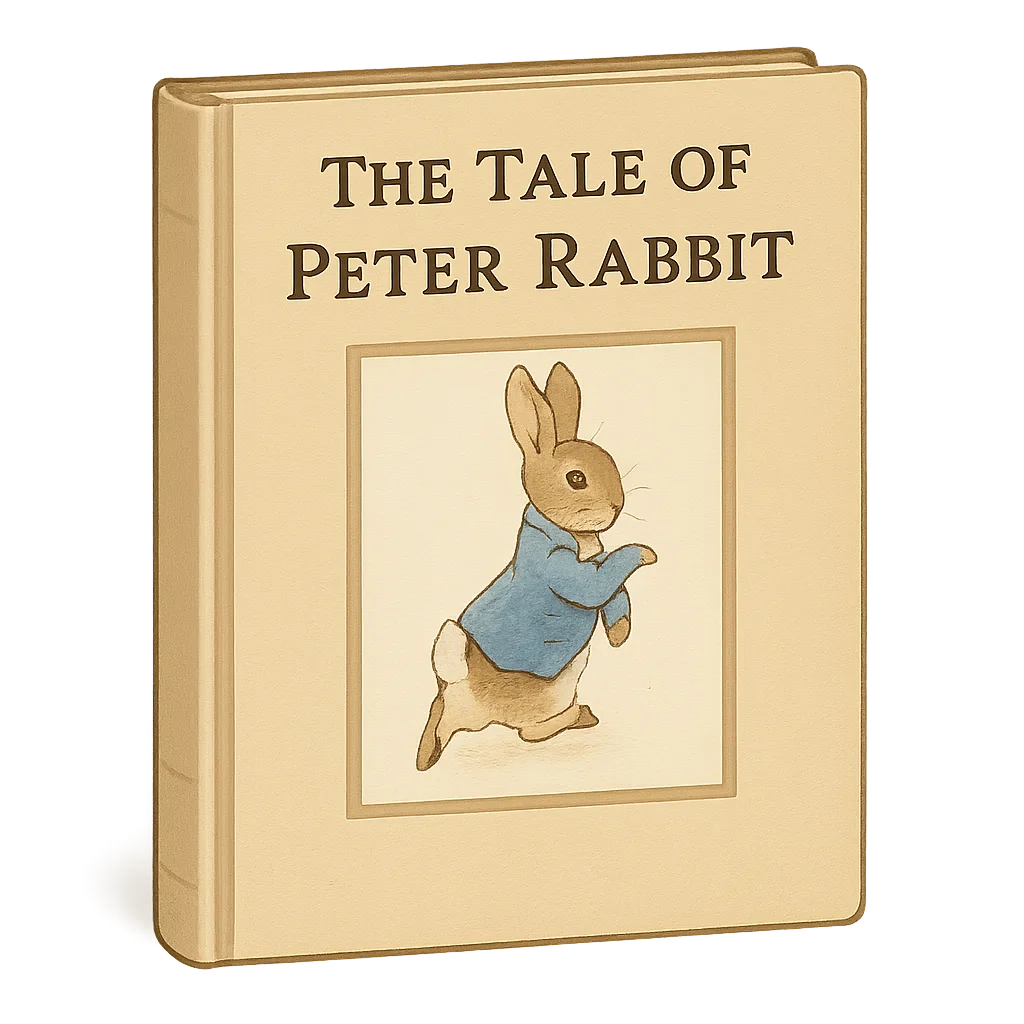
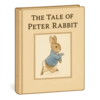
Imagine the feeling of being held gently, my small, sturdy frame fitting perfectly into a child's curious hands. My cover is a calm, welcoming blue, and on it, you can see a picture of a very distinguished-looking rabbit dressed in a smart little jacket. If you lean in close, you can catch the faint, lovely scent of old paper and rich ink, a smell that promises secrets and adventures. My pages feel smooth and cool to the touch, and with every turn, they make a soft, whispering sound. Within them lies a world bursting with life—a world of tidy vegetable patches filled with crunchy lettuces and radishes, a grumpy gardener named Mr. McGregor who is fiercely protective of his prize-winning plants, and a very brave, very mischievous hero with twitching whiskers and a thirst for exploration. I am more than just paper and binding. I am a gateway to a thrilling escape, a lesson learned, and a cozy return home. I am a story. I am The Tale of Peter Rabbit.
My life, however, did not begin on a bookshelf. I started as a secret, a special message sent through the mail. My story was first put to paper on September 4th, 1893, not as a book, but as a picture letter. My creator was a remarkable woman named Beatrix Potter. She was quiet and observant, with a brilliant mind and a deep affection for the natural world. She spent her days sketching the rolling hills, ancient stone walls, and bustling wildlife of the English countryside. She wasn't just an artist; she was a friend to animals, keeping many pets, including a particularly cheeky rabbit named Peter Piper. One day, Beatrix learned that the young son of her former governess, a boy named Noel Moore, was quite ill and stuck in bed. Wanting to lift his spirits, she sat down and wrote him a letter. But instead of just words, she filled it with charming illustrations and a story she made up on the spot about her own pet rabbit's daring adventures. She wrote, “I don’t know what to write to you, so I shall tell you a story about four little rabbits…” That letter, a simple act of kindness meant to brighten a single child’s day, was my very first draft. I was born from a place of care and creativity.
For years, I remained a treasured private letter, tucked away in a drawer. But Beatrix had a feeling that other children might enjoy my story just as much as Noel had. She expanded my tale, adding more beautiful watercolor illustrations and creating a more complete narrative. With a finished manuscript in hand, she began sending me to publishing houses in London, hoping to share me with the world. However, the path to publication was not easy. One after another, the publishers sent me back. Some said I was too small and that children preferred large, brightly colored books. They suggested she change her delicate, realistic watercolor drawings to something more vibrant and less subtle. But Beatrix believed in her vision. She knew that a small book was perfect for small hands, and that her soft, gentle illustrations captured the true spirit of the countryside. Unwilling to compromise her artistic integrity, she decided to take matters into her own hands. Using her own savings, she arranged for a private printing of 250 copies of me. On December 16th, 1901, I officially existed as a real book, a testament to my creator's perseverance and her unwavering belief in the story she wanted to tell.
That small, self-published edition was just the beginning. The little books were so beloved by those who received them that one of the publishers who had initially rejected me, Frederick Warne & Co., changed their mind. They realized Beatrix had created something truly special. They agreed to publish me, but only if Beatrix would re-do her illustrations in color. She painstakingly recreated each drawing, and on October 2nd, 1902, I was officially published for all the world to see. My success was immediate and immense. Children adored my pocket-sized format, and parents appreciated the gentle moral of my story. I wasn't just a book; I became a phenomenon. In 1903, Beatrix, who was also a shrewd businesswoman, designed and patented a Peter Rabbit doll, making me one of the first fictional characters to become a piece of merchandise. The income from my sales gave Beatrix a level of independence few women had at the time. It allowed her to purchase Hill Top Farm in the Lake District, the very landscape that had inspired my world. Her success as an author enabled her to become a conservationist, preserving thousands of acres of the beautiful English countryside for future generations to enjoy.
For over a century, I have hopped from one generation to the next, my pages turned by countless hands. I have traveled across continents and oceans, speaking to children in dozens of different languages, from Japanese to Spanish. My simple story about a curious rabbit who disobeys his mother, ventures into danger, and finds his way back to the comforting safety of home is a timeless one. It speaks to the adventurous spirit in every child, but also acknowledges the consequences of our actions. I am more than just ink on paper; I am an invitation to explore, a reminder that curiosity is a wonderful thing, and a promise that even after a frightening adventure, there is always a warm bed and a soothing cup of chamomile tea waiting for you. I keep the spirit of childhood wonder alive, one little reader at a time.
Activities
Take a Quiz
Test what you learned with a fun quiz!
Get creative with colors!
Print a coloring book page of this topic.










 Free for Educators