English
 For Schools
 For Homeschool

I am Wonder
Before I had a cover or a title, I was just an idea, a feeling in someone's heart. I was the quiet thought of what it feels like to walk into a room and know everyone is looking at you, to want to pull your astronaut helmet down over your face and disappear. I was a collection of unspoken fears and questions about fitting in. I am the story of a boy who felt ordinary on the inside but looked different on the outside, a boy with a face that made people stare or quickly look away. Before I was pages in a book, I was a question: can people learn to see past someone's face and find the person within? Can kindness be a choice we make every single day? I am the journey to answer that question. I am Wonder.
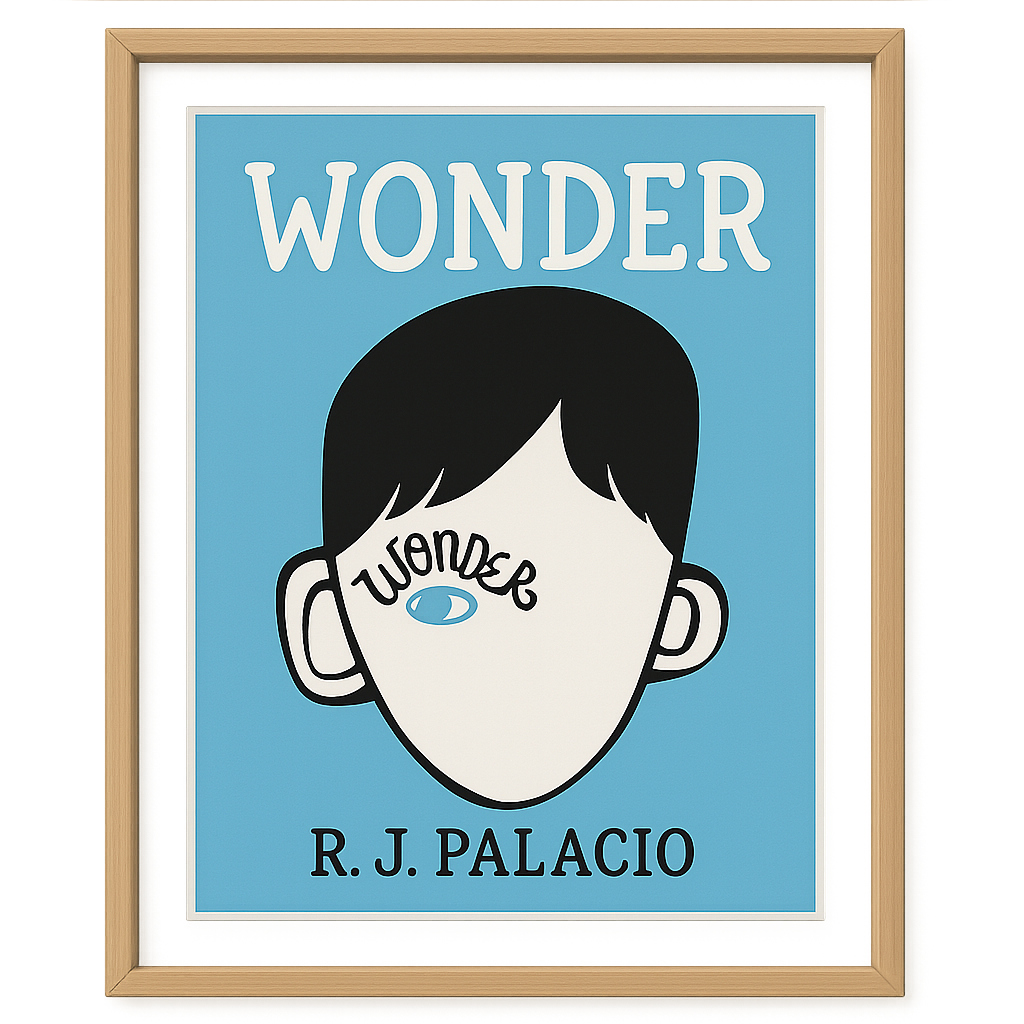
My life began with a moment outside an ice cream shop. My creator, a kind woman named R.J. Palacio, was with her sons when they saw a little girl with a severe craniofacial difference. Her youngest son, who was only three, began to cry, not out of meanness, but out of surprise and fear. In her panic to leave so she wouldn't upset the girl and her family, R.J. Palacio felt she had handled the situation badly. That night, she couldn't stop thinking about it. She felt a profound sense of a missed opportunity, a chance to teach her sons something important about empathy and how to react with compassion. From that feeling of regret, a powerful idea sparked. She started writing that very night, wanting to explore what life must be like for a child who faces the world with a visible difference every single day. She gave this boy a name—August Pullman, or Auggie for short. For months, she poured her heart into telling his story, crafting his protective family, his complicated friendships, and his inner world of science and Star Wars. Finally, on February 14th, 2012, I was ready to meet the world, bound in a cover with a simple, powerful drawing of a boy's face, a face you could imagine for yourself.
Inside my pages, you meet Auggie. He loves science, his dog Daisy, and everything about space. He's funny, smart, and has a big heart, but he's never been to a real school before because of his many surgeries. The thought of it is terrifying, and that's where my story truly begins—Auggie's first year in the fifth grade at Beecher Prep. It’s a year filled with challenges, from navigating the lunchroom to dealing with bullies like Julian. But I am not just Auggie's story. My creator knew that every person has their own story, their own private struggles. So, she let other characters speak, too. You hear from his older sister, Via, who loves her brother fiercely but sometimes feels invisible in her own family. You hear from Jack Will, who learns a tough and painful lesson about what true friendship means. You also hear from Summer, who chooses to sit with the new kid at lunch when no one else will, simply because she wants to be a good person. By switching perspectives, I show that every person is fighting their own battle. My purpose was to build a universe of empathy, to let you walk in many different pairs of shoes and understand that behind every face is a heart with feelings, hopes, and fears just like yours.
When I first reached the hands of readers, something amazing happened. A precept, or rule about a truly important thing, shared by one of Auggie's teachers, Mr. Browne, began to stand out. It was simple: 'When given the choice between being right or being kind, choose kind.' This idea jumped off my pages and into the real world. People started talking about it. Teachers created entire lesson plans around my story, and students started 'Choose Kind' projects and challenges in their schools. Classrooms and hallways were decorated with precepts written by the students themselves. I became more than just a book; I became a movement. I was a conversation starter about bullying, acceptance, and what it truly means to be a friend. A few years later, on November 17th, 2017, my story was even turned into a movie. Actors gave voices and faces to Auggie, Via, and Jack, letting my message of compassion reach millions more people all around the globe. I watched as my simple story, born from a moment of regret, created a ripple of kindness that spread further than my author ever could have imagined.
Today, I sit on shelves in libraries, schools, and bedrooms all over the world. But I am not just paper and ink. I am a reminder. I am the courage you feel when you stand up for someone who is being treated unfairly. I am the warmth you feel when you offer a smile to someone who looks lonely. My story proves that one person's journey can help us all be a little more human, a little more compassionate. I live on not just in my pages, but in every small, kind choice you make. And that, I believe, is the greatest wonder of all.
Activities
Take a Quiz
Test what you learned with a fun quiz!
Get creative with colors!
Print a coloring book page of this topic.