English
 For Schools
 For Homeschool

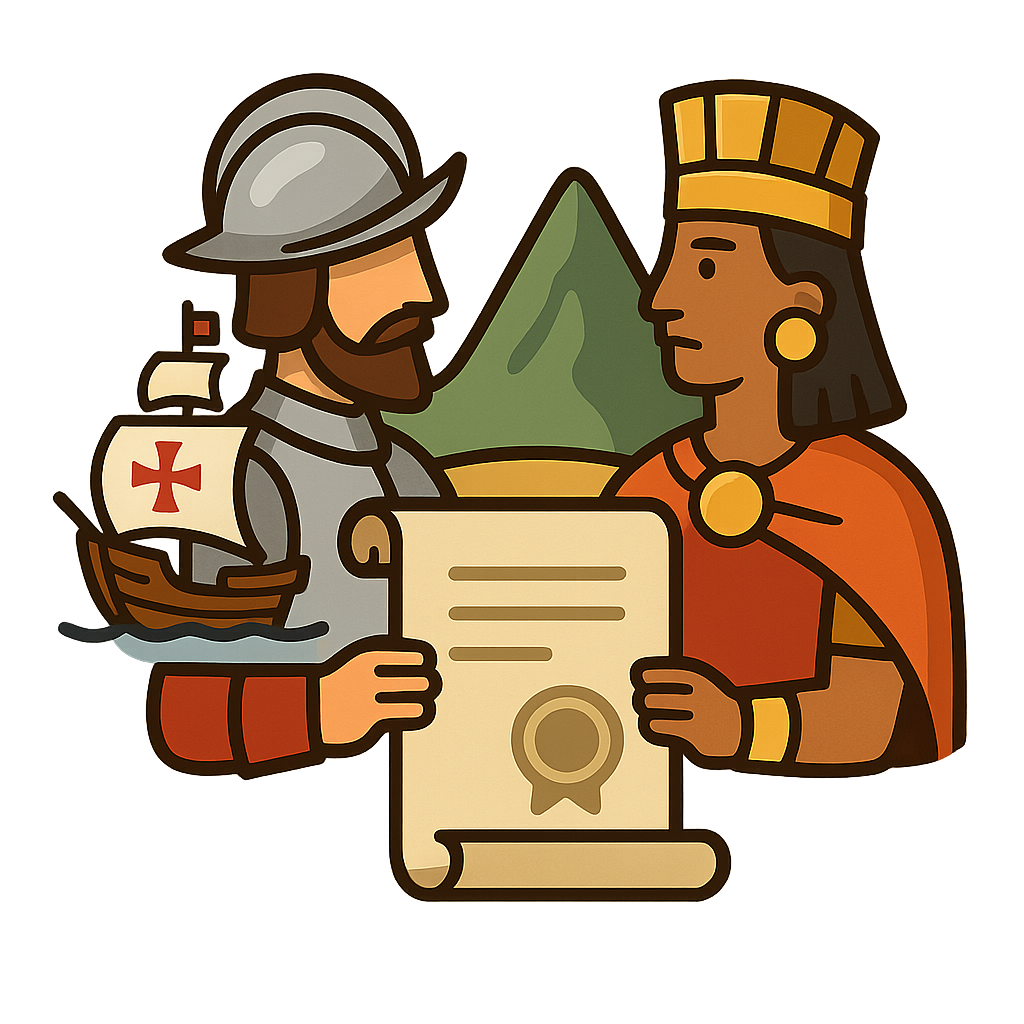
Atahualpa: The Last Inca King
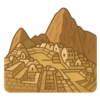
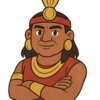
My name is Atahualpa, and I was the Sapa Inca, the ruler of the greatest empire my world had ever known. We called it Tawantinsuyu, the Land of the Four Quarters, and it stretched along the high, jagged peaks of the Andes mountains. Our capital city, Cusco, was the heart of it all, a marvel of stone built with such precision that not even a knife blade could fit between the great blocks. Gold, the sweat of our sun god, Inti, decorated our temples, and a magnificent network of roads, like stone threads, stitched our vast kingdom together, from the hot jungles to the cold mountain peaks. My people were builders, farmers, and astronomers, and we lived in harmony with the mountains that were our home and our protectors. I was their king, a descendant of the sun itself, and they looked to me for guidance and strength.
My reign began after a time of trouble. I had just won a difficult civil war against my own brother, Huáscar, to unite the empire under my rule. The fighting had been long, but by the year 1532, I was the undisputed Sapa Inca. I was resting in the city of Cajamarca, enjoying the healing waters of the hot springs and planning for the future of our newly unified kingdom. Although we were strong, the war had left scars on our land and our people. It was during this fragile peace, when we were looking inward to heal ourselves, that the first strange news arrived. Messengers spoke of tall, pale men who had landed on our shores. They rode upon strange, giant beasts and carried sticks that spoke with the voice of thunder. I was curious, not afraid. What could a few hundred strangers do against my millions of loyal subjects? I decided I would meet them and see for myself what manner of men they were.
They called their leader Francisco Pizarro. My scouts told me he and his small band of about 180 men were making their way toward me. They moved slowly, their metal clothing glinting in the mountain sun like the scales of a fish. I agreed to meet them in the main square of Cajamarca on November 16th, 1532. I believed this meeting would show them my power and majesty. I arrived carried on a golden litter, a throne of polished gold and brilliant parrot feathers. I wore my finest clothes and the mascapaicha, the royal fringe that marked me as emperor. Thousands of my nobles and attendants walked with me, all of them unarmed, singing songs of praise. We came in peace and celebration, expecting to greet these visitors and learn of their purpose.
The square was strangely empty when we arrived, with the strange men hiding in the buildings that surrounded it. A single man in dark robes came forward, holding an object he called a book, and he began to speak words I did not understand about a god I did not know. When I took the book and held it to my ear, it was silent. It did not speak to me. Confused, I let it fall to the ground. In that instant, the world exploded. A terrible cry went up from the strangers. The thunder sticks roared, filling the air with smoke and fire. Their giant beasts, which I now know were called horses, charged into the unarmed crowd. It was not a battle. it was a terrifying ambush. In the chaos and confusion, my litter was overturned, and I was pulled down and made a prisoner. In a matter of minutes, the ruler of the greatest empire in the land was a captive of a few hundred men.
I was held in a stone building, a king in a cage. But I was still the Sapa Inca, and I believed I understood what these men wanted. They were obsessed with gold. It was all they spoke of. They touched the golden ornaments in our temples with a strange hunger in their eyes. So, I made them an offer I was certain they could not refuse. I stood in the largest room of my prison and reached as high as I could on the wall. I promised to fill that entire room with gold up to that mark. and to fill two smaller rooms with silver twice over. in exchange for my freedom. Pizarro agreed. He saw the gleam of treasure in his mind.
My loyal subjects answered my call. For months, a river of treasure flowed into Cajamarca. Llamas arrived daily, their backs laden with golden statues, intricate jewelry, plates, and cups from the temples of Inti. We were stripping our kingdom of its sacred beauty to pay for my life. The room began to fill, the pile of gold growing higher and higher. But as the treasure mounted, I saw a change in the invaders. Their greed was a bottomless pit. The more gold they received, the more they wanted. I began to understand that this was not a simple transaction. They did not honor their promises. They were not here to trade. they were here to conquer. They had no intention of ever setting me free.
Despite my people fulfilling their side of the bargain, the ransom room overflowing with riches, my captors broke their word. In July of 1533, they put me on trial for crimes I did not commit. They feared that if they released me, my armies would rise up and destroy them. Their fear made them cruel. They took my life, hoping to break the spirit of my people and end the Inca empire forever. They thought that by cutting down the king, they could cut down the kingdom. But an idea, a culture, is stronger than any one person.
The sun of my empire did set that day. The Spanish conquered our lands and melted down our sacred art. But they could not destroy our spirit. Today, high in the Andes mountains, my people, the Quechua, still walk the ancient stone paths. They speak our language. They weave patterns that tell our stories. They remember Inti, the sun, who sets every evening but, without fail, rises again every morning. My story is a sad one, but it is also a story of resilience. It is a reminder that a culture is a treasure far more valuable than gold and that the spirit of a people can endure even the darkest of nights, waiting for the dawn.
Activities
Take a Quiz
Test what you learned with a fun quiz!
Get creative with colors!
Print a coloring book page of this topic.