

 English

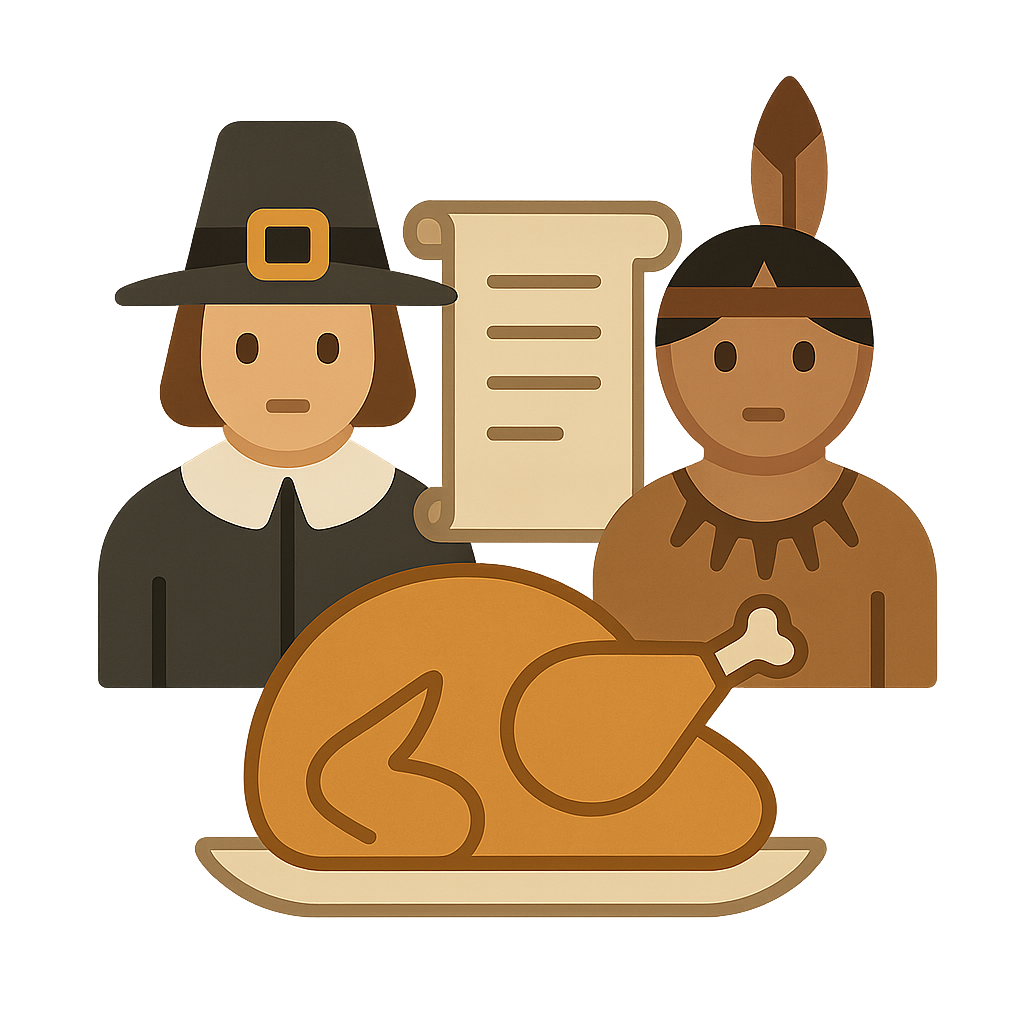
A Feast of Friendship
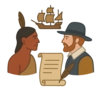
My name is Tisquantum, but many people today know me as Squanto. My home was a beautiful land of thick forests, sparkling rivers, and shores full of tasty clams. I am part of the Wampanoag people, and we have lived in this land for a very long time. One day, in the year 1620, a giant wooden ship called the Mayflower arrived at our shores. New people, who called themselves Pilgrims, came off the boat. They looked tired and were not ready for the cold winter that was coming. That first winter was very hard for them. They did not know how to find food in this new place, and many of them were sick. My people and I watched them. We saw their struggle, and our great chief, Massasoit, decided that we should help them. We chose to be kind to our new, weary neighbors.
When spring arrived, I went to meet the Pilgrims. They were very surprised when I said, “Hello,” in their own language. I knew it was my job to help them learn how to live in our home. Their leader, a kind man named Governor William Bradford, listened carefully to everything I said. First, I taught them how to plant corn. “You must plant it when the oak leaf is the size of a mouse’s ear,” I told them. I showed them a special trick my people use: we put a small fish in the ground with each corn seed. The fish acts like a special snack for the seed, helping it grow big and strong. I also showed them the best places to catch fish in the river and how to find sweet berries and tasty nuts in the forest. All summer long, we worked together. The Pilgrims were so happy when they saw the tall stalks of corn in their fields. Their harvest was a great success, and their food houses were finally full for the coming winter. Governor Bradford was so thankful that he decided to have a big celebration. He invited my chief, Massasoit, and about ninety of our Wampanoag people to join them for a special feast.
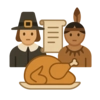
That feast was a wonderful celebration that lasted for three whole days. I will never forget it. The air smelled delicious with the scent of roasted turkeys and deer that my people brought to share. The Pilgrims had made bread from the corn we grew together, and there were bowls of berries, pumpkin, and beans on the long wooden tables. We all sat together—my Wampanoag brothers and the new Pilgrim families. We didn't look the same or dress the same, but that didn't matter. We ate and we laughed. The Pilgrim children ran around with the Wampanoag children, playing games and chasing each other. We showed them some of our games, and they showed us theirs. It was a time of peace and happiness. For those three days, we weren't two different groups of people. We were just friends, sharing food and a happy time together.
That great feast was about more than just filling our bellies with delicious food. It was a time to show gratitude, which is a special word for being thankful. We were all thankful for the successful harvest that filled the storage houses and promised we would have enough food for the winter. We were thankful for the earth that gave us so much. But most importantly, I believe we were thankful for each other. I helped them because kindness makes everyone stronger. That feast showed us all that sharing what you have and helping your neighbors is one of the most important lessons in the world. It is a memory of friendship and a reminder to always have a grateful heart.
Activities
Take a Quiz
Test what you learned with a fun quiz!
Get creative with colors!
Print a coloring book page of this topic.








 Free for Educators