

 English

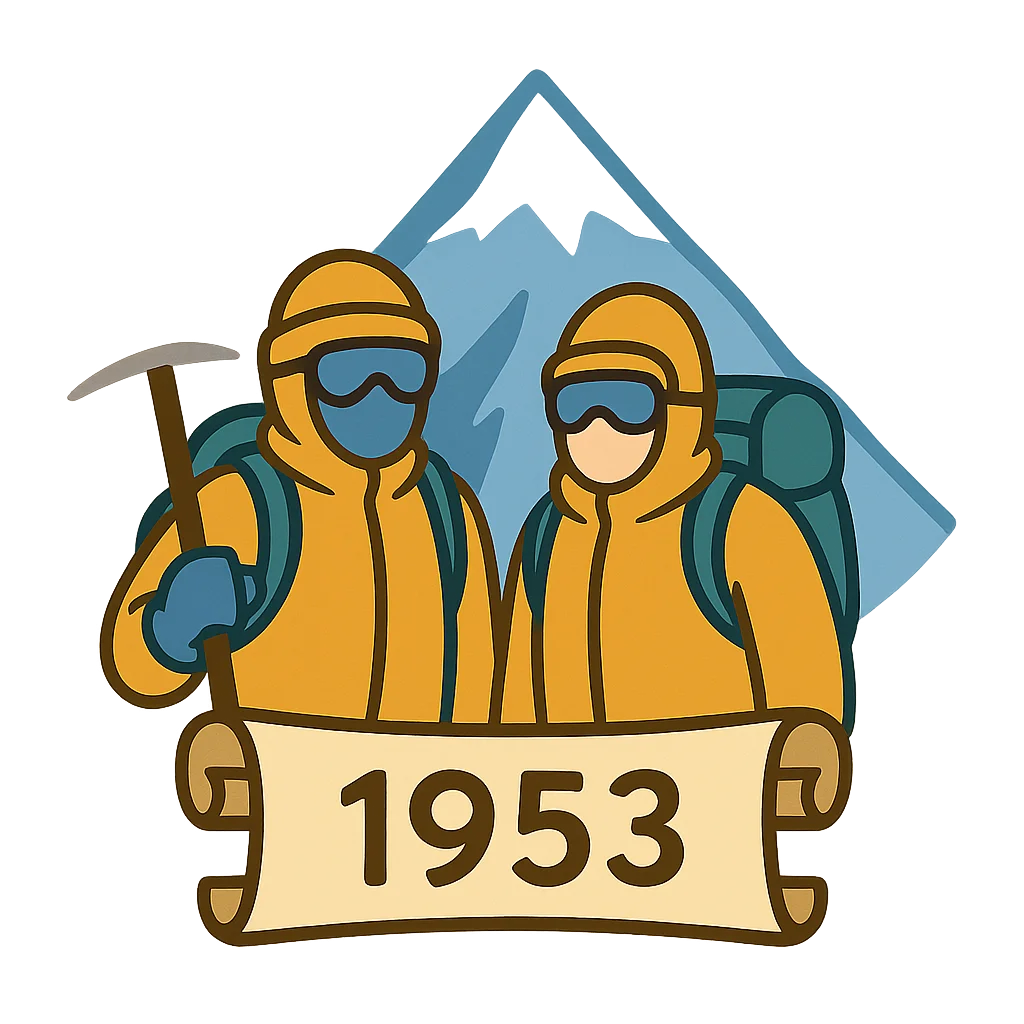
Sir Edmund Hillary: The Top of the World
You might know my name, Edmund Hillary, but you might not know that before I climbed the highest mountain in the world, I was a beekeeper in New Zealand. My days were spent with my bees, but my dreams were filled with mountains. In the early 1950s, Mount Everest was like the last great unexplored place on Earth. It stood there, a giant of rock and ice known to the Nepalese as Sagarmatha, the “Goddess of the Sky,” towering over 29,000 feet. No one had ever stood on its summit and returned to tell the tale. It was a challenge that called to climbers everywhere, a question mark on the map of human achievement. In 1951, I was part of a reconnaissance expedition that found a possible new route up its southern side. That taste of the mountain made me want more. So, when I received an invitation in 1952 to join the British expedition led by the brilliant organizer, Colonel John Hunt, I didn't hesitate. This wasn't going to be a simple climb; it was a military-style operation. We had tons of equipment—special boots that wouldn't freeze our feet, oxygen tanks that felt like heavy shells on our backs, and tents designed to withstand hurricane-force winds. Colonel Hunt believed in teamwork above all else. He assembled a group of climbers from different backgrounds, but we all shared one goal: to put a man on the summit. It wasn't about who got there first, but about working together to make it possible for anyone in our team to succeed. The planning was meticulous, every detail considered, from the food we’d eat to the exact sequence of camps we’d establish up the treacherous slopes.
Our journey began long before we touched the mountain. We trekked for weeks through the beautiful but rugged valleys of Nepal, with hundreds of porters carrying our supplies. The air grew thinner with every step, and we had to move slowly, letting our bodies acclimatize to the lack of oxygen. This process is crucial; rushing can be deadly at high altitudes. The Himalayas were breathtakingly beautiful, with sharp, snow-dusted peaks piercing a deep blue sky, but they were also unforgiving. Our first great obstacle was the Khumbu Icefall. Imagine a frozen river, a chaotic maze of gigantic ice blocks called seracs, some as large as houses. They could shift and collapse without warning. We had to carefully navigate this treacherous path, laying down ladders to cross deep crevasses that plunged into darkness. It was here that my partnership with Tenzing Norgay truly began. Tenzing was a Sherpa, one of the local people who are incredible mountaineers. He wasn't just our guide; he was one of the most experienced and skilled climbers I had ever met. He moved over the ice with a grace and confidence that was astonishing. We quickly formed a strong bond, a friendship built on mutual respect and trust. We didn't always need words to understand each other; a simple look or gesture was enough. We knew we could rely on one another completely. Slowly, painstakingly, our team established a chain of camps up the mountain. Each camp was a small victory, a foothold higher up in the 'death zone,' where the human body can't survive for long. We ferried supplies up, battled fierce winds, and endured bone-chilling cold. By late May, we were in position. Colonel Hunt selected the first pair for the summit attempt: Tom Bourdillon and Charles Evans. They were incredibly strong climbers and used a special closed-circuit oxygen system. On May 26th, 1953, they set off. We waited anxiously at the camp below, watching their tiny figures move up the final ridge. They climbed higher than any human had before, reaching the South Summit, just 300 feet below the true peak. But their oxygen sets malfunctioned, and they were exhausted. They had to make the heartbreaking decision to turn back. Their effort, though, was not a failure. It was a crucial step. They had proven the route was possible and gave Tenzing and me the vital information we needed for our own attempt. Their near-success filled us with both hope and a heavy sense of responsibility. The mountain had been tested, but it had not yet been conquered.
After Tom and Charles returned, exhausted but safe, Colonel Hunt turned to Tenzing and me. It was our turn. On May 28th, we pushed our way up to Camp IX, a tiny tent clinging to the side of the mountain at 27,900 feet. It was the highest anyone had ever camped before. The world below us was a sea of clouds. That night was long and brutal. The temperature dropped to minus 27 degrees Celsius, and the wind howled outside our tent. We huddled in our sleeping bags, sipping warm drinks and checking our oxygen gear. Sleep was nearly impossible. I felt a mix of excitement and deep anxiety. We were so close, but everything had to go perfectly. Failure wasn't just about not reaching the top; at this altitude, a small mistake could be fatal. Before dawn on May 29th, 1953, we began. The snow crunched loudly under my boots in the silent, thin air. We moved slowly, deliberately, conserving every ounce of energy. The climbing was difficult, but the final obstacle was a formidable, 40-foot wall of rock and ice that stood directly in our path. It's now known as the 'Hillary Step.' It looked almost impossible. I searched for a way up and found a narrow crack between the rock and a cornice of ice overhanging the massive drop to our right. I jammed myself inside the crack and began to squirm my way upward, kicking my crampons into the ice for grip. It was exhausting, but I finally pulled myself onto the top. I then brought Tenzing up on the rope. After that, we knew. We just knew we were going to make it. The ridge ahead curved upward, and then, suddenly, there was nowhere else to go. We were standing on the summit of Mount Everest. At 11:30 a.m., we stood on top of the world. The view was beyond anything I could have imagined. Peaks and glaciers stretched out in every direction, under a sky so dark blue it was almost black. We felt no sense of conquest, but a profound sense of awe and humility. I reached out and shook Tenzing’s hand, but he pulled me into a hug. We had done it together. I took a few photographs, and Tenzing buried some small offerings in the snow. We were only there for about 15 minutes. We knew our journey was only half over; getting down safely was just as important.
A Step for Humankind
The descent was perilous, but we made it back to our team, who greeted us with relief and joy. The news of our success was carried down the mountain by runners and eventually reached London on the morning of June 2nd, 1953, the very day of Queen Elizabeth II's coronation. It felt like a gift to the new Queen and the entire world. But for me, the victory wasn't just mine or Tenzing's. It belonged to Colonel Hunt, to Tom and Charles, to every Sherpa and climber on our team who had worked so hard to make it possible. We had climbed the mountain as a team, and we succeeded as a team. Standing on that summit proved that with careful preparation, unwavering determination, and trust in one another, humans could achieve what seemed impossible. My message to you is simple: Everyone has their own Everest to climb. It might not be a mountain of rock and ice, but a challenge in your life that seems daunting. Find your team, prepare well, and never give up. The view from the top is worth it.
Activities
Take a Quiz
Test what you learned with a fun quiz!
Get creative with colors!
Print a coloring book page of this topic.












 Free for Educators